
Circular PL Filter: The Complete Guide to Polarizing Filters
Discover how a circular polarizing filter can transform your photography by reducing glare, enhancing color saturation, and capturing dramatic skies. Your essential guide to choosing and using a CPL filter.
View Recommended FiltersWhy Trust This Guide? We've tested dozens of circular polarizing filters in real-world conditions. This guide breaks down the science, the practical benefits, and the top products, so you can make an informed decision and elevate your photography.
What is a Circular PL Filter and Why Do You Need One?
A circular polarizing (CPL) filter is one of the most versatile and essential tools in a photographer's kit. Unlike other filters, its primary job is to manage light that has been polarized by reflections or scattering in the atmosphere. By rotating the filter, you can selectively block this polarized light, which allows you to control reflections and deepen colors in ways that are impossible to replicate with editing software alone.
If you're looking to expand your creative toolkit beyond just the lens, understanding different types of camera lens filters is crucial. A CPL filter is a must-have, especially for landscape and outdoor photography. It helps you capture scenes the way your eyes see them, cutting through the haze and capturing the true vibrancy of the world.
How Does a Circular Polarizer Work?
Light waves typically vibrate in all directions. However, when light reflects off non-metallic surfaces like water, glass, or leaves, it becomes polarized, meaning it vibrates in a single plane. This is what causes harsh glare and washed-out colors.
A circular PL filter contains a polarizing film that acts like a microscopic grid. It only allows light vibrating in a specific direction to pass through. When you rotate the front ring of the filter, you're aligning this grid to block the most intense polarized light, effectively reducing glare and enhancing contrast.
This ability to control light is a fundamental skill in photography. To truly master this, you need to understand the exposure triangle, as using a CPL filter will reduce the amount of light entering your lens, requiring adjustments to your settings.
Key Benefits of Using a Circular PL Filter
Integrating a CPL filter into your workflow provides several immediate and dramatic improvements to your images. Here are the most significant benefits:
- Reduces Glare and Reflections: This is the filter's superpower. It can cut through reflections on water to reveal the riverbed, reduce glare on leaves after a rain shower, and even minimize reflections on glass. This is invaluable for landscape photography and architectural shots.
- Enhances Color Saturation: By removing the haze caused by polarized light, a CPL filter makes colors appear richer and more vibrant. Blues become deeper, greens become lush, and the overall scene gains a "pop" that feels natural, not over-processed.
- Darkens Skies and Enhances Clouds: A CPL filter can deepen a blue sky, making white, fluffy clouds stand out with dramatic contrast. This effect is most pronounced at a 90-degree angle to the sun.
- Acts as a 1-2 Stop Neutral Density Filter: A CPL filter typically cuts 1 to 2 stops of light. This can be a handy bonus for shooting with a slower shutter speed for motion blur or a wider aperture for shallower depth of field in bright conditions.
Advantages and Disadvantages of Circular PL Filters
While a CPL is a powerful tool, it's not without its limitations. Understanding these helps you use it more effectively.
Advantages
- Significantly reduces unwanted glare and reflections.
- Boosts color saturation and contrast for punchier images.
- Deepens blue skies and makes clouds more dramatic.
- Can be used as a poor-man's ND filter in a pinch.
- Effect is not easily replicable in post-processing.
Disadvantages
- Reduces the amount of light entering the camera (1-2 stops).
- Can produce an uneven effect on wide-angle lenses (banding in the sky).
- Not effective when shooting directly towards or away from the sun.
- Requires careful rotation for the desired effect.
- Can be expensive, especially for high-quality, multi-coated versions.
Recommended Circular PL Filters
⚠️ AFFILIATE DISCLOSURE: This website contains affiliate links. As an affiliate Associate, we earn from qualifying purchases. If you make a purchase through these links, we may receive a small commission at no additional cost to you. Read our full affiliate policy.

Circular PL Filter
Check price on Amazon
Circular PL Filter
Check price on Amazon
Canon Cameras US PL-C 52 NEW Drop-in Circular Polarizing Filter, Black, full-size (3050C001)
Check price on Amazon
Hoya Alpha Circular Polarizer Cir-PL Filter (58mm)
Check price on Amazon
POLARPRO - 135 Series Chroma PL Circular Polarizer Filter w/Peter McKinnon – Enhanced Color Saturation & Glare Reduction for DSLR, Mirrorless & Cinema Cameras – Premium Threaded Lens Filter - 77mm
Check price on Amazon
Hoya 49mm HRT Circular Polarizer CPL UV Filter Filtre
Check price on Amazon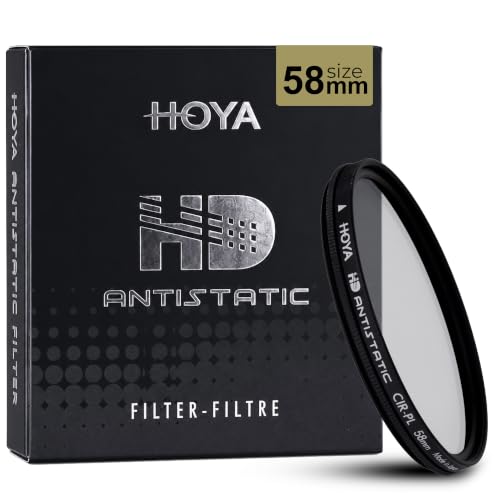
HOYA 58mm HD Antistatic CIR-PL Circular Polarizing Filter for Camera Lens | HRT film, 1-stop light loss, reduces flare and ghosting, 20-layer multi-coating, water-, oil-, and smudge-resistant coatings
Check price on Amazon
POLARPRO - 135 Series Chroma PL Circular Polarizer Filter w/Peter McKinnon – Enhanced Color Saturation & Glare Reduction for DSLR, Mirrorless & Cinema Cameras – Premium Threaded Lens Filter - 67mm
Check price on AmazonHow to Choose the Right Circular PL Filter
Choosing the right CPL filter is essential for getting the best results. A low-quality filter can degrade your image more than it helps. Consider these factors:
1. Size Matters: Finding the Right Thread Diameter
Filters are sized by the thread diameter of your lens, which is printed on the front of your lens (indicated by a "Ø" symbol). Common sizes include 52mm, 58mm, 67mm, 72mm, and 77mm. If you have multiple lenses with different sizes, buy a filter for your largest lens and use step-up rings for smaller ones to save money.
2. Quality is Key: Coatings and Build
Look for filters with multi-coating to reduce internal reflections and lens flare. High-quality brands like B+W, Hoya, and breakthrough photography offer excellent optical glass and coatings. A brass or high-quality aluminum frame is also more durable and less likely to get stuck on your lens. For more information on different types of filters, you can explore our general guide on digital camera filters.
3. Slim vs. Standard Frames
Slim filters are designed for wide-angle lenses to prevent vignetting (darkening at the corners of the image). However, slim filters often lack front threads, meaning you can't attach a lens cap. A standard filter is fine for lenses 28mm and longer (full-frame equivalent).
How to Use a Circular PL Filter Effectively
Using a CPL filter is simple, but mastering it takes a little practice. Follow these steps to get the most out of your filter:
- Attach the Filter: Carefully screw the filter onto your lens's front threads.
- Check the Angle: The filter's effect is strongest when the sun is at a 90-degree angle to your camera (i.e., to your left or right). It has little to no effect when the sun is directly in front of or behind you.
- Rotate and Observe: While looking through your viewfinder or at your screen, slowly rotate the front ring of the filter. You will see the reflections diminish and colors deepen as you rotate.
- Find the Sweet Spot: Don't just rotate it to the max. Find the position that gives you the most pleasing effect. For skies, you want the deepest blue. For reflections, you want the least glare.
- Adjust Your Exposure: Your camera's meter will account for the reduced light, but you may need to adjust your shutter speed or ISO to keep a proper exposure. For this, a sturdy travel tripod is highly recommended for landscape work to avoid camera shake.
Common Mistakes to Avoid with a Circular PL Filter
Even seasoned photographers can fall into these traps. Avoid them to ensure your photos look their best.
- Over-Polarizing: Too much of a good thing is bad. An over-polarized sky can look unnatural, almost black. The effect can also make skin tones look gray or lifeless, so it's often best avoided for portrait photography.
- Using it on Wide-Angle Lenses Incorrectly: As mentioned, CPLs can cause uneven skies on ultra-wide lenses. If you must use one, be aware of the effect and compose accordingly, or consider a fisheye lens filter for very wide shots.
- Leaving it on All the Time: A CPL filter is a tool, not a permanent fixture. It cuts light and can reduce sharpness slightly. For low-light indoor shots or when you need maximum sharpness, take it off.
- Forgetting to Rotate: The filter's effect is not static. You must rotate it for each shot to match the changing light and your creative vision.
Final Thoughts: Is a Circular PL Filter Right for You?
For landscape, nature, and travel photographers, a circular PL filter is not just an accessory; it's an essential part of the creative process. It unlocks a level of control over light and color that is difficult to achieve otherwise. While it requires practice and an understanding of its limitations, the results—dramatic skies, crystal-clear water, and vibrant foliage—are well worth the investment.
If you're building a versatile camera kit or looking to take your outdoor photography to the next level, adding a high-quality CPL filter is one of the wisest purchases you can make. Use this guide to inform your choice, and get ready to see the world in a new, clearer light.