
Portrait Photography Guide: Master Lighting, Lenses & Posing
Learn how to capture breathtaking portraits with the right gear, lighting techniques, and posing strategies. From choosing the perfect lens to mastering natural light, this guide covers everything you need to create professional-quality portraits.
START EXPLORINGWhy Portrait Photography Matters: A great portrait does more than capture a face—it tells a story, evokes emotion, and preserves a moment in time. Whether you're photographing clients, family, or friends, mastering portrait techniques will elevate your work and help you stand out as a photographer.
Recommended Cameras for Portrait Photography
⚠️ AFFILIATE DISCLOSURE: This website contains affiliate links. As an affiliate Associate, we earn from qualifying purchases. If you make a purchase through these links, we may receive a small commission at no additional cost to you. Read our full affiliate policy.
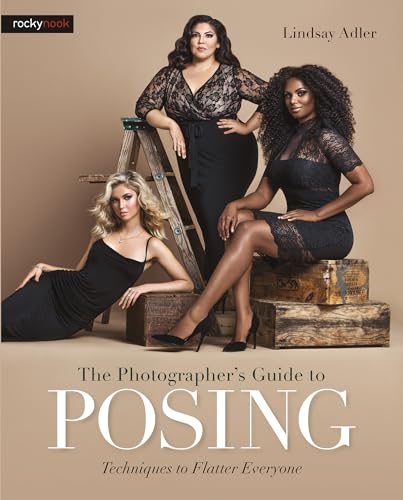
The Photographer's Guide to Posing: Techniques to Flatter Everyone
Check price on Amazon
Photography Accessories 220 Portrait Pose Ideas Cards Camera Accessories | 220 Portrait Pose Photographer Must Haves Camera Accessories for Photography Books Guide Cool Photographer Gift for Men Women
Check price on Amazon
Mastering Portrait Photography: The Definitive Guide for Photographers
Check price on Amazon
Master Lighting Guide for Portrait Photographers
Check price on Amazon
Digital Photography Complete Course: Learn Everything You Need to Know in 20 Weeks
Check price on Amazon
The Photographer's Posing & Prompt Guide: Natural Poses, Easy Prompts & Proven Techniques for Better Portraits
Check price on Amazon
Talent Mark Mat™ Posing & Positioning Mat for Photography | Foot Placement Guide, Built-In Posing Cues, High Volume Sessions, Consistent Headshots, Studio Efficiency
Check price on Amazon
Senior and Portrait Photography Posing Cards, Photographer Guide | 100 real photo examples, laminated cards, ring-bound design, color-coded categories, pocket-sized session tool
Check price on AmazonUnderstanding Portrait Photography
Portrait photography is one of the most rewarding and challenging genres in photography. It requires a blend of technical skill, artistic vision, and the ability to connect with your subject. Unlike landscape or street photography, where you can take your time to compose the perfect shot, portrait photography demands quick thinking, adaptability, and a deep understanding of how light interacts with the human face.
At its core, portrait photography is about capturing the essence of a person. This means going beyond a simple snapshot and creating an image that reveals something about your subject's personality, mood, or story. Whether you're shooting a formal studio portrait or a candid outdoor shot, the goal is always the same: to create a compelling image that resonates with viewers.
To excel in portrait photography, you'll need to master several key elements: understanding your camera settings, choosing the right lens, controlling light, and directing your subject. Each of these elements plays a critical role in the final image, and learning how to balance them is what separates amateur snapshots from professional portraits.
Choosing the Right Camera for Portraits
While you can take portraits with almost any camera, some are better suited for the job than others. The ideal portrait camera should offer excellent autofocus, good low-light performance, and the ability to create a shallow depth of field. Both DSLR and mirrorless cameras are excellent choices, but mirrorless cameras have become increasingly popular due to their compact size, advanced autofocus systems, and real-time exposure preview.
When evaluating cameras for portrait work, pay close attention to the sensor size. A full-frame sensor vs APS-C comparison is essential reading, as full-frame sensors generally offer better low-light performance and shallower depth of field, which is ideal for isolating your subject from the background. However, APS-C cameras are more affordable and can still produce stunning portraits when paired with the right lens.
Another critical factor is the camera's autofocus system. Modern cameras with eye-detection autofocus can dramatically improve your hit rate, especially when shooting at wide apertures. If you're in the market for a new camera, be sure to check out our list of highest-rated cameras and editor's choice cameras for recommendations.
The Best Lenses for Portrait Photography
The lens you choose has a profound impact on your portraits. Focal length, aperture, and optical quality all play a role in how your subject is rendered. For portrait photography, the most popular focal lengths are between 50mm and 135mm (on full-frame). These focal lengths provide a flattering perspective that minimizes distortion and compresses facial features in a pleasing way.
When it comes to aperture, faster lenses (those with lower f-numbers like f/1.4 or f/1.8) allow you to create a beautiful background blur, also known as bokeh. This helps isolate your subject and draw the viewer's eye to the face. For those deciding between different lens types, our guide on prime vs zoom lenses explains why prime lenses are often preferred for portrait work due to their superior sharpness and wider apertures.
If you're looking for a dedicated portrait lens, consider a macro lens for close-up detail work or a fast prime lens for general portrait shooting. A camera lens with a wide aperture is an investment that will serve you well across many types of photography, not just portraits.
Mastering Lighting for Portraits
Lighting is arguably the most important element in portrait photography. The quality, direction, and color of light can dramatically change the mood and feel of your image. Understanding how to work with both natural and artificial light is essential for any portrait photographer.
Natural light is often the most flattering and accessible option. The golden hour—shortly after sunrise and before sunset—provides soft, warm light that is ideal for portraits. Overcast days also offer beautiful diffused light that eliminates harsh shadows. To take your lighting skills further, explore our lighting techniques guide, which covers everything from basic three-point lighting to advanced creative setups.
When using artificial light, an LED flash or strobe can give you complete control over the lighting. You can shape the light with modifiers like softboxes, umbrellas, and reflectors to achieve the look you want. Remember that the goal is to flatter your subject, so pay attention to how shadows fall on the face and adjust your light source accordingly.
Color temperature is another important consideration. Different light sources have different color temperatures, which can affect the skin tones in your portrait. Our white balance guide will help you understand how to set your camera for accurate colors, whether you're shooting in daylight, shade, or under artificial light.
Camera Settings for Portraits
Getting your camera settings right is crucial for achieving consistent, high-quality portraits. While there's no single "correct" setting for every situation, here are some guidelines to get you started.
Aperture: For portraits, you'll typically want to use a wide aperture (f/1.4 to f/2.8) to create a shallow depth of field. This blurs the background and makes your subject stand out. However, be careful not to go too wide, as extremely shallow depth of field can make it difficult to keep both eyes in focus.
Shutter Speed: When shooting handheld, use a shutter speed of at least 1/125th of a second to avoid motion blur. If you're using a longer focal length, you may need to increase this to 1/250th or faster. For a deeper understanding of how aperture, shutter speed, and ISO work together, see our exposure triangle guide.
ISO: Keep your ISO as low as possible to minimize noise. In good lighting, ISO 100-400 is ideal. In low-light situations, you may need to increase it, but modern cameras handle high ISO well, so don't be afraid to push it when necessary.
Focus: Always focus on the eyes. This is the most critical part of a portrait. Use single-point autofocus or eye-detection autofocus if your camera has it. Our focus techniques guide offers more tips on achieving sharp focus.
Posing and Directing Your Subject
Posing is an art form in itself. A good pose can flatter your subject, convey emotion, and add visual interest to your portrait. The key is to make your subject feel comfortable and natural, rather than stiff and posed.
Start by giving your subject simple directions. Instead of saying "stand there and smile," try "lean slightly forward, turn your head to the left, and think about something that makes you happy." This gives them something to do and results in more natural expressions.
Pay attention to the body's angles. Having your subject turn slightly away from the camera (a 45-degree angle) is often more flattering than facing straight on. This creates a slimming effect and adds depth to the image. Also, consider the position of the hands—they should be relaxed and doing something natural, like resting on a hip or holding a prop.
For more inspiration on posing and composition, check out our composition rules guide, which covers techniques like the rule of thirds and leading lines that can be applied to portrait photography.
Composition and Framing in Portraits
Composition is about how you arrange the elements within your frame. In portrait photography, the composition should guide the viewer's eye to your subject and create a balanced, visually pleasing image.
One of the most fundamental composition techniques is the rule of thirds. Imagine dividing your frame into a 3x3 grid, and place your subject's eyes along one of the horizontal lines. This creates a more dynamic and interesting composition than simply centering your subject.
Another important consideration is framing. How much of your subject do you want to include? A tight headshot focuses on the face and expression, while a waist-up shot includes more of the body and environment. Full-body portraits tell a different story, showing your subject in context. Each framing choice has its own emotional impact, so choose based on the story you want to tell.
Don't forget about negative space. Leaving some empty space around your subject can create a sense of calm or isolation, depending on how it's used. It also gives the viewer's eye a place to rest.
Editing and Post-Processing Your Portraits
Post-processing is where you put the final polish on your portraits. While you should always aim to get the best possible image in-camera, editing allows you to refine colors, retouch skin, and enhance the overall mood of your photo.
Start with basic adjustments: exposure, contrast, highlights, and shadows. Then, move on to color correction using the white balance tools in your editing software. For skin retouching, use a light touch—the goal is to enhance, not to make your subject look plastic. Remove temporary blemishes but preserve the natural texture of the skin.
For a complete overview of the editing process, from importing your photos to exporting the final images, see our photo editing workflow guide. And if you're interested in creating a specific look, our film emulation guide shows you how to achieve classic film aesthetics in your digital portraits.
Building Your Portrait Portfolio
Whether you're an aspiring professional or a passionate hobbyist, building a strong portfolio is essential for showcasing your work and attracting clients. Your portfolio should demonstrate your range as a photographer, from different lighting setups to various posing styles and compositions.
When selecting images for your portfolio, choose quality over quantity. It's better to have ten outstanding portraits than fifty mediocre ones. Look for images that tell a story, evoke emotion, and demonstrate your technical skills.
For more advice on creating a compelling portfolio, check out our portfolio building guide. And if you're ready to start selling your services, our client delivery workflow guide will help you streamline the process from shoot to final delivery.
Common Portrait Photography Mistakes to Avoid
Even experienced photographers can fall into bad habits. Here are some common mistakes to watch out for:
- Focusing on the wrong spot: Always focus on the eyes. If the eyes aren't sharp, the portrait fails.
- Using too wide an aperture: While f/1.4 can create beautiful bokeh, it can also result in only one eye being in focus. Stop down to f/2.8 or f/4 if you need more depth of field.
- Ignoring the background: A distracting background can ruin an otherwise great portrait. Pay attention to what's behind your subject and move or adjust as needed.
- Over-posing: Stiff, unnatural poses look, well, posed. Encourage natural movement and expressions.
- Poor lighting: Harsh shadows or flat lighting can make portraits look unflattering. Learn to shape and control light.
- Over-editing: Too much retouching can make your subject look unnatural. Keep it subtle.
Portrait Photography Styles and Inspiration
Portrait photography encompasses a wide range of styles, from classic studio portraits to environmental portraits, candid shots, and fine art photography. Exploring different styles can help you find your own unique voice as a photographer.
For more inspiration across different photography genres, explore our photography style and technique hub. Whether you're interested in street photography, landscape photography, or macro photography, understanding other genres can inform and improve your portrait work.
If you're looking to expand your gear collection to support your portrait work, browse our photography equipment section for recommendations on everything from tripods to camera bags and camera straps.
Frequently Asked Questions About Portrait Photography
What is the best focal length for portrait photography?
The most flattering focal lengths for portraits are between 85mm and 135mm on a full-frame camera. These focal lengths compress facial features and minimize distortion. However, 50mm lenses are also popular for environmental portraits where you want to include more of the surroundings.
Do I need a full-frame camera for portrait photography?
No, you don't need a full-frame camera to take great portraits. Many professional portrait photographers use APS-C or Micro Four Thirds cameras. What matters more is the lens you use and your understanding of lighting and composition. That said, full-frame cameras do offer advantages in low light and depth of field control.
How do I make my subject feel comfortable during a shoot?
Communication is key. Talk to your subject, give them clear directions, and reassure them throughout the shoot. Show them some of the images on your camera's LCD screen to build their confidence. Playing music and keeping the atmosphere relaxed also helps.
What's the best time of day for outdoor portraits?
The golden hour—the hour after sunrise and before sunset—provides the most flattering natural light for portraits. Overcast days are also great because the clouds act as a giant diffuser, creating soft, even lighting.
How much should I charge for portrait photography?
Pricing for portrait photography varies widely based on your experience, location, and the type of session. Beginner photographers might charge $100–$300 per session, while experienced professionals can charge $500–$2,500 or more. Research local photographers in your area to determine competitive rates.
Final Thoughts
Portrait photography is a journey of continuous learning and improvement. Every subject is different, every lighting situation is unique, and every shoot presents new challenges and opportunities. The key is to practice regularly, experiment with different techniques, and never stop learning.
Remember that the best portraits come from genuine connection and collaboration between photographer and subject. Technical skills are important, but they're in service of capturing something real and meaningful. When you combine technical mastery with genuine human connection, you create portraits that transcend the ordinary and become truly memorable.
Whether you're just starting out with a DSLR camera for beginners or you're a seasoned professional looking to refine your craft, there's always more to discover in the world of portrait photography. Use this guide as a foundation, and build upon it with your own experience and creativity.
Ready to take your photography to the next level? Explore our other guides on exposure, composition, and lighting to continue your journey toward photographic mastery.