
Focus Techniques: Master Sharp Photos & Precise Autofocus
Discover professional focus techniques used by top photographers. From autofocus modes and eye AF to manual focus and hyperfocal distance — learn exactly how to get tack-sharp images in every situation.
START LEARNINGWhy Focus Technique Matters More Than Your Camera: A $3,000 camera with poor focus technique will produce blurry images, while a $500 camera with excellent technique can deliver professional-grade sharpness. Focus is the single most important technical skill separating amateur snapshots from portfolio-worthy photographs.
Whether you shoot portraits, landscapes, wildlife, or macro, mastering the focus techniques on this page will dramatically improve your keeper rate and creative control. Let's dive into the methods that professionals rely on every single day.
Understanding Autofocus Modes
Every modern camera offers multiple autofocus (AF) modes, and choosing the wrong one is the most common cause of missed shots. The two fundamental modes you must understand are AF-S (Single) and AF-C (Continuous). Mastering when to switch between them is the foundation of reliable focus technique.
AF-S (Single Autofocus)
Best for stationary subjects. The camera locks focus once you half-press the shutter and holds it until you take the shot or release the button.
- Ideal for landscapes and architecture
- Perfect for posed portraits
- Great for macro and product photography
- Allows focus-and-recompose technique
AF-C (Continuous Autofocus)
The camera continuously adjusts focus while you hold the shutter button, tracking subjects as they move toward or away from you.
- Essential for sports and action
- Required for wildlife and birds in flight
- Necessary for children and pets
- Works with subject-tracking modes
Many photographers also use AF-A (Auto), which lets the camera decide between single and continuous. While convenient for beginners, it can be unpredictable. For consistent results, manually select AF-S or AF-C based on your subject. If you are exploring different shooting genres, our guide to portrait photography and wildlife photography explains how AF mode choice changes per discipline.
Autofocus Area Modes Explained
AF area modes determine where in the frame your camera looks for focus. Modern mirrorless cameras offer sophisticated subject-detection algorithms, but understanding the traditional modes remains essential.
| AF Area Mode | How It Works | Best Used For |
|---|---|---|
| Single Point | You choose one precise AF point | Static subjects, precise compositions, macro |
| Zone / Group | A cluster of points works together | Erratic movement, unpredictable subjects |
| Wide / Auto Area | Camera selects the focus point automatically | Quick snapshots, beginner use, family events |
| Subject Tracking | AI locks onto and follows a detected subject | Sports, wildlife, video, children |
| Eye AF / Animal Eye AF | Detects and tracks eyes specifically | Portraits, pets, wildlife, weddings |
💡 Pro Tip: On most mirrorless cameras, enabling Eye AF combined with AF-C and subject tracking gives you the highest keeper rate for people and animals. This single combination has revolutionized portrait and wildlife photography, allowing you to focus on composition instead of chasing focus points.
Eye Autofocus: The Portrait Game-Changer
Eye AF detects your subject's eye and locks focus on it with incredible precision. Since the eyes are the most critical element in any portrait, this technology eliminates the guesswork that plagued earlier generations of photographers. When combined with a fast prime lens — see our prime vs zoom lenses comparison — Eye AF delivers razor-sharp portraits even at f/1.2.
Human Eye AF
Detects and tracks human eyes. Works through glasses, hats, and partial obstructions on modern systems. Choose left or right eye priority for critical work.
Animal Eye AF
Tracks the eyes of dogs, cats, birds, and other animals. Essential for pet photography and wildlife. Some cameras now distinguish between animal types.
Bird Eye AF
A specialized mode for birds, often detecting the eye even during flight. Dramatically improves hit rate for bird-in-flight photography.
If you shoot a lot of wildlife, pairing Eye AF with the right camera body matters. Our roundup of the highest-rated cameras highlights models with the most reliable subject-detection algorithms.
Back Button Focus: The Professional Standard
Back Button Focus (BBF) decouples autofocus from the shutter button, assigning it to a rear button (typically AF-ON). This gives you complete control over when the camera focuses versus when it takes the picture.
Why Use Back Button Focus?
- Focus and recompose without re-triggering AF
- Switch instantly between AF-S and AF-C by holding or releasing
- Lock focus completely for multiple shots
- Prevents accidental refocusing when shooting
- Works seamlessly with trap focus techniques
How to Set It Up
- Go to custom controls / button assignment
- Assign "AF-ON" to a rear button
- Disable "AF activation" on the shutter button
- Practice: hold rear button to focus, release to lock
- Press shutter freely without changing focus
💡 Pro Tip: It takes 1–2 weeks to retrain your muscle memory for BBF, but once you do, you'll never go back. It's the single most impactful workflow change for serious photographers.
Manual Focus Techniques
Autofocus is extraordinary, but there are situations where manual focus remains king. Macro photography, astrophotography, and landscape work often demand the precision that only manual focus provides. Modern mirrorless cameras make this far easier with focus peaking, magnification, and focus guides.
Focus Peaking
Highlights in-focus edges with a colored overlay (red, yellow, or blue). Invaluable for manual focus in video and macro work. Adjust sensitivity to match your scene.
Focus Magnification
Zooms into the live view image (5x–14x) so you can confirm critical focus. Essential for macro and product photography where millimeters matter.
Focus Guide / Rangefinder
Some cameras display a visual guide showing which direction to turn the focus ring. Helpful for adapting manual lenses to mirrorless bodies.
Manual focus is particularly important in macro photography, where depth of field can be less than a millimeter. Even the best autofocus systems struggle at extreme magnifications, making manual focus the reliable choice.
Hyperfocal Distance & Zone Focusing
Hyperfocal distance is the focus distance that gives you the deepest possible depth of field — from half the hyperfocal distance to infinity. This is the secret behind tack-sharp landscape images and is fundamental to street photography.
Hyperfocal Distance for Landscapes
Focus at the hyperfocal distance to keep everything from foreground to horizon acceptably sharp. Use a depth-of-field calculator app or the markings on older lenses to find your distance.
- Use narrower apertures (f/8–f/16)
- Wider focal lengths increase depth of field
- Focus approximately 1/3 into the scene
- Combine with a camera tripod for stability
Zone Focusing for Street
Pre-focus at a specific distance and shoot within a defined zone. This eliminates autofocus lag, letting you capture decisive moments instantly.
- Set aperture to f/8 for a wide zone
- Pre-focus at 2–3 meters
- Everything from 1.5m to 5m stays sharp
- Ideal for candid street photography
Zone focusing is a cornerstone of street photography and pairs beautifully with the exposure fundamentals covered in our exposure triangle guide.
Focus Techniques by Photography Genre
Different genres demand different focus strategies. Here's how to apply the techniques above to the situations you actually shoot.
📸 Portrait Photography
Always focus on the nearest eye. Use Eye AF with AF-C for moving subjects, or AF-S with single-point for posed shots. For shallow depth of field at f/1.4, focus on the eye closest to the camera.
AF-C + Eye AF Single Point Back Button Focus🏔️ Landscape Photography
Use manual focus or AF-S with a single point placed about one-third into the scene. For maximum sharpness, use hyperfocal distance. Consider focus stacking for extreme depth of field.
Manual Focus Hyperfocal Focus Stacking🐦 Wildlife Photography
Use AF-C with subject tracking or Bird Eye AF. Set focus limiter switches if your lens has them. For birds in flight, use a wide zone or tracking mode with a fast frame rate.
AF-C + Tracking Bird Eye AF Focus Limiter🔬 Macro Photography
Manual focus is essential at high magnification. Focus by moving the camera (not the ring), use focus peaking, and consider focus stacking for maximum sharpness across the subject.
Manual Focus Peaking Focus StackingFocus Stacking: Unlimited Depth of Field
Focus stacking combines multiple images, each focused at a different distance, into a single image with sharpness from front to back. This technique is essential for macro, product, and landscape photography where a single exposure cannot achieve sufficient depth of field.
How to Focus Stack
- Mount camera on a stable tripod
- Set manual focus and manual exposure
- Take a series of shots, shifting focus slightly each time
- Use a focus rail for macro precision
- Merge images in software like Helicon Focus or Photoshop
When to Use Focus Stacking
- Macro subjects with significant depth
- Product photography requiring edge-to-edge sharpness
- Landscapes with extreme foreground-to-background depth
- Architecture and interiors
- Any scene where one exposure can't cover the depth
Troubleshooting Common Focus Problems
❌ Front Focus / Back Focus
Your lens consistently focuses slightly in front of or behind the subject. Solution: use AF micro-adjustment (DSLR) or send the gear for calibration. Mirrorless cameras rarely have this issue.
❌ Blurry Images Despite AF Lock
Usually caused by shutter speed too slow for the focal length. Follow the reciprocal rule: minimum 1/focal-length. Use image stabilization or a faster shutter.
❌ AF Hunting in Low Light
Autofocus struggles without contrast. Solution: use AF assist beam, switch to manual focus with peaking, or focus on a high-contrast edge at the same distance.
❌ Missed Focus on Moving Subjects
AF-S cannot track movement. Switch to AF-C with tracking. Pre-focus on where the subject will be (trap focus) for predictable motion.
❌ Soft Images at Wide Apertures
Very fast lenses are often soft wide open. Stop down 1–2 stops for peak sharpness. Also check that you're focusing on the right point.
❌ Inconsistent Eye AF Performance
Ensure firmware is updated. Sunglasses, masks, and backlighting can reduce detection. Choose the correct subject type (human/animal/bird) in settings.
Frequently Asked Questions About Focus Techniques
Start with AF-S (Single) and single-point AF for stationary subjects. This teaches you to be deliberate about where you place focus. Once comfortable, add AF-C with subject tracking for moving subjects. Avoid full auto AF mode, as it gives you less control and makes it harder to learn.
Yes, back button focus is extremely useful for video. It prevents the camera from continuously hunting for focus while recording. You can tap the rear button to refocus when needed, then release to lock focus during a take. Many videographers also use manual focus with peaking for maximum control.
At f/11 and beyond, diffraction softens the image. The sweet spot for most lenses is f/5.6 to f/8. For deep landscapes, use hyperfocal distance or focus stacking instead of stopping down excessively. Also ensure your tripod is stable and use a remote release or self-timer.
Modern mirrorless cameras make manual focus easier than ever with focus peaking and magnification. Enable peaking, assign a magnification button, and use both together. For critical work, use a tripod, magnify to 10x, and focus slowly. Some cameras also have focus guide indicators that show which direction to turn the ring.
Trap focus (or focus trap) involves pre-focusing on a specific spot where you expect your subject to be, then waiting for the subject to enter that zone. When combined with back button focus and continuous shooting, the camera fires as soon as the subject is in focus. It's a classic technique for sports and wildlife.
Yes, modern Eye AF systems work with glasses, though performance can vary. Anti-reflective coatings help. If detection struggles, try adjusting the angle slightly, ensuring enough light on the subject's face, or switching to a larger AF area mode. Latest-generation cameras handle glasses very reliably.
Master Focus, Master Your Photography
Focus technique is the invisible thread that separates technically perfect images from frustrating near-misses. By understanding AF modes, leveraging Eye AF, adopting back button focus, and knowing when to switch to manual, you gain complete creative control over your camera.
Start by mastering one technique at a time. Spend a week shooting exclusively in AF-C with eye detection for portraits. Then dedicate a week to back button focus. Before long, these methods become second nature, and your keeper rate will skyrocket.
Explore more of our technique guides — from composition rules and lighting techniques to the complete style & technique hub — to build a comprehensive skill set that elevates every photograph you take.
Recommended Lenses for Precise Focus Control
⚠️ AFFILIATE DISCLOSURE: This website contains affiliate links. As an affiliate Associate, we earn from qualifying purchases. If you make a purchase through these links, we may receive a small commission at no additional cost to you. Read our full affiliate policy.

Stolen Focus: Why You Can't Pay Attention--and How to Think Deeply Again
Check price on Amazon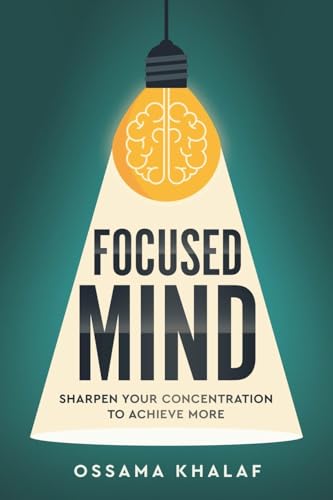
Focused Mind: Sharpen Your Concentration To Achieve More
Check price on Amazon
Modern Recording Techniques: A Practical Guide to Modern Music Production (Audio Engineering Society Presents)
Check price on Amazon
Master Your Focus: A Practical Guide to Stop Chasing the Next Thing and Focus on What Matters Until It's Done (Personal Workbook) (Mastery Series Workbooks)
Check price on Amazon
Couples Therapy Workbook for Healing: Emotionally Focused Therapy Techniques to Restore Your Relationship
Check price on Amazon
15-Minute Focus: Behavior Interventions: Strategies for Educators, Counselors, and Parents
Check price on Amazon
15-Minute Counseling Techniques that Work: What You Didn't Learn in Grad School (15-Minute Focus Series)
Check price on Amazon