
Composition Rules: Master Photography Framing Techniques
Transform ordinary snapshots into captivating images. Learn the essential composition rules that professional photographers use to create balance, depth, and visual impact in every shot.
Why Composition Matters: A great camera and perfect exposure mean nothing if your subject is poorly placed. Composition is the art of arranging visual elements within your frame to guide the viewer's eye, tell a story, and evoke emotion. Whether you're shooting with a point-and-shoot digital camera or a professional DSLR, understanding these rules will dramatically improve your photography. From the classic rule of thirds to advanced techniques like leading lines and negative space, mastering composition is the fastest way to elevate your work from amateur to professional.
Essential Composition Rules Every Photographer Should Know
1. Rule of Thirds
The most fundamental composition rule. Divide your frame into a 3x3 grid and place key elements along the lines or at their intersections. This creates natural balance and visual interest.
2. Leading Lines
Use natural lines — roads, fences, rivers, or architectural edges — to draw the viewer's eye toward your main subject. Leading lines create depth and guide attention.
3. Framing
Use elements in your scene — archways, windows, tree branches — to frame your subject. This adds context and draws focus to the center of interest.
4. Symmetry & Patterns
Symmetrical compositions create a sense of order and calm. Repeating patterns are visually satisfying — and breaking the pattern creates powerful tension.
5. Negative Space
Don't fear empty space. A minimalist composition with generous negative space isolates your subject and creates a clean, striking image.
6. Depth & Layers
Create depth by including foreground, midground, and background elements. Layering adds dimensionality and draws viewers into the scene.
7. Balance & Visual Weight
Elements in your frame have visual weight. Balance a large subject on one side with smaller elements on the other to create equilibrium.
8. Golden Ratio
A mathematical ratio (1:1.618) found throughout nature. Similar to the rule of thirds but more organic, it creates naturally pleasing compositions.
Applying Composition Rules Across Photography Genres
Different genres demand different compositional approaches. In landscape photography, the rule of thirds and leading lines are essential for creating depth and guiding the eye through sweeping vistas. For portrait photography, framing and negative space help isolate your subject while conveying mood and personality. Street photographers often rely on decisive moments combined with geometry and layering to tell compelling stories in chaotic environments.
For macro photography, simplicity and negative space become critical since the subject itself is already complex. And in wildlife photography, anticipation and rule of thirds placement ensure your subject is positioned dynamically within the frame, leaving room for movement. No matter your genre, understanding exposure and focus techniques alongside composition creates a complete technical foundation.
Common Composition Mistakes to Avoid
- Centering everything: While symmetrical centering can work, defaulting to it creates static, boring images. Explore off-center placements.
- Horizon lines through the middle: Place the horizon on the upper or lower third line for more dynamic landscapes.
- Mergers: Avoid elements that awkwardly overlap your subject — like a tree branch "growing" from someone's head.
- Ignoring the edges: Scan your frame edges before shooting. Distracting elements at the borders weaken your composition.
- No clear focal point: Every image needs a subject. If viewers can't tell what to look at, the composition has failed.
- Forgetting to move: Sometimes the best fix is simply taking a step left, right, or crouching down for a new perspective.
Once you've captured a well-composed image, the next step is refining it. Our photo editing workflow guide covers how to enhance composition through cropping, straightening, and tonal adjustments. For those exploring different editing styles, check out our film emulation guide and HDR photography guide to see how post-processing interacts with strong composition.
How to Practice and Internalize Composition Rules
Theory only takes you so far. To truly master composition, you need deliberate practice. Start by picking one rule per week and shooting exclusively with it in mind. Review your images and ask: does the composition guide my eye effectively? What would improve it? Over time, these rules become instinctive.
Study the work of master photographers and analyze how they apply composition. Browse our editor's choice cameras to see what gear professionals trust, or explore community favorite cameras for inspiration from fellow enthusiasts. You can also check out the latest new camera releases and trending camera gear to ensure your equipment supports your creative vision.
Remember: composition rules are guidelines, not laws. Once you understand them deeply, you'll know exactly when and how to break them for maximum creative impact. For a broader overview of photography techniques, visit our Photography Style & Technique Hub.
Ready to Elevate Your Photography?
Composition is just one piece of the puzzle. Explore our complete guides on lighting, color theory, and exposure to build a comprehensive skill set that will transform your photography.
Explore All Photography GuidesRecommended Cameras for Mastering Composition
⚠️ AFFILIATE DISCLOSURE: This website contains affiliate links. As an affiliate Associate, we earn from qualifying purchases. If you make a purchase through these links, we may receive a small commission at no additional cost to you. Read our full affiliate policy.

Gueevin Composition Notebook Classroom Rules Poster, 16.5 x 11.2 in | Elementary School Decor, Teacher Wall Art, Back to School, Office or Home Display
Check price on Amazon
Mead Composition Notebook, Wide Ruled Paper, 7.5" x 9.75", 100 Sheets, Black Marble, 3 Pack (38301)
Check price on Amazon
Oxford Composition Notebook 6 Pack, College Ruled Paper, 9-3/4 x 7-1/2 Inches, 100 Sheets, Assorted Marble Covers. 2 Each: Blue, Green, Red (63763)
Check price on Amazon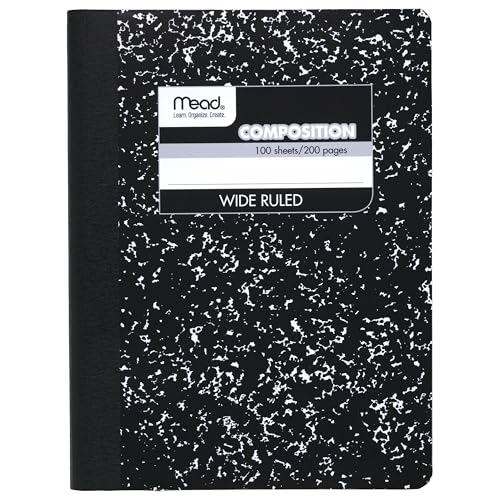
Mead Composition Notebook, Wide Ruled Paper, 7.5" x 9.75", 100 Sheets, Black Marble (09910)
Check price on Amazon
Harloon 43 Pcs Classroom Rules Posters Composition Book Class Rules Decor | Motivational Posters for Teacher Bulletin Board, Composition Behavior Management Decor, Preschool Back to School Wall Supply
Check price on Amazon
Classroom Rules Posters Back to School Bulletin Board Decor Composition Notebook Classroom Decoration Motivational Educational Good Habits Behavior Chart for Preschool kindergarten Elementary Students
Check price on Amazon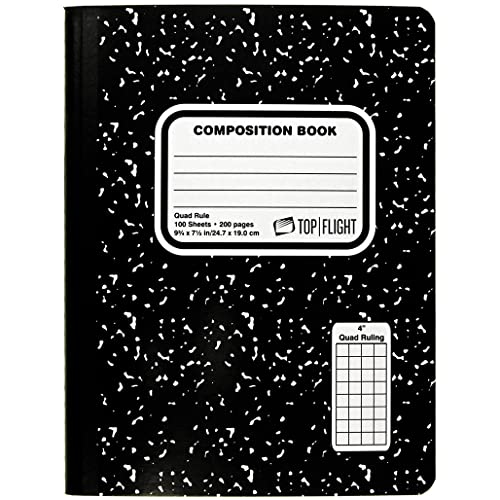
Top Flight Sewn Marble Composition Book, Black/White, Quad Rule, 4 Squares per Inch, 9.75 x 7.5 Inches, 100 Sheets (41320)
Check price on Amazon