
Front and Rear Dash Cam with Night Vision
Protect your vehicle around the clock with dual-channel recording that captures crystal-clear footage in low-light conditions. Your complete guide to choosing the right system.
VIEW TOP PICKSWhy a Front and Rear Dash Cam with Night Vision Matters: Accidents, vandalism, and insurance disputes don't wait for daylight. A dual-channel dash cam with night vision gives you comprehensive coverage—recording both the road ahead and the traffic behind you, even in near-total darkness. Whether you're parking on a dimly lit street or driving through unlit rural roads, this technology ensures you're never left without evidence.
This guide will walk you through everything you need to know: how night vision works, what features to prioritize, and how to choose the best system for your specific needs and budget.
How Night Vision Dash Cams Work
Night vision in dash cams isn't magic—it's a combination of sophisticated hardware and software working together. Understanding the technology helps you make a smarter purchase decision. Most systems rely on one or more of the following approaches:
Infrared (IR) LEDs
Infrared LEDs emit light that's invisible to the human eye but fully detectable by the camera sensor. This allows the dash cam to illuminate the scene without distracting the driver or attracting attention. IR LEDs are particularly effective for interior-facing cameras and short-range exterior recording.
Large Aperture Lenses
A lens with a wider aperture (lower f-stop number, such as f/1.6 or f/1.8) lets in more light, dramatically improving low-light performance. This is one of the most important specifications to check when comparing night vision capabilities between models.
High-Sensitivity Sensors
Modern CMOS sensors with larger pixels and back-illuminated designs capture more light per pixel, reducing noise and improving clarity in dark conditions. Brands like Sony (STARVIS and STARVIS 2) are industry leaders in this area.
WDR & HDR Processing
Wide Dynamic Range (WDR) and High Dynamic Range (HDR) processing balance extreme contrasts between bright headlights and dark shadows, ensuring license plates and road details remain readable in challenging lighting.
Key Features to Consider Before Buying
Not all dual-channel dash cams are created equal. When comparing options, focus on these critical features to ensure you get the best value for your money:
Dual-Channel Recording
The core feature: simultaneous recording from both front and rear cameras. Some systems also support a third interior camera for rideshare or fleet use. Check that both channels record at acceptable resolution—some cheaper models compromise the rear camera to 720p or lower.
Resolution & Frame Rate
For clear license plate capture, aim for at least 1080p at 30fps on both channels. Premium options offer 4K front and 1080p rear, or even 2K on both. Higher resolution means more detail but also larger files and the need for a high-capacity memory card.
Parking Mode
This feature continues recording (or activates on motion/impact detection) when your car is parked and the engine is off. It requires either a hardwiring kit or a dash cam with a built-in battery. Essential for hit-and-run protection and vandalism deterrence.
Storage & Connectivity
Look for support for high-capacity microSD cards (128GB or 256GB recommended). Wi-Fi and Bluetooth connectivity allow you to view and download footage directly to your phone via a companion app—no need to remove the card.
GPS & Speed Logging
Built-in GPS records your speed, location, and route alongside the video. This data can be invaluable for insurance claims and legal proceedings. Some systems also include speed camera alerts.
Build Quality & Heat Resistance
Dash cams live on your windshield, exposed to extreme heat and cold. Look for models with supercapacitors instead of lithium-ion batteries—they handle temperature extremes far better and are less prone to swelling or failure.
Front vs. Rear Camera: What to Expect
Understanding the differences between the front and rear channels helps you set realistic expectations and choose a system that meets your specific requirements.
| Feature | Front Camera | Rear Camera |
|---|---|---|
| Typical Resolution | 1080p to 4K | 720p to 1080p (some premium models offer 2K) |
| Night Vision Performance | Excellent with large aperture and STARVIS sensor | Good to very good; may be limited by rear window tint |
| Field of View | 140°–170° wide angle | 120°–140° (often narrower due to installation position) |
| Primary Use Case | Road ahead, traffic, accidents, scenic drives | Tailgating, rear-end collisions, parking incidents |
| Installation Complexity | Simple—mounts on windshield | Moderate—requires routing cable to rear window |
Pros and Cons of Dual-Channel Dash Cams
Advantages
- Complete 360-degree coverage (front and rear)
- Superior evidence for insurance claims and legal disputes
- Deters tailgating and road rage incidents
- Parking mode protects against hit-and-run
- Many systems support interior recording for rideshare drivers
- Night vision ensures 24/7 protection
Limitations
- Higher cost compared to single-channel dash cams
- More complex installation (rear cable routing)
- Requires larger memory card for dual-channel recording
- Rear camera performance can be affected by tinted windows
- Parking mode requires hardwiring or a separate battery pack
- Some budget models compromise rear camera resolution
How Much Should You Expect to Pay?
Pricing for front and rear dash cams with night vision varies widely based on resolution, brand, and additional features. Here's a realistic breakdown of what you can expect to invest:
Mid-Range Systems ($120–$250): Expect 1080p or 2K on both channels, superior night vision with Sony STARVIS sensors, Wi-Fi connectivity, GPS, and robust parking mode. This is the sweet spot for most buyers seeking a balance of performance and value.
Premium Dash Cams ($250–$500+): 4K front and 1080p or 2K rear, advanced night vision with STARVIS 2 sensors, cloud connectivity, 5GHz Wi-Fi, and advanced driver assistance features (ADAS). Best for those who want the absolute best footage quality and features.
Installation Tips for Optimal Performance
Proper installation is crucial for getting the most out of your dual-channel dash cam, especially when it comes to night vision performance:
- Clean the windshield thoroughly before mounting the front camera. Dust and smudges can cause glare and reduce night vision clarity.
- Position the front camera behind the rearview mirror to minimize obstruction of your view and avoid interference with driver assistance systems.
- Route the rear camera cable along the headliner and down the A-pillar, then along the floor or roof trim to the rear window. Avoid routing near airbags.
- Mount the rear camera at the top center of the rear window for the best field of view and minimal obstruction.
- For parking mode, use a professional hardwiring kit or a dedicated dash cam battery pack to avoid draining your car's battery.
- Adjust camera angle so the horizon is roughly in the middle of the frame. This maximizes the effectiveness of night vision processing.
Ready to Protect Your Vehicle 24/7?
Explore our top-rated front and rear dash cams with night vision, hand-picked for performance, reliability, and value.
SHOP RECOMMENDED MODELSRecommended Front and Rear Dash Cams with Night Vision
⚠️ AFFILIATE DISCLOSURE: This website contains affiliate links. As an affiliate Associate, we earn from qualifying purchases. If you make a purchase through these links, we may receive a small commission at no additional cost to you. Read our full affiliate policy.

IIWEY N6 360° Dash Cam 4 Channel, Free 128GB Card, 8 IR Lights Night Vision | STARVIS 2K,5.8G WiFi-6 (up to 20MB/s), App, 24/7 Parking Mode, Front & Rear Inside DashCam for Car, 3.16” IPS, GPS, G-Sensor
Check price on Amazon
ROVE R2-4K Dual Dash Cam Front and Rear, STARVIS 2 Sensor, Free 128GB Card | 4K Upscaled Front + FHD Rear Recording, 5.8GHz WiFi, 20MB/s Download Speed, App, GPS, 3" IPS, 24Hr Parking Mode, Night Vision
Check price on Amazon
4K+1080P*3 FHD Dash Cam Front and Rear, 360° Car Camera, 5.8GHz WiFi 20MB/s | 4 Channel Dash Cam, 8 LED IR Night Vision, Loop Recording, 24H Parking Monitor, App Control, Includes 64GB SD Card, Black
Check price on Amazon
360 View 4 Channel Dash Cam Front and Rear Left Right Inside Camera for Cars, GPS and 5G Band WiFi, Night Vision, 160 Wide Angle, WDR, 24H Parking Mode, Supercapacitor, Included 128GB Card
Check price on Amazon
Terunsoul 4K+4K Dash Cam, Free 128GB Card, 5.8GHz WiFi6 - up to 20MB/s | AProX HD Night Vision Dash Cam Front and Rear, App, GPS, G-Sensor, 24H Parking Mode, Support 512GB Max, Premium Dark Gray
Check price on Amazon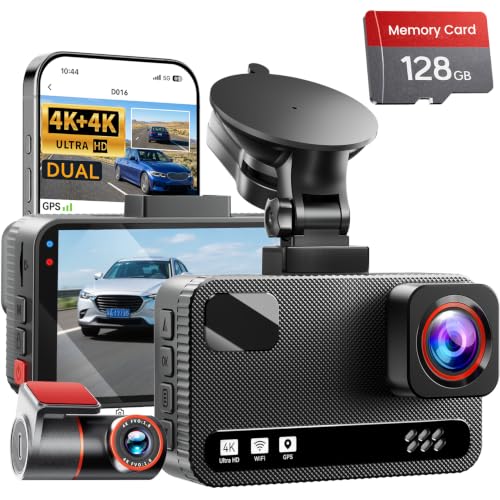
4K+4K Dual Dash Cam Front and Rear, Free 128GB Card, Starlight Night Vision | Dual-Channel Recording, 5.8GHz WiFi, 20MB/s Download Speed, GPS, 3" IPS Screen, Collision Sensor, 24H Parking Mode
Check price on Amazon
FAIMEE 4K Dash Cam Front and Rear, Night Vision, WDR, Free Card Included | 2K Rear Dash Camera for Cars, 170° Wide Angle, 5.8G/2.4G Wi-Fi, Built-in GPS, G-Sensor Emergency Lock, 24H Parking Monitor
Check price on Amazon
Dash Cam Front and Rear, 1296P Dash Camera for Cars, 3 Channel Car Camera Front Rear and Inside with 32GB Card, Loop Recording, Night Vision, HDR, 24Hr Parking, G-Sensor
Check price on AmazonFrequently Asked Questions
While a front-only dash cam covers the most common accident scenarios, a rear camera provides critical coverage for rear-end collisions, tailgating incidents, and parking lot accidents. If you frequently drive in heavy traffic, park on streets, or want comprehensive protection, a dual-channel system is highly recommended. Many insurance companies also view dual-channel footage more favorably when processing claims.
Night vision dash cams combine several technologies: large aperture lenses that let in more light, high-sensitivity image sensors (like Sony STARVIS), and advanced image processing (WDR/HDR) that balances bright and dark areas. Some models also include infrared LEDs for short-range illumination. The result is usable footage even in very low light, though complete darkness without any ambient light remains challenging for any camera.
If installed correctly with a hardwiring kit that includes a voltage cutoff, a dash cam in parking mode should not drain your battery to the point of preventing engine start. The hardwiring kit monitors your battery voltage and cuts power to the dash cam when it drops below a safe threshold (typically around 11.8V–12.2V). Alternatively, you can use a dedicated dash cam battery pack that charges while you drive and powers the camera when parked.
For dual-channel recording, a 128GB microSD card is a good starting point, offering roughly 8–16 hours of footage depending on resolution and bitrate. If you want to use parking mode extensively or record at 4K, consider a 256GB card. Always use a high-endurance card designed for continuous write cycles—standard cards can fail prematurely in dash cam applications.
Yes, most dual-channel dash cams are designed for DIY installation. The front camera mounts easily on the windshield, and the rear camera cable can be routed along the headliner and trim panels without special tools. However, if you're uncomfortable removing trim pieces or working near airbags, professional installation is a worthwhile investment. Hardwiring for parking mode is best left to a professional unless you have experience with automotive electrical systems.
1080p can be sufficient for reading license plates at night if the dash cam has a high-quality sensor (like Sony STARVIS) and a large aperture lens, and if the plate is well-lit by your headlights or streetlights. However, for the most reliable plate capture in all conditions, 2K or 4K resolution provides more detail and a better chance of capturing critical information. The quality of the sensor and lens matters more than resolution alone.
Final Thoughts
Investing in a front and rear dash cam with night vision is one of the smartest decisions you can make for your vehicle's security and your peace of mind. Whether you're protecting against fraudulent insurance claims, documenting a road rage incident, or simply capturing scenic drives, a dual-channel system with reliable night vision ensures you're covered around the clock.
When choosing your dash cam, prioritize sensor quality, aperture size, and build durability over flashy features. A well-installed mid-range system will consistently outperform a poorly installed premium model. And remember—the best dash cam is the one that's properly installed and running every time you drive.