
Beginner Camera for Sports Photography
Your complete guide to choosing the right entry-level camera to capture fast-paced action, from local games to professional matches, without breaking the bank.
SEE TOP RECOMMENDATIONSWhy Sports Photography Needs a Specialized Camera
Sports photography is one of the most demanding genres for any camera. Unlike landscapes or portraits, where you have time to compose the perfect shot, sports require you to capture a split-second moment that may never happen again. A sprinter crossing the finish line, a basketball player mid-dunk, or a soccer player executing a perfect bicycle kick—these are fleeting moments that demand a camera with specific capabilities.
If you're a beginner looking to get into sports photography, you might feel overwhelmed by the technical jargon and the sheer number of options available. The good news is that you don't need to spend thousands of dollars on professional-grade equipment to get started. Modern entry-level cameras have advanced significantly, offering features that were once reserved for flagship models. This guide will walk you through everything you need to know to make an informed decision.
For those who are also interested in capturing the beauty of the natural world, you might want to explore our guide on a beginner camera for nature photography, which shares some similarities but has different priorities. However, if your focus is on fast action, this is the right place to be.
Key Features to Look for in a Beginner Sports Camera
Not all cameras are created equal, and for sports, certain specifications matter more than others. Here are the critical features you should prioritize:
1. Burst Rate (Continuous Shooting Speed)
This is arguably the most important specification for sports photography. Burst rate refers to how many frames per second (fps) your camera can capture. When you're shooting a fast-moving subject, you want to fire off a rapid sequence of shots to increase your chances of getting that perfect moment. For a beginner camera, aim for at least 7-8 fps. Many modern entry-level mirrorless cameras offer 10-15 fps, which is excellent for most sports.
2. Autofocus System
A fast and accurate autofocus (AF) system is non-negotiable. Look for cameras with phase-detection AF, which is much faster and more reliable than contrast-detection AF, especially for moving subjects. Advanced subject-tracking and eye-AF (for humans and animals) are huge bonuses that can dramatically improve your keeper rate. A camera that can lock onto a player and track them across the field is worth its weight in gold.
3. Buffer Depth
The buffer is the camera's internal memory that temporarily stores images before they're written to the memory card. A shallow buffer means your camera will slow down or stop shooting after a few seconds, causing you to miss crucial moments. A deep buffer allows you to shoot longer bursts. Look for a camera that can handle at least 30-50 RAW files or 100+ JPEG files in a single burst.
4. Lens Compatibility and Reach
The camera body is only half the equation. For sports, you'll often need a telephoto lens to get close to the action. Consider the lens mount system and the availability of affordable telephoto zoom lenses (like a 70-200mm or 100-400mm). A camera with a good selection of lenses within your budget will serve you better in the long run. You can learn more about different lens types in our guide to standard zoom lenses.
5. Low-Light Performance
Many sporting events take place in the evening or indoors, where lighting can be challenging. A camera with good high-ISO performance will allow you to use faster shutter speeds without introducing excessive noise. Full-frame sensors generally perform better in low light, but modern APS-C sensors are also quite capable.
DSLR vs. Mirrorless for Sports Photography
This is a common dilemma for beginners. Both systems have their strengths and weaknesses. Let's break them down:
DSLR Advantages
- Often better battery life
- Optical viewfinder with no lag
- Wide selection of used lenses at lower prices
- Generally more affordable for entry-level
Mirrorless Advantages
- Faster burst rates with electronic shutter
- Advanced AF with subject tracking
- Silent shooting mode
- More compact and lightweight
For a beginner in sports photography, a mirrorless camera often has the edge due to its superior autofocus and burst capabilities. However, a DSLR can be a great budget-friendly option, especially if you're willing to buy used gear. The key is to choose a system that fits your budget and ergonomic preferences.
Budget Considerations: What to Expect
Your budget will largely determine what you can get. Here's a realistic breakdown of what you can expect to spend on a beginner camera for sports photography:
- Entry-Level Kit ($500–$800): You can find a capable DSLR or mirrorless camera with a kit lens. While the kit lens may not have enough reach for field sports, it's a good starting point for indoor sports or closer action. You'll likely need to upgrade the lens soon.
- Mid-Range Setup ($800–$1,500): This is the sweet spot for beginners. You can get a camera body with excellent AF and burst rates, plus a decent telephoto lens (like a 55-200mm or 70-300mm). This setup can handle most amateur sports.
- Advanced Beginner ($1,500–$2,500): If you're serious about sports photography, this budget opens up options for cameras with even faster burst rates, deeper buffers, and better low-light performance. You can also invest in a faster telephoto lens.
Remember to factor in the cost of accessories like extra batteries, fast memory cards (UHS-II is recommended for sports), and a camera bag. A good hard case can protect your investment during travel to games.
Recommended Beginner Cameras for Sports Photography
⚠️ AFFILIATE DISCLOSURE: This website contains affiliate links. As an affiliate Associate, we earn from qualifying purchases. If you make a purchase through these links, we may receive a small commission at no additional cost to you. Read our full affiliate policy.

Canon EOS Rebel T7 DSLR Camera EF-S 18-55mm f/3.5-5.6 is II Lens Kit | 24.1 Megapixel CMOS (APS-C) Sensor, Full HD Videos, Built-in Wi-Fi, Beginner Photographers, Digital Camera
Check price on Amazon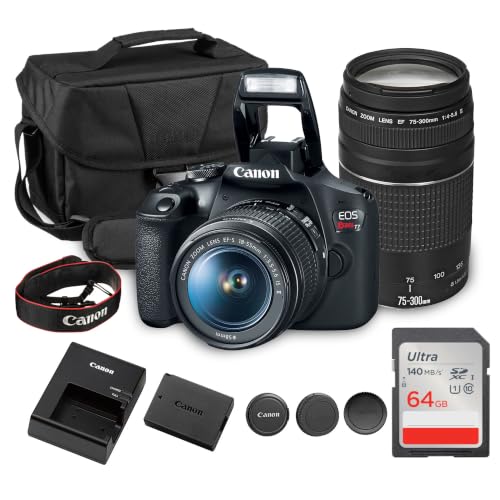
Canon EOS Rebel T7 DSLR Camera with 18-55mm & 75-300mm Double Lens Bundle | For Beginner Photography | 24.1MP APS-C DSLR Camera | Full HD 1080p Video + 64GB Memory Card + Camera Bag (2727C002)
Check price on Amazon
Canon EOS Rebel T7 DSLR Camera with 18-55mm Lens Bundle | For Beginner Photography | 24.1MP APS-C DSLR Camera | Built-in Wi-Fi & NFC + 64GB Memory Card + Camera Bag
Check price on Amazon
Camtryzine 6K Digital Camera, 64MP Vlogging Camera for YouTube, WiFi | AF, 3" Flip Screen, 16X Zoom, 18 Filters, Time-Lapse, Slow-Mo, 64GB Card, 2 Batteries, photography for beginners camera,Black
Check price on Amazon
5K Digital Cameras for Photography 80MP WiFi UHD Autofocus Vlogging Camera | Camera for YouTube, Fast Autofocus, Travel Video Camara Beginner, 3" 270° Flip Screen, 18X Zoom, Memory Card, Lens Hood
Check price on Amazon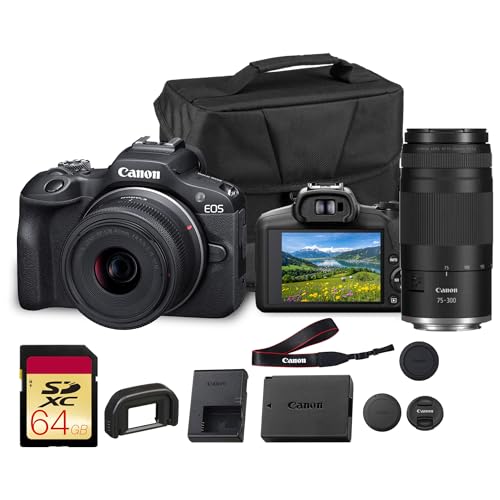
Canon EOS R100 Mirrorless Camera with 18-45mm & 75-300mm Double Lens Bundle | For Photography & Video | 24.2MP APS-C Mirrorless Camera | 4K Video | Dual Pixel Autofocus + 64GB Memory Card + Camera Bag
Check price on Amazon
Canon EOS 2000D / Rebel T7 DSLR Camera w/EF-S 18-55mm f/3.5-5.6 Lens 3 Lens Kit: 128GB Memory + Wide Angle + Telephoto + Flash (Renewed)
Check price on Amazon
64MP 8K Cameras for Photography with 2.8" Flip Screen & Hot Shoe,Black | 16X Zoom, WiFi, Autofocus,Vlogging Camera for YouTube, 32GB Card & 2 Batteries
Check price on AmazonTips for Getting Started with Sports Photography
Once you have your camera, the learning curve can be steep. Here are some practical tips to accelerate your progress:
Master Your Autofocus Modes
Learn the difference between single-shot AF (for stationary subjects) and continuous AF (for moving subjects). For sports, you'll almost always use continuous AF with subject tracking. Practice tracking moving cars or people to get a feel for how your camera behaves.
Use Shutter Priority or Manual Mode
To freeze action, you need a fast shutter speed—typically 1/500s or faster for most sports, and up to 1/1000s or more for very fast action. Use Shutter Priority mode to set your shutter speed and let the camera adjust the aperture and ISO. As you gain confidence, switch to Manual mode for full control.
Panning Technique
Panning is a technique where you move your camera along with a moving subject. This creates a motion blur in the background while keeping your subject relatively sharp, conveying a sense of speed. It takes practice, but the results can be stunning.
Anticipate the Action
The best sports photographers don't just react—they anticipate. Learn the flow of the game, and position yourself where the action is likely to happen. This is often more important than having the most expensive gear.
If you're also interested in capturing wildlife, which shares some similar techniques, you might find our guide on a beginner camera for nature photography helpful. For those who want to delve deeper into the technical side of lenses, understanding standard zoom lenses can be very beneficial.
Final Thoughts: Choosing Your First Sports Camera
Getting into sports photography as a beginner is an exciting journey. The key is to prioritize the features that matter most—burst rate, autofocus, and buffer depth—while staying within your budget. Don't get caught up in the megapixel race or other specs that are less relevant for action shooting.
Remember that the camera is a tool, and the photographer is the artist. Even an entry-level camera in the hands of someone who understands the sport, anticipates the action, and practices consistently will outperform a professional camera in the hands of someone who doesn't. So choose a camera that fits your hands and your budget, then get out there and start shooting.
Whether you're shooting your child's soccer game or aiming to become a professional sports photographer, the right beginner camera will be your trusted companion. Use the recommendations above as a starting point, read reviews, and if possible, try before you buy. Your perfect camera is out there waiting for you.