
Camera Filters: The Complete Guide to Lens Filters
Discover how UV, polarizing, ND, and special effect filters can protect your lens and transform your photography.
EXPLORE ACCESSORIESWhy Camera Filters Matter: A camera filter is one of the most affordable and impactful accessories you can add to your gear bag. They protect your valuable lenses from scratches, dust, and moisture while unlocking creative possibilities that are difficult or impossible to achieve in post-processing. Whether you shoot landscapes, portraits, or video, understanding filters is essential for every photographer.
Essential Types of Camera Filters
Filters come in two main forms: screw-on circular filters that attach directly to your lens threads, and square filter systems that use a holder and adapter ring. Circular filters are convenient and portable, while square systems offer more flexibility for graduated filters. Below are the most important filter types every photographer should know.
UV Filters
A UV filter is a clear glass filter that blocks ultraviolet light. Its primary modern purpose is to protect your front lens element from scratches, dust, and impact. It's the most affordable insurance policy for your lens.
Best for: Everyday lens protectionPolarizing Filters (CPL)
A circular polarizing filter reduces glare and reflections from non-metallic surfaces like water and glass. It also deepens blue skies and boosts color saturation. The effect cannot be fully replicated in editing software.
Best for: Landscapes, water, and reducing reflectionsNeutral Density (ND) Filters
ND filters reduce the amount of light entering your lens without changing the color. This allows you to use slower shutter speeds for motion blur or wider apertures in bright conditions. They are available in fixed strengths like ND8 or variable options.
Best for: Long exposures and cinematic videoGraduated Neutral Density (GND)
GND filters are dark at the top and clear at the bottom, balancing exposure between a bright sky and a darker foreground. They are essential for landscape photography during sunrise or sunset.
Best for: Landscape and seascape photographySpecial Effect Filters
This category includes star filters, soft-focus filters, and color correction filters. They create in-camera artistic effects that add unique character to your images without relying on editing software.
Best for: Creative and artistic photographyProtection & Clear Filters
Clear filters offer pure protection without any optical effect. They are ideal for harsh environments like sandy beaches or dusty trails where you want maximum safety for your lens.
Best for: Harsh shooting environmentsHow to Choose the Right Camera Filter
Selecting the right filter depends on your lens thread size, your shooting style, and your budget. Here's what you need to consider before buying.
1. Check Your Lens Thread Size
Every lens has a filter thread diameter, usually printed on the front of the lens or inside the cap (e.g., 52mm, 58mm, 67mm, 77mm). You must buy a filter that matches this size. If you own multiple lenses with different thread sizes, consider buying filters for your largest lens and using step-up rings for smaller lenses.
2. Decide on Your Filter System
Circular screw-on filters are the most popular for beginners and travelers. They are compact, quick to use, and generally less expensive. Square filter systems are preferred by landscape professionals because they allow you to slide graduated filters up and down for precise positioning.
3. Prioritize Optical Quality
Cheap filters can degrade image sharpness and introduce color casts. Look for multi-coated filters from reputable brands. Multi-coating reduces reflections and ghosting, ensuring your images remain sharp and contrast-rich. If you've invested in a high-quality lens, pair it with a filter of similar quality. You can learn more about lens care and maintenance in our camera repair guide.
4. Consider Your Genre
If you shoot landscapes, a polarizing filter and a set of ND filters are essential. For portrait photographers, a soft-focus or UV filter might be more useful. If you shoot video, variable ND filters are invaluable for controlling exposure. For those interested in creative portrait work, check out our guide on the 85mm lens, a popular choice for portrait photography.
5. Build a Filter Kit Gradually
You don't need every filter at once. Start with a UV filter for protection and a polarizing filter for creative control. As your skills grow, add ND filters for long exposures and graduated filters for landscape work. If you're building a complete camera setup, our camera setup and accessories hub provides a comprehensive overview.
Camera Filter Comparison at a Glance
The table below summarizes the key characteristics and typical price ranges for common filter types. Prices vary based on brand, size, and coating quality.
| Filter Type | Primary Use | Optical Effect | Typical Price Range |
|---|---|---|---|
| UV / Clear | Lens protection | Blocks UV light (minimal on digital) | $15–$80 |
| Circular Polarizer (CPL) | Reduce glare, boost colors | Darkens skies, cuts reflections | $30–$150 |
| Neutral Density (ND) | Long exposure, video | Reduces light without color shift | $25–$200 |
| Variable ND | Video, run-and-gun | Adjustable light reduction | $50–$250 |
| Graduated ND (GND) | Landscape exposure balance | Darkens top half of frame | $40–$180 |
| Special Effects | Creative artistry | Star, soft-focus, color effects | $20–$100 |
How to Install and Care for Your Filters
Proper handling and maintenance will ensure your filters last for years and continue to deliver flawless results.
Installation Tips
- Always attach filters indoors or in a clean environment to avoid dust settling on the glass.
- Screw the filter gently onto the lens threads—do not overtighten, as this can make removal difficult.
- When using a polarizing filter, rotate the outer ring while looking through the viewfinder to see the effect change in real time.
- For square filter systems, ensure the adapter ring is securely attached before sliding the filter into the holder.
Cleaning and Storage
- Use a microfiber cloth or a lens cleaning solution designed for coated optics. Avoid using your shirt or rough fabrics.
- Never use paper towels or tissues, as they can scratch the coating.
- Store filters in a protective case when not in use. For more tips on protecting your gear, see our guide on the hard case for cameras.
- Avoid leaving filters on your lens in extreme heat, as the adhesive in some filters can degrade.
Common Camera Filter Mistakes to Avoid
Even experienced photographers can fall into these traps. Avoid these common mistakes to get the most out of your filters.
Buying Cheap, Uncoated Filters
Low-quality filters can introduce flare, reduce contrast, and soften your images. Always opt for multi-coated filters from trusted brands. The cost difference is small compared to the value of your lens and the quality of your photos.
Stacking Too Many Filters
Stacking multiple filters can cause vignetting (dark corners) and increase the risk of flare. Whenever possible, use a single filter that achieves your goal. If you must stack, use slim-profile filters to minimize vignetting.
Leaving a Polarizer on All the Time
While a polarizer is versatile, it can darken skies unevenly when shooting with wide-angle lenses and reduce light in low-light situations. Use it intentionally, not as a permanent lens cap.
Forgetting to Adjust Exposure
ND filters reduce the light entering your camera. You'll need to compensate by using a slower shutter speed, wider aperture, or higher ISO. Forgetting this will result in underexposed images.
Not Testing Before a Shoot
Always test a new filter before an important shoot. Check for vignetting, color casts, and sharpness. This is especially important when using variable ND filters, which can produce cross-polarization artifacts at certain settings.
Recommended Camera Filters
⚠️ AFFILIATE DISCLOSURE: This website contains affiliate links. As an affiliate Associate, we earn from qualifying purchases. If you make a purchase through these links, we may receive a small commission at no additional cost to you. Read our full affiliate policy.

K&F CONCEPT 67mm Variable ND2-400 Lens Filter (1-9 Stops) for Camera Lens | Ultra Slim Adjustable Neutral Density Filter with Microfiber Cleaning Cloth (B-Series) FN101
Check price on Amazon
NEEWER 58mm UV CPL FLD Filter Kit & ND Set Compatible with Canon Cameras | For Rebel, EOS DSLR Cameras, Lens Filter Photography Accessories
Check price on Amazon
NEEWER 58mm ND Lens Filter Kit with Hood & Lens Cap | UV, CPL, FLD, ND2, ND4, ND8, Compatible with Canon Nikon Sony Panasonic DSLR Cameras with 58mm Lens
Check price on Amazon
58mm Graduated Color Filters Kit 9 Pieces Gradual Colour Lens Filter Kit Set Accessory for Canon Nikon Sony Pentax Olympus Fuji DSLR Camera + Lens Filter Pouch +Lens Cleaning Cloth
Check price on Amazon
LingoFoto 72mm 6pcs Round Full Color Lens Filter Set for 72mm Lens | Red Orange Yellow Green Blue Purple Color Filters+ 6 Pockets Filter Pouch+3 Lens Cleaning Tool
Check price on Amazon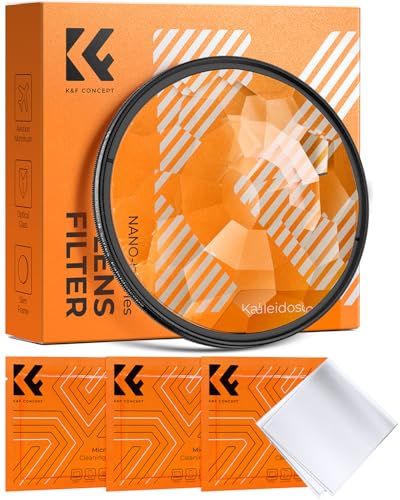
K&F CONCEPT 58mm Kaleidoscope Effects Filter Prism | Special Effects Filter Prism Crystal Glass with Multi Refraction Subjects for Camera Lens Nano-B Series FE110
Check price on Amazon
K&F CONCEPT 82mm Star Filters Kit 3pcs 4+6+8 Points Starburst Filters Set | 18 Layer Coating Ultra Slim Optical Glass Camera Lens Filter with 3 Cleaning Cloth Nano-K Series FS306
Check price on AmazonPrice Note: The prices listed above are approximate and reflect current market rates for entry-level to mid-range filters. Premium filters from brands like B+W, Hoya, and Lee can cost significantly more. Always check the latest prices and read reviews before making a purchase.
Final Thoughts on Camera Filters
Camera filters are a small investment that can dramatically improve your photography. They protect your lenses, expand your creative options, and help you capture images that are simply not possible with a bare lens. Start with a UV filter for protection and a polarizer for creative control, then expand your kit as your skills and interests grow. Whether you're shooting with a budget camera or a professional setup, there's a filter that will enhance your work.
For more ways to improve your photography, explore our guides on 50mm lenses, standard zoom lenses, and photography supplies. Building a thoughtful, well-rounded kit is the key to capturing stunning images in any situation.