
Dual Channel Dash Cam: Complete Front & Rear Protection Guide
Discover why a 2-channel dash cam is the ultimate investment for your vehicle's safety. Learn how to choose the right system for complete peace of mind on every journey.
View Recommended ModelsWhy a Dual Channel Dash Cam is a Smart Investment
When it comes to protecting yourself on the road, a single front-facing camera only tells half the story. A dual channel dash cam (also known as a 2-channel dash cam) records simultaneously from both the front and rear of your vehicle. This comprehensive coverage is invaluable in the event of a rear-end collision, a parking lot hit-and-run, or any incident where fault is disputed.
While many drivers start with a basic single-camera setup, upgrading to a dual-channel system provides a complete visual record of your journey. This is particularly important for rideshare drivers, parents with new drivers, or anyone who spends significant time on busy highways. The rear camera captures critical evidence that a front-only camera would miss, ensuring you have a full picture of any event.
For those who are new to dash cams in general, understanding the fundamentals is key. You might want to explore our broader guide on wireless dashcam technology to see how modern systems have evolved. However, for maximum reliability and video quality, a dedicated dual-channel system remains the gold standard for complete vehicular documentation.
How Dual Channel Dash Cams Work
A dual-channel dash cam system consists of a primary front-facing camera unit and a secondary rear camera. These two components are connected either by a physical cable (for traditional systems) or via a wireless link (for newer, more streamlined models). Both cameras record to a single memory card, typically located in the main front unit.
Key Components
- Front Camera Unit: This is the main hub. It houses the primary lens, the processor, the memory card slot, and often a screen for easy viewing and menu navigation.
- Rear Camera: A smaller, secondary camera designed to be mounted on the rear windshield or exterior of the vehicle. It captures the view behind you.
- Connection Cable: In most traditional systems, a long cable runs from the front unit to the rear camera, often routed along the edge of the headliner for a clean, hidden installation.
- Power Source: The system is typically powered by your car's 12V outlet or hardwired to the fuse box for 24/7 parking mode monitoring.
When you start your car, both cameras begin recording automatically. The footage is stored on a loop, meaning the oldest files are overwritten when the card is full. This ensures you always have the most recent video available. For those who need to review footage on the go, many systems offer Wi-Fi connectivity, allowing you to transfer files directly to your smartphone. To access your recordings on a computer, a reliable card reader is an essential accessory.
Key Benefits of Front and Rear Coverage
The advantages of a dual-channel setup extend far beyond simple video recording. Here’s what you gain:
- Complete Evidence in Rear-End Collisions: Rear-end accidents are one of the most common types of collisions. Without a rear camera, it's your word against the other driver's. A dual-channel system provides indisputable proof of what happened behind you.
- Parking Mode Protection: When hardwired, these systems can continue recording even when your car is parked and turned off. A rear camera is crucial for capturing hit-and-run incidents in parking lots, where damage to the rear of your car is common.
- Protection Against Insurance Fraud: Unfortunately, staged accidents and "swoop and squat" scams are a reality. Footage from both front and rear cameras can expose fraudulent claims and protect you from false liability.
- Monitoring Teen or New Drivers: If you have a new driver in the family, a dual-channel dash cam allows you to review their driving habits and provide constructive feedback on their performance in various situations.
- Enhanced Situational Awareness: Some systems offer a picture-in-picture display, allowing you to see both front and rear views simultaneously on the main screen, giving you a complete view of your surroundings.
Pro Tip: When choosing a dual-channel dash cam, pay close attention to the resolution of the rear camera. While 1080p is standard, some systems offer 4K for the front and 1080p for the rear. A high-quality rear camera is just as important as the front one. If you are also interested in capturing your adventures off-road, you might want to look into a dedicated action camera for a different kind of rugged footage.
Essential Features to Look For
Not all dual-channel dash cams are created equal. When making your selection, prioritize these features:
1. Video Resolution and Frame Rate
Look for a system that offers at least 1080p Full HD for both front and rear cameras. Higher-end models offer 2K or even 4K for the front camera. A higher frame rate (e.g., 60fps for the front camera) provides smoother video, which is crucial for capturing fast-moving details like license plates.
2. Low-Light Performance and Night Vision
Accidents don't just happen during the day. A dash cam with a large aperture (e.g., f/1.8 or lower) and a high-quality sensor will perform significantly better in low-light conditions. Some systems also include infrared (IR) LEDs for enhanced night vision, though this is more common in interior-facing cameras.
3. Parking Mode
This feature allows the dash cam to continue recording while your car is parked. It typically requires a hardwiring kit. Look for systems with buffered parking mode, which records a few seconds before and after a motion event is detected, saving storage space and making it easier to find the relevant clip.
4. Storage Capacity and Management
A dual-channel system generates twice the amount of data as a single-channel one. Ensure the dash cam supports a high-capacity microSD card (at least 128GB, ideally 256GB). Some systems also offer cloud storage options, but these usually come with a subscription fee.
5. Build Quality and Heat Resistance
Your dash cam will be exposed to extreme temperatures, especially in summer. Choose a model with a supercapacitor instead of a lithium-ion battery. Supercapacitors are more resistant to heat and have a longer lifespan, making them ideal for automotive use.
6. Wi-Fi and GPS
Built-in Wi-Fi allows you to easily transfer footage to your phone for sharing with insurance companies or law enforcement. GPS logging adds speed and location data to your video files, which can be critical evidence in an accident investigation.
For those who need a dash cam in a vehicle that isn't their primary car, or for a temporary setup, a dash cam mount can provide a flexible and secure solution. Additionally, if you want to avoid the hassle of running cables, a wireless dashcam is an excellent alternative, though it may have different performance characteristics.
Single Channel vs. Dual Channel: A Quick Comparison
Understanding the difference is key to making the right choice for your needs.
| Feature | Single Channel Dash Cam | Dual Channel Dash Cam |
|---|---|---|
| Coverage | Front only | Front and rear |
| Evidence for Rear-End Collisions | None | Complete |
| Parking Lot Protection | Limited (front only) | Superior (front and rear) |
| Installation Complexity | Simple | Moderate (requires rear cable routing) |
| Cost | $50–$200 | $150–$500+ |
| Best For | Basic front-view recording | Complete vehicular protection |
While a single-channel dash cam is better than nothing, the added security and peace of mind from a dual-channel system are well worth the investment, especially considering the high cost of auto repairs and insurance disputes.
Installation Tips for a Clean Setup
Installing a dual-channel dash cam can be a DIY project, but it requires some patience. Here are some tips:
- Plan Your Route: Before sticking anything, plan how you will route the cable from the front unit to the rear camera. The most common path is along the top edge of the windshield, down the A-pillar, and then along the headliner to the back.
- Use a Fish Tool: A plastic trim removal tool or a fish tape can help you tuck the cable behind interior panels without damaging them.
- Clean the Glass: Ensure the mounting areas on both the front and rear windshields are clean and dry before applying the adhesive mounts.
- Consider a Professional: If you are uncomfortable working with your car's interior panels or hardwiring to the fuse box, it's worth paying a professional to install it. This is especially true for the hardwiring kit, which requires a good understanding of your car's electrical system. If you ever need to remove the system, having a hard case for storage is a good idea to keep all components together.
Recommended Dual Channel Dash Cams
⚠️ AFFILIATE DISCLOSURE: This website contains affiliate links. As an affiliate Associate, we earn from qualifying purchases. If you make a purchase through these links, we may receive a small commission at no additional cost to you. Read our full affiliate policy.

VIOFO A229 Plus Dash Cam Front and Rear, 2K Dual STARVIS 2 Sensors & HDR | 1440P+1440P Car Dash Camera, 5GHz Wi-Fi, Smart Voice Control, Ultra-Precise GPS, Built-in Supercapacitor, 24H Parking Modes
Check price on Amazon
ROVE R2-4K Dual Dash Cam Front and Rear, STARVIS 2 Sensor, Free 128GB Card | 4K Upscaled Front + FHD Rear Recording, 5.8GHz WiFi, 20MB/s Download Speed, App, GPS, 3" IPS, 24Hr Parking Mode, Night Vision
Check price on Amazon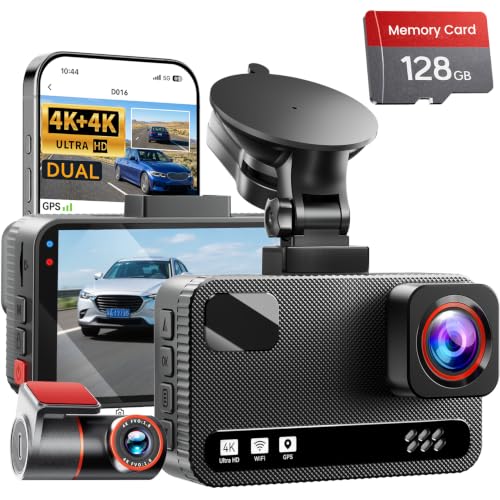
4K+4K Dual Dash Cam Front and Rear, Free 128GB Card, Starlight Night Vision | Dual-Channel Recording, 5.8GHz WiFi, 20MB/s Download Speed, GPS, 3" IPS Screen, Collision Sensor, 24H Parking Mode
Check price on Amazon
4K Dash Cam Front and Rear Inside,3.16" IPS,3 Channel Dash Cam for Car with 5G WiFi,Free 64GB Card,170° Wide Angle,Loop Recording,G-Sensor,WDR,Night Vision,Time-Lapse,24H Parking Monitor
Check price on Amazon
360 View 4 Channel Dash Cam Front and Rear Left Right Inside Camera for Cars, GPS and 5G Band WiFi, Night Vision, 160 Wide Angle, WDR, 24H Parking Mode, Supercapacitor, Included 128GB Card
Check price on Amazon
70mai 4K Dash Cam Front and Rear Inside, 3 Channel Car Dash Camera for Cars, Dashcam with GPS, Wi-Fi 6, Voice Control, Parking Monitor, Night Vision, Loop Recording, 64GB SD Card Included (T800E)
Check price on Amazon
Dash Cam 2.5K Front Rear 64GB WiFi GPS 160° Night Vision | WDR & G-sensor protection, loop recording. 3.39" IPS screen. 2nd camera + card in box.
Check price on Amazon
Affver 4K+2.5K Dash Cam Front and Rear, Built-in 5G WiFi 6 GPS Dual Dashcam | 64GB Card Included, 3.59" IPS Screen, APP Control, G-Sensor, Loop Recording, 24H Parking Mode, Night Vision, Car Dash Camera
Check price on AmazonFinal Thoughts: Choosing the Right System for You
Investing in a dual channel dash cam is one of the most effective ways to protect yourself on the road. It provides a level of documentation and security that a single-channel camera simply cannot match. When selecting a model, focus on the core features that matter most to you: video quality, night vision performance, parking mode capabilities, and build quality.
Whether you are a daily commuter, a professional driver, or a parent looking to monitor a new driver, a 2-channel dash cam offers invaluable peace of mind. The evidence it can provide in the event of an incident can save you thousands of dollars in insurance premiums and legal fees, making it a smart and practical investment for any vehicle owner.