
Focus Pull: The Art of Cinematic Focus
Master the technique that separates amateur video from professional cinema. Learn how to execute flawless focus pulls that guide your audience's attention and elevate your storytelling.
START LEARNINGWhy Focus Pull Matters: In filmmaking, focus is not just about sharpness—it's a storytelling tool. A well-executed focus pull directs the viewer's eye, creates depth, and adds emotional weight to a scene. Whether you're shooting a narrative film, a documentary, or a commercial, mastering this skill is essential for any serious camera for video operator.
What is a Focus Pull?
A focus pull (also known as a rack focus) is the technique of changing the focus of a lens during a shot. This deliberate shift in focus can move the viewer's attention from one subject to another, reveal new information, or create a sense of depth and dimension. While it may seem simple, executing a smooth, precise focus pull requires practice, the right gear, and a deep understanding of your lens and camera system.
The person responsible for this task on a film set is called the "focus puller" or "1st AC" (Assistant Camera). They are the unsung heroes of cinema, ensuring that every frame is perfectly sharp. For solo creators, learning to pull focus effectively is a game-changer for production value.
Essential Gear for Focus Pulling
1. The Right Lens
Not all lenses are created equal for focus pulling. Cine lenses are designed with long, smooth focus throws and geared rings, making precise pulls easier. If you're using photography lenses, look for ones with linear focus-by-wire or a smooth mechanical focus ring. A prime lens is often preferred for its consistent optical quality and wider aperture.
2. Follow Focus System
A follow focus is a mechanical device that attaches to your camera rig and allows you to adjust focus smoothly using a gear-driven knob. This is essential for precise, repeatable pulls. Many modern systems also offer wireless control, allowing a focus puller to work remotely from a monitor.
3. Monitor & Peaking
A high-resolution external monitor with focus peaking is invaluable. Focus peaking overlays a colored outline on the sharpest areas of the image, giving you a visual reference for your focus. This is especially helpful when shooting in low light or with shallow depth of field.
4. Camera Rig & Support
A stable rig is crucial. Whether you're using a handheld gimbal camera or a traditional tripod, your setup must be rigid enough to prevent accidental shifts. A solid camera tripod stand or a well-balanced shoulder rig will give you the stability needed for smooth pulls.
Focus Pull Techniques
There are several types of focus pulls, each serving a different narrative purpose:
| Technique | Description | Best Use Case |
|---|---|---|
| Rack Focus | Shifting focus from one subject to another within the same frame. | Dialogue scenes, revealing a hidden detail. |
| Follow Focus | Continuously adjusting focus to keep a moving subject sharp. | Tracking shots, sports, wildlife. |
| Pull to Reveal | Starting with a blurred foreground object and pulling focus to reveal the subject behind it. | Dramatic entrances, creating suspense. |
| Deep Focus Pull | Pulling focus from a close subject to a distant one (or vice versa) in a single shot. | Landscape cinematography, establishing shots. |
Choosing the Right Camera for Focus Pulling
The camera you use plays a significant role in how easy it is to pull focus. Here are a few things to consider:
Mirrorless vs. DSLR
Mirrorless cameras are generally preferred for video work due to their electronic viewfinders (EVFs), which show the actual exposure and focus. A mirrorless interchangeable lens camera often offers better video features like focus peaking and zebras. However, a full-frame DSLR can also produce stunning results with the right lens and follow focus setup.
Sensor Size & Depth of Field
Larger sensors, like those in full-frame cameras, produce a shallower depth of field. This makes focus pulls more dramatic but also more challenging. If you're just starting, an entry-level mirrorless camera with an APS-C sensor can be a more forgiving platform to learn on.
Focus Assist Tools
Look for cameras that offer built-in focus assist tools such as peaking, magnifying, and waveform monitors. These features are indispensable for nailing critical focus. A high-end digital camera will typically have more robust versions of these tools.
Practical Tips for Better Focus Pulls
- Practice, Practice, Practice: Set up a simple scene with two objects at different distances and practice racking focus between them until it becomes second nature.
- Use a Monitor: Don't rely solely on the camera's LCD. An external monitor gives you a larger, clearer view of what's in focus.
- Know Your Lens: Every lens has a different focus throw. Spend time with your lens to understand how much rotation is needed to go from close focus to infinity.
- Mark Your Focus: Use tape or a grease pencil to mark focus points on your follow focus wheel or lens barrel.
- Anticipate the Action: Start your pull just before the subject moves. This ensures the focus is sharp by the time the action is complete.
- Use a Loupe: A viewfinder loupe can help you see critical focus more clearly, especially in bright environments.
Frequently Asked Questions
Do I need a follow focus to pull focus?
While you can pull focus by hand directly on the lens, a follow focus offers much smoother and more precise control. It also allows you to repeat the same pull consistently, which is crucial for multiple takes.
What is the best aperture for focus pulling?
There's no single "best" aperture. A wider aperture (e.g., f/1.8 or f/2.8) creates a shallower depth of field, making focus pulls more dramatic but also more difficult. A narrower aperture (e.g., f/5.6 or f/8) gives you more room for error but less separation. It depends on the look you want to achieve.
Can I use autofocus for focus pulls?
Modern autofocus systems are incredibly advanced, but for precise, narrative focus pulls, manual focus is still the gold standard. Autofocus can hunt or miss focus at critical moments. However, some cameras offer excellent "focus transition" features that can simulate a rack focus, which can be useful for solo shooters.
What is the difference between a focus pull and a zoom?
A focus pull changes the plane of focus (what's sharp), while a zoom changes the focal length (how close the subject appears). They are two distinct techniques, though they can be used together for creative effects.
Recommended Gear for Focus Pulling
⚠️ AFFILIATE DISCLOSURE: This website contains affiliate links. As an affiliate Associate, we earn from qualifying purchases. If you make a purchase through these links, we may receive a small commission at no additional cost to you. Read our full affiliate policy.

Tilta Pocket Follow Focus | Precise Focus Ring with A/B Stops | Fluid Damping System | 15mm Rod & Rod Holder | Works with Most Cameras & Lenses | Lightweight, Comfortable, and Compact Design (FF-T07)
Check price on Amazon
SmallRig Wireless Follow Focus Kit (Lite) with Handwheel Controller | & Receiver Motor, A/B Stops & 15mm Rod Clamp, Compact Design, Widely Compatible with Cinema and Zoom Lenses with High Damping
Check price on Amazon
SmallRig Mini Follow Focus with A/B Stops | Includes a 15mm Rod Clamp and Snap-on Gear Ring Belt, for DLSRs and Mirrorless Cameras, Fit Dia. Lenses Up to 114mm
Check price on Amazon
SmallRig F60 Modular Follow Focus with A/B Stops | Stepless Damping Adjustment, Allows Wide-Range (0.6kgf-1.8kgf), for DLSRs and Mirrorless Camera
Check price on Amazon
Tilta Nucleus Nano II Base Kit - Wireless Lens Control System | Includes Handwheel, Motor + More | Wireless Zoom, Focus, Aperture Control | Follow Focus | Accurate Pulling | Touch Screen
Check price on Amazon
SmallRig F50 Follow Focus with A/B Stops | with Stepless Dynamic Damping Adjustment, Including 15mm Rod & Rod Clamp, for DSLR, for Sony FE/FE C, for Canon
Check price on Amazon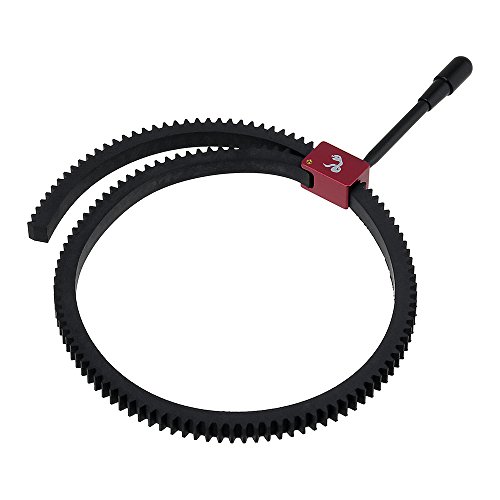
Fotodiox Follow Focus Elite Handle - Choice of 4 Colors
Check price on Amazon
Tilta Khronos Focus PD Handle | Provide Power to Khronos Accessories & iPhone 15/16 Pro/Pro Max | Control Focus - Zoom in Blackmagic Camera App - Black | Locking Clamp TK-IP-PH-B
Check price on AmazonExplore More: Ready to dive deeper into filmmaking? Check out our guides on cameras for video, handheld gimbal cameras, and 35mm movie cameras. For those interested in the technical side of lenses, our prime lens guide is a must-read.