
Inspection Camera Guide: See the Unseen
Discover the best borescope, snake camera, and endoscope for home inspection, automotive diagnostics, and professional work. Learn how to choose the right tool for every hidden space.
VIEW TOP PICKSKey Takeaways
- Inspection cameras, also called borescopes or snake cameras, let you see inside walls, pipes, engines, and other hard-to-reach areas.
- Key specs to compare: resolution, probe diameter, cable length, screen size, and lighting.
- Budget models start around $30, while professional articulating units can exceed $2,500.
- The right choice depends on your use case: home DIY, automotive, HVAC, or industrial inspection.
- Wireless and USB models offer flexibility, while dedicated units with built-in screens are best for field work.
Why an inspection camera matters: Whether you are a homeowner chasing a leak behind a wall, a mechanic inspecting a cylinder bore, or a technician tracing a blocked drain, an inspection camera turns guesswork into clear visual evidence. This guide walks you through everything you need to know before buying one, so you can make a confident, informed decision.
Table of Contents
What Is an Inspection Camera?
An inspection camera, often called a borescope camera or snake camera, is a specialized imaging tool designed to view areas that are otherwise inaccessible or dangerous to reach. It typically consists of a long, flexible or rigid probe with a tiny camera at the tip, connected to a display screen, smartphone, or monitor.
Unlike a standard point-and-shoot, an inspection camera prioritizes portability, durability, and the ability to work in tight, dark, or wet environments. Many models include built-in LED lights around the lens, allowing you to illuminate the area you are inspecting. If you are already familiar with tools like a borescope camera, you will recognize the core design: a slim probe, a light source, and a real-time viewer.
The technology has evolved significantly. Modern units now offer high-definition resolution, articulating tips, wireless connectivity, and even thermal imaging in premium models. For professionals who need to detect heat loss or electrical hotspots, a thermal imaging camera for home inspection can complement a standard optical inspection camera.
Types of Inspection Cameras
Not all inspection cameras are built the same. The right type depends on where you plan to use it and how much control you need over the probe.
Handheld Borescopes
Self-contained units with a built-in screen and rechargeable battery. Ideal for field work, automotive, and HVAC. No phone or PC required.
USB & Wireless Endoscopes
Affordable probes that connect to your smartphone, tablet, or laptop via USB or Wi-Fi. Great for DIYers and casual inspections.
Articulating Borescopes
Premium probes with a steerable tip, allowing you to navigate bends and inspect at different angles. Preferred by professionals.
Drain & Pipe Cameras
Rugged, waterproof reels with long cables and bright LEDs, designed specifically for plumbing and sewer line inspection.
If your work involves inspecting engines, walls, or machinery, a dedicated snake camera with a rigid or semi-rigid probe may be more practical than a flexible USB model. Meanwhile, for occasional home use, a borescope camera that connects to your phone offers excellent value.
Key Features to Compare
When comparing inspection cameras, focus on the specifications that directly affect usability and image quality. Here are the most important ones:
| Feature | Why It Matters | Typical Range |
|---|---|---|
| Resolution | Higher resolution reveals finer details like cracks, corrosion, or debris. | 640×480 up to 1080p HD |
| Probe Diameter | Thinner probes reach tighter spaces such as spark plug holes. | 3.9mm to 10mm |
| Cable Length | Longer cables are essential for drains, ducts, and walls. | 1m to 30m+ |
| Screen Size | A larger screen makes inspection easier without squinting. | 2.4" to 5" (or phone/tablet) |
| Lighting | Adjustable LED brightness is critical in dark cavities. | 4 to 12 LEDs |
| Waterproof Rating | IP67 or higher allows use in pipes and wet environments. | IP67 / IP68 |
| Articulation | Steerable tips let you look around corners and at angles. | 2-way or 4-way |
For professional inspections, a thermal imaging camera for home inspection can reveal hidden moisture or insulation gaps that a standard optical camera might miss. Pairing both tools gives you a complete diagnostic picture.
Best Use Cases for Inspection Cameras
Home Inspection & DIY
Homeowners use inspection cameras to check behind walls, under floors, inside HVAC ducts, and within crawl spaces. They are invaluable for identifying mold, pest damage, leaks, and blocked vents before they become expensive problems. A borescope camera with a flexible probe is often the best fit for these varied tasks.
Automotive Diagnostics
Mechanics use borescopes to inspect cylinder walls, valves, and combustion chambers without dismantling the engine. A slim probe (often 5mm or less) is required to fit through spark plug holes. High-resolution imaging and bright LEDs are essential for spotting carbon buildup or scoring.
Plumbing & Drain Inspection
Drain cameras, a specialized type of inspection camera, are used to locate blockages, cracks, and root intrusions in sewer lines. These models feature long cables (often 20m to 30m), rugged reels, and powerful lighting to navigate dark, wet pipes. A snake camera with a waterproof probe is the go-to tool for this work.
Industrial & HVAC
Technicians inspect machinery, turbines, and ductwork for wear, corrosion, or foreign objects. Articulating borescopes are preferred here because they allow precise tip control in complex geometries. Some professionals also use a thermal imaging camera for home inspection to detect overheating components.
Price Ranges & What to Expect
Inspection camera prices vary widely based on resolution, probe quality, articulation, and brand. Here is a realistic breakdown of what you can expect to pay:
| Category | Price Range | Best For |
|---|---|---|
| Budget USB / Wireless Endoscope | $30–$80 | Occasional DIY, quick checks |
| Handheld Borescope with Screen | $80–$250 | Home inspection, automotive DIY |
| Professional Articulating Borescope | $250–$800 | HVAC, industrial, serious automotive |
| Drain / Pipe Inspection Camera | $300–$1,500 | Plumbing professionals |
| High-End Industrial Borescope | $1,500–$2,500+ | Aerospace, precision engineering |
For most homeowners and DIYers, a handheld unit in the $80–$250 range offers the best balance of performance and value. Professionals who need articulation and superior optics should budget $250–$800. If you also need to detect heat signatures, consider adding a thermal imaging camera for home inspection to your toolkit.
Pros and Cons of Inspection Cameras
✅ Pros
- See inside walls, pipes, and engines without disassembly
- Saves time and money on diagnostics
- Portable and often battery-powered
- Many models are waterproof and durable
- Affordable entry-level options available
❌ Cons
- Image quality can be limited in budget models
- Thin probes may be fragile if mishandled
- Articulating models are significantly more expensive
- Battery life varies; some units need frequent charging
- Learning curve for navigating tight spaces
How to Choose the Right Inspection Camera
Follow these steps to narrow down your options and pick the best inspection camera for your needs:
- Define your primary use case. Home DIY, automotive, plumbing, or industrial? Each has different requirements for probe diameter, cable length, and durability.
- Choose your probe diameter. Measure the smallest opening you need to inspect. A 3.9mm probe fits most spark plug holes; 5.5mm is common for general use; 8mm+ is fine for drains and walls.
- Decide on cable length. For walls and short pipes, 1m–3m is enough. For drains and ducts, look for 10m–30m.
- Pick your display. Built-in screens are convenient for field work. USB/Wi-Fi models let you use your phone or laptop, which is great for sharing images.
- Check the lighting. Adjustable LED brightness is a must. More LEDs generally mean better illumination in dark spaces.
- Consider articulation. If you need to look around corners or inspect at angles, invest in an articulating borescope.
- Verify waterproofing. If you will inspect pipes or wet areas, ensure the probe is rated IP67 or IP68.
If you are also considering a dedicated snake camera for plumbing, make sure the cable is long enough and the reel is sturdy. For automotive work, a borescope camera with a slim, semi-rigid probe is often the better choice.
Ready to Inspect the Unseen?
Browse our top-rated inspection cameras and find the perfect tool for your next project.
SHOP RECOMMENDED MODELSRecommended Inspection Cameras
⚠️ AFFILIATE DISCLOSURE: This website contains affiliate links. As an affiliate Associate, we earn from qualifying purchases. If you make a purchase through these links, we may receive a small commission at no additional cost to you. Read our full affiliate policy.

Teslong Articulating Borescope for Mechanic Automotive HVAC Wall Inspection | 2.0MP HD Endoscope, 8 LED Lights, Two-Way 210°, 4.5" IPS Screen, 32GB, IP67 Waterproof, Semi-Rigid Gooseneck, Carrying Case
Check price on Amazon
Endoscope Camera with Light, 1920P HD Borescope Tools(16.5FT) | Snake Camera with 8 LED Lights, IP67 Waterproof Inspection Camera, 4.3" IPS Screen, No App,for auto repair,Walls,Pipes&Sewers
Check price on Amazon
Daxiongmao Endoscope Camera with Light, 1080P HD Borescope | IP67 Waterproof Snake Camera – Ideal for Inspecting Walls, Vents, Automotive Engines, Pipes – A Great Gift Tool for Men
Check price on Amazon
Endoscope Camera with Light: 5" 1080P HD Dual-Lens Inspection Borescope Camera for Sewer - 16.4ft Waterproof Industrial Endoscope - Flexible Snake BoreScope for Plumbing Automotive - Gift Tool for Men
Check price on Amazon
Teslong 5'' Dual Lens Borescope Camera for Wall & Engine Inspection | IPS Screen 16.5FT Cable Industrial Endoscope with 7 LEDs, Waterproof Fiber Optic Snake Scope for Automotive, HVAC, Plumbing
Check price on Amazon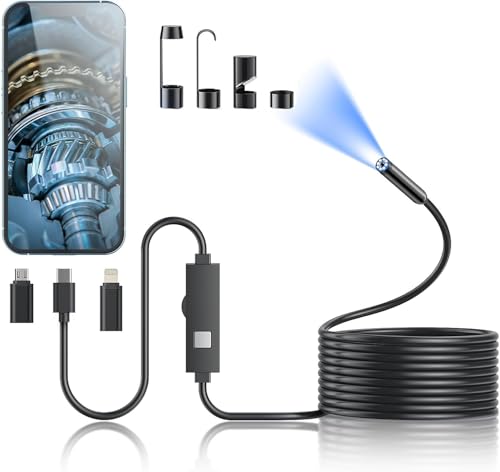
Endoscope Camera with Light,1920P HD Borescope Tools(16.4ft Single Lens) | IP67 Waterproof Endoscope, Snake Camera with 8 Adjustable LED Lights, Semi-Rigid, Inspection Borescope for iOS and Android
Check price on Amazon
Daxiongmao Articulating Borescope, 1080P HD Inspection Camera with Light | 0.24in Slim Probe Endoscope, 4.5" IPS Screen, 5FT Semi-Rigid Snake Cable, for Automotive HVAC Pipe, Engine Mechanic Tool
Check price on Amazon
FOXWELL Y400 220° 2-Way Articulating Borescope, 0.24in Ultra-Slim Endoscope | with Light, 1080P IPS HD Screen, IP67, 32GB, 5.3FT Flexible Scope Camera for Automotive, Engine, HVAC, Industrial Inspection
Check price on AmazonFrequently Asked Questions
Final Thoughts
An inspection camera is one of those tools you do not realize you need until you have one. From finding a hidden leak to inspecting an engine cylinder, it transforms impossible-to-see spaces into clear, actionable information. Whether you choose a budget-friendly borescope camera or a professional-grade articulating unit, the key is to match the tool to your specific use case.
For homeowners, a handheld model with a 5mm probe and a 3m cable covers most needs. For plumbers, a dedicated snake camera with a long, rugged cable is essential. And for those who need to detect heat as well as visuals, a thermal imaging camera for home inspection is a powerful companion. Whichever you choose, you will wonder how you ever managed without it.