
Mirrorless Digital Camera for Beginners
Your complete guide to choosing the perfect mirrorless camera. Learn about sensors, lenses, key features, and find the best entry-level models to start your photography journey with confidence.
See Recommended CamerasWhy Mirrorless? Mirrorless cameras have become the top choice for beginners because they combine professional-level image quality with a compact, lightweight design. Without the bulky mirror mechanism of DSLRs, they offer faster autofocus, better video capabilities, and real-time exposure preview through the electronic viewfinder. This guide will walk you through everything you need to know before making your first purchase.
What Exactly Is a Mirrorless Camera?
A mirrorless camera is a digital camera that uses an electronic viewfinder (EVF) or the rear LCD screen instead of the optical viewfinder found in DSLRs. Light passes directly through the lens and hits the image sensor, which then displays a live preview on the screen or EVF. This simpler design eliminates the need for a reflex mirror and prism, making the camera body significantly smaller and lighter.
For beginners, this means you can carry your camera all day without fatigue, and you get to see exactly how your exposure, white balance, and depth of field will look before you press the shutter. If you are still deciding between camera types, you might also want to explore our guide on a digital camera for beginner photographer to understand the broader landscape.
Key Advantages of Mirrorless Cameras for Beginners
1. Compact and Lightweight
Mirrorless camera bodies are typically 30-50% smaller and lighter than comparable DSLRs. This is a huge advantage for beginners who want to bring their camera everywhere—from family gatherings to weekend hikes—without feeling weighed down.
2. Real-Time Exposure Preview
The electronic viewfinder (EVF) and LCD screen show you a live preview of your exposure settings. As you adjust shutter speed, aperture, or ISO, you see the result instantly. This is an invaluable learning tool that helps you understand the exposure triangle much faster than trial-and-error with a DSLR.
3. Superior Autofocus for Beginners
Modern mirrorless cameras use advanced phase-detection and eye-tracking autofocus. They can automatically lock onto a subject's eye and keep it sharp, which is a game-changer for portrait and family photography. This technology makes it much easier to get consistently sharp photos, even if you are just starting out.
4. Better Video Capabilities
If you want to record video as well as take photos, mirrorless cameras are the clear winner. They offer 4K recording, clean HDMI output, microphone jacks, and flip-out screens—features that are often limited or absent on entry-level DSLRs. If you are considering vlogging, check out our guide on a small vlogging camera with flip screen.
Key Features to Look For in a Beginner Mirrorless Camera
Sensor Size: APS-C vs. Micro Four Thirds vs. Full Frame
The sensor is the heart of any camera. For beginners, the most common sensor sizes in mirrorless cameras are:
- APS-C (Crop Sensor): The sweet spot for beginners. Offers excellent image quality, a wide selection of affordable lenses, and a good balance between size and performance. Prices range from $500–$1,200 for a kit.
- Micro Four Thirds (M43): Even smaller and lighter. Great for travel and video, but with slightly lower low-light performance than APS-C. Prices range from $400–$900 for a kit.
- Full Frame: The best image quality, especially in low light, but larger, heavier, and more expensive. Prices start around $1,200 and go up to $3,000+. For most beginners, APS-C is the ideal starting point.
Lens Mount and Ecosystem
Each camera brand has its own lens mount (e.g., Sony E-mount, Canon RF mount, Fujifilm X mount, Nikon Z mount). Before buying, check the availability and price of lenses for that mount. A good rule of thumb: Sony E-mount and Fujifilm X-mount have the widest selection of affordable third-party lenses for beginners. If you want to understand how lenses work, our guide on a compact camera with interchangeable lens can help.
Autofocus System
Look for cameras with phase-detection autofocus and eye-tracking. This is especially important if you plan to photograph people or pets. Brands like Sony, Canon, and Fujifilm excel in this area.
Video Resolution and Features
If video is important to you, look for at least 4K at 30fps, a microphone input, and a flip-out screen. Some beginner-friendly models even offer 4K at 60fps.
Ergonomics and Controls
Visit a store if possible and hold the camera. A comfortable grip, intuitive menu system, and well-placed dials make a huge difference in your learning experience. Fujifilm cameras, for example, are famous for their retro dials that make learning exposure fun.
Battery Life
Mirrorless cameras generally have shorter battery life than DSLRs because of the EVF and LCD. Look for a camera that offers at least 300-400 shots per charge, and consider buying a spare battery. If you are also interested in outdoor photography, our guide on a digital camera for outdoor photography covers rugged options.
Popular Beginner Mirrorless Cameras Compared
Sony Alpha Series (a6100/a6400)
Excellent autofocus, compact body, and a huge lens ecosystem. Great for both photo and video. Prices range from $700–$1,000 with a kit lens. Ideal for beginners who want room to grow.
Canon EOS R Series (R50/R10)
User-friendly menus, excellent dual-pixel autofocus, and great JPEG colors straight out of camera. Prices range from $700–$1,200. Perfect for beginners who want great results without editing.
Fujifilm X Series (X-T30 II/X-S10)
Retro dials, film simulations, and superb image quality. Great for beginners who want to learn manual controls and enjoy shooting straight out of camera. Prices range from $800–$1,300.
Nikon Z Series (Z30/Z50)
Comfortable ergonomics, good image quality, and a growing lens lineup. The Z50 is a solid all-rounder. Prices range from $700–$1,100.
Essential Accessories for Your First Mirrorless Camera
1. Memory Card
Get a fast UHS-I or UHS-II SD card with at least 64GB. A fast card ensures smooth 4K video recording and quick buffer clearing.
2. Spare Battery
Mirrorless cameras drain batteries faster than DSLRs. Always carry at least one spare.
3. Camera Bag
A padded shoulder bag or backpack protects your gear and keeps accessories organized. Check our guide on camera backpacks for recommendations.
4. Lens Cleaning Kit
A microfibre cloth, blower, and lens pen are essential for keeping your lens and sensor clean. For a deeper dive, see our lens cleaning guide.
5. UV Filter
A UV filter protects your lens from scratches and dust. It's a cheap insurance policy for your lens.
6. Tripod
A basic tripod is invaluable for landscape, night, and long-exposure photography. It also helps with self-portraits and video.
Ready to Start Your Mirrorless Journey?
Explore our curated selection of beginner-friendly mirrorless cameras below. These models offer the best balance of performance, ease of use, and value.
View Recommended CamerasBest Mirrorless Cameras for Beginners
⚠️ AFFILIATE DISCLOSURE: This website contains affiliate links. As an affiliate Associate, we earn from qualifying purchases. If you make a purchase through these links, we may receive a small commission at no additional cost to you. Read our full affiliate policy.

Canon EOS R100 Mirrorless Camera RF-S18-45mm F4.5-6.3 is STM Lens Kit | 24.1 Megapixel CMOS (APS-C) Sensor, 4K Video, Wi-Fi & Bluetooth, Beginner Photographers & Creators, Digital Camera
Check price on Amazon
Canon EOS R100 Mirrorless Camera with RF-S 18-45mm Lens Bundle | For Beginners | 24.1MP APS-C Mirrorless Camera | Full HD Video | Dual Pixel AF + 64GB Memory Card + Camera Bag
Check price on Amazon
Canon EOS R100 Mirrorless Camera with 18-45mm Lens | Bundle with 64GB SD Memory Card + Canon 200ES Should Bag
Check price on Amazon
Canon EOS R50 Mirrorless Camera with 18-45mm Lens (5811C012) Bundle | For Photography & Video | APS-C Mirrorless Camera | 4K Video | Dual Pixel AF II + 64GB Memory Card + Camera Bag
Check price on Amazon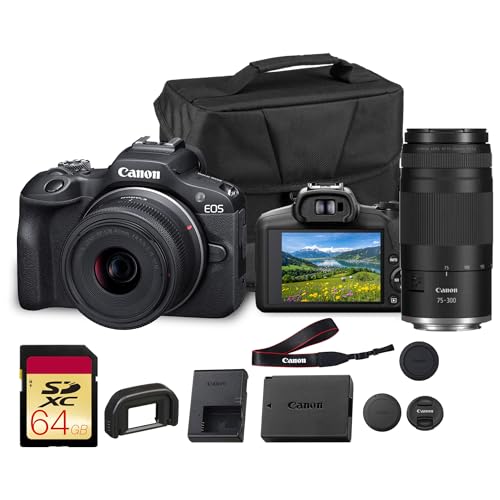
Canon EOS R100 Mirrorless Camera with 18-45mm & 75-300mm Double Lens Bundle | For Photography & Video | 24.2MP APS-C Mirrorless Camera | 4K Video | Dual Pixel Autofocus + 64GB Memory Card + Camera Bag
Check price on Amazon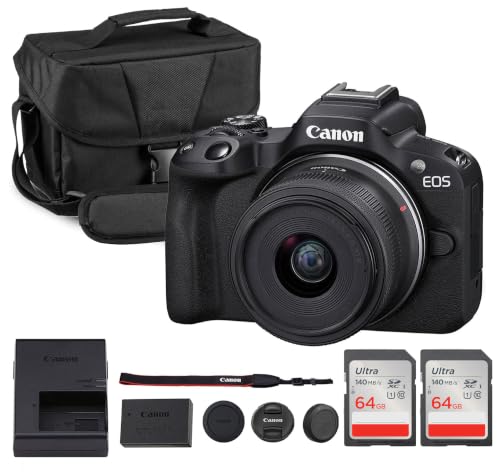
Canon EOS R50 Mirrorless Camera Kit – APS-C RF Camera with 18-45mm Lens, 4K Video, Dual Pixel AF II & Vari-Angle Touchscreen + Shoulder Bag + 2 x 64GB Cards
Check price on Amazon
Canon EOS R50 Mirrorless Camera RF-S18-45mm F4.5-6.3 is STM Lens Kit | 24.2 Megapixel CMOS (APS-C) Sensor, 4K Video, Vlogging, Content Creation, Photography, Digital Camera, Black
Check price on Amazon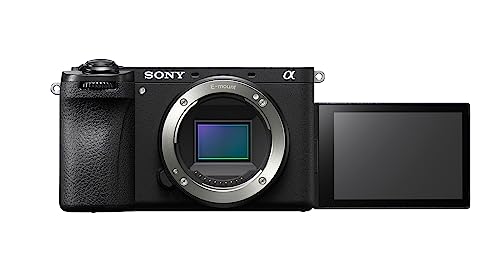
Sony Alpha a6700 APS-C Mirrorless Camera Body 26MP 4K Black | 26 MP Sensor, 4K Video, Log Shooting, LUT Handling, Vlog Friendly Functions
Check price on AmazonTips for Learning with Your New Mirrorless Camera
1. Start in Auto Mode, Then Move to Aperture Priority
Begin with auto mode to get comfortable with framing and composition. Then switch to Aperture Priority (A or Av) to learn how aperture affects depth of field.
2. Shoot in RAW
RAW files capture more data and give you more flexibility in post-processing. Most beginner mirrorless cameras allow you to shoot RAW + JPEG simultaneously.
3. Practice the Exposure Triangle
Understand how aperture, shutter speed, and ISO work together. Our exposure triangle guide explains this in detail.
4. Join a Community
Join online forums, local photography clubs, or social media groups. Feedback and inspiration from others accelerate your learning.
5. Take Your Camera Everywhere
The best way to learn is to shoot daily. Even if it's just around your house or neighborhood, consistent practice builds muscle memory.
Common Mistakes Beginners Make (and How to Avoid Them)
- Buying Too Much Camera: Don't overspend on a full-frame camera if you're just starting. An APS-C mirrorless camera is more than enough for learning.
- Ignoring the Lens: The lens matters more than the camera body. Invest in a good prime lens (like a 35mm f/1.8) rather than multiple cheap zooms.
- Not Reading the Manual: Your camera's manual is a treasure trove of information. Spend an hour with it—it will save you hours of frustration.
- Forgetting to Format the Memory Card: Always format your card in-camera before a shoot to avoid errors.
- Not Backing Up Photos: Set up a backup workflow early. Losing your first photos is heartbreaking. Our backup workflow guide can help.
If you are also considering a camera for a specific purpose, such as wildlife or sports, our guide on a affordable camera for wildlife photography might be useful.
Final Thoughts
Choosing your first mirrorless camera is an exciting step. The key is to focus on what you need today, not what you might need in five years. An entry-level APS-C mirrorless camera from Sony, Canon, Fujifilm, or Nikon will serve you well for years to come. Pair it with a versatile kit lens and a fast prime, and you have a setup that can handle everything from portraits to landscapes to video.
Remember, the best camera is the one you have with you. Start shooting, make mistakes, learn, and enjoy the journey. If you're still exploring other camera types, you might also be interested in our guide on a high-quality point and shoot digital camera or a budget-friendly camera for photography.