
Photography Lighting: The Complete Guide to Mastering Light
Light is the language of photography. Learn how to control natural and artificial light to create stunning, professional-quality images in any situation.
Start LearningWhy Lighting Matters: Great photography isn't about the most expensive camera—it's about understanding light. Whether you're shooting portraits, landscapes, or product photos, mastering lighting is the single most impactful skill you can develop. This guide will walk you through everything from basic light theory to advanced studio setups.
The Fundamentals of Photography Lighting
Before diving into gear and techniques, it's essential to understand the core properties of light. Every lighting decision you make—whether you realize it or not—affects the mood, depth, and quality of your images. The three fundamental characteristics of light are intensity, direction, and color temperature.
💡 Intensity
Intensity refers to the brightness of your light source. It determines your exposure settings and affects the overall mood of the image. High-intensity light creates bright, energetic scenes, while low-intensity light produces moody, dramatic atmospheres.
- Bright light: Ideal for product photography and clean, commercial looks
- Soft light: Perfect for flattering portraits and wedding photography
- Low light: Great for dramatic, artistic, and atmospheric shots
🧭 Direction
The direction of light relative to your subject dramatically changes the look of your photo. This is one of the most powerful tools in a photographer's arsenal.
- Front lighting: Even, flat illumination with minimal shadows
- Side lighting: Creates depth and texture—great for portraits
- Backlighting: Produces silhouettes and rim lighting effects
- Top lighting: Dramatic and moody, often used in fine art
🎨 Color Temperature
Measured in Kelvin (K), color temperature describes how warm or cool your light appears. Understanding this helps you achieve accurate colors and set the right mood.
- 2700K–3000K: Warm, golden light (candlelight, tungsten)
- 4000K–5000K: Neutral, natural daylight
- 5500K–6500K: Cool, blue light (overcast, shade)
Mastering Natural Light
Natural light is free, abundant, and incredibly versatile. Many professional photographers prefer it for its organic, flattering quality. The key is learning to work with it rather than against it.
Golden Hour
The hour after sunrise and before sunset produces warm, soft, directional light that flatters almost any subject. It's the most sought-after natural lighting condition for portraits and landscapes.
Blue Hour
Just before sunrise and after sunset, the sky takes on a deep blue hue with soft, diffused light. This is perfect for cityscapes, moody portraits, and creative projects.
Overcast Days
Clouds act as a giant diffuser, creating soft, even light with minimal shadows. This is ideal for portraits and macro photography where detail and texture are key.
Window Light
A window is one of the best natural light sources for indoor photography. Position your subject near a window for soft, directional light that mimics studio lighting—and it costs nothing.
Artificial Lighting: Taking Control
When natural light isn't enough—or when you need consistency—artificial lighting gives you complete control over intensity, direction, and color. Understanding the different types of artificial lights is essential for any serious photographer.
| Light Type | Best For | Color Temp | Price Range |
|---|---|---|---|
| Continuous LED Panels | Video, portraits, product photography | Adjustable (3200K–5600K) | $80–$400 |
| Speedlights (Flash) | Events, weddings, on-location portraits | ~5500K (daylight) | $100–$600 |
| Studio Strobes | Professional portraits, commercial work | ~5500K (daylight) | $200–$2,500+ |
| Ring Lights | Beauty, macro, vlogging, face cam | Adjustable (3200K–5600K) | $50–$300 |
| Softboxes & Diffusers | Portraits, product, fashion | Depends on light source | $30–$200 |
For photographers looking to build a versatile lighting setup, a photography lighting kit is often the most cost-effective solution. These kits typically include multiple lights, stands, and modifiers, giving you everything you need to start experimenting with different lighting setups.
Essential Lighting Techniques
Once you have your lights, it's time to learn how to position them. These classic lighting patterns are used by professional photographers worldwide and form the foundation of portrait lighting.
Rembrandt Lighting
Named after the famous painter, this technique creates a small triangle of light on the shadowed cheek. It's dramatic, classic, and ideal for character portraits.
Butterfly Lighting
The light is placed directly in front of and above the subject, creating a butterfly-shaped shadow under the nose. This is flattering for most face shapes and is a staple in beauty photography.
Split Lighting
The light is placed at a 90-degree angle to the subject, illuminating exactly half of the face. This creates a bold, dramatic, and mysterious look.
Loop Lighting
A slight variation of butterfly lighting, where the light is moved slightly to one side. This creates a small loop shadow under the nose and is one of the most versatile portrait lighting patterns.
Lighting Modifiers: Shaping the Light
Modifiers are tools that change the quality, direction, and color of your light. They are just as important as the lights themselves and can dramatically transform your photography.
Softboxes
Enclosed diffusers that create soft, even light with gentle shadows. Available in various shapes and sizes, from small square boxes to large octaboxes.
- Best for: Portraits, product photography, fashion
- Price: $30–$200
Umbrellas
Affordable and versatile modifiers that can be used to shoot light through (shoot-through) or bounce it back (reflective). Great for beginners.
- Best for: Events, group portraits, travel
- Price: $15–$80
Beauty Dishes
A shallow, parabolic modifier that creates a crisp, contrasty light with a natural falloff. A favorite for fashion and beauty photography.
- Best for: Beauty, fashion, editorial portraits
- Price: $40–$150
Snoots & Grids
These modifiers narrow the light beam, creating a spotlight effect. Perfect for dramatic, high-contrast lighting and highlighting specific areas.
- Best for: Dramatic portraits, product shots, creative work
- Price: $20–$100
Lighting for Different Photography Genres
Different genres demand different lighting approaches. Here's a quick reference to help you choose the right setup for your specific needs.
| Genre | Recommended Lighting | Key Technique |
|---|---|---|
| Portrait Photography | Softbox or beauty dish with reflector | Rembrandt or loop lighting |
| Product Photography | LED panels with diffusers | Even, shadow-free illumination |
| Landscape Photography | Natural light (golden hour) | Backlighting for depth |
| Street Photography | Natural light, ambient | Embrace shadows and contrast |
| Macro Photography | Ring light or small LED panels | Diffused, close-range illumination |
| Video & Vlogging | Continuous LED panels | Consistent, adjustable lighting |
If you're interested in vlogging or creating video content, a face cam setup often benefits from a dedicated ring light or LED panel to ensure consistent, flattering illumination. Similarly, for product photography, a complete lighting kit can save you time and money while delivering professional results.
Budget-Friendly Lighting Solutions
You don't need to spend thousands of dollars to achieve great lighting. Here are some affordable options that deliver excellent results.
Under $100
- LED Panel Light: $40–$80
- Reflector (5-in-1): $15–$30
- Diffuser Panel: $20–$40
- Basic Umbrella Kit: $50–$90
$100–$300
- Speedlight Flash: $100–$200
- Softbox Kit: $80–$150
- Ring Light: $60–$150
- LED Panel (Bi-Color): $100–$250
$300–$800
- Studio Strobe Kit: $300–$600
- Professional LED Panel: $250–$500
- Complete Lighting Kit: $400–$800
- High-End Speedlight: $300–$600
Frequently Asked Questions
What is the best lighting for beginners?
Start with natural light and a simple reflector. Window light combined with a $20 reflector can produce professional-quality portraits. Once you understand how light behaves, invest in a basic LED panel or speedlight.
Do I need expensive lighting equipment?
No. Many professional photographers started with budget LED panels and umbrellas. What matters most is understanding light direction, intensity, and color—skills that can be developed with inexpensive gear.
What's the difference between continuous and strobe lighting?
Continuous lights stay on constantly, making them easier to learn with because you see the effect immediately. Strobes (flash) are more powerful and freeze motion, but require more practice to master. For video and beginners, continuous is often better.
How many lights do I need?
One light is enough to start. A single light with a reflector can create beautiful portraits. As you advance, add a second light for fill or background separation, and a third for hair or accent lighting.
Can I use household lamps for photography?
Yes, but with limitations. Household lamps have inconsistent color temperatures and low intensity. They can work for still-life and product photography with long exposures, but for portraits and moving subjects, dedicated photography lights are recommended.
Ready to Master Photography Lighting?
Explore our recommended lighting kits and equipment below to start your journey toward professional-quality lighting.
View Recommended Lighting GearRecommended Photography Lighting Equipment
⚠️ AFFILIATE DISCLOSURE: This website contains affiliate links. As an affiliate Associate, we earn from qualifying purchases. If you make a purchase through these links, we may receive a small commission at no additional cost to you. Read our full affiliate policy.

Torjim Softbox Photography Lighting Kit | 16" X 16" & 85W LED Studio Light | Soft Diffusion For Even Light | 3000-7500K Adjustable LED Bulbs for Studio Photo Video Recording Live Streaming Portraits
Check price on Amazon
2-Pack LED Video Light Kit, NiceVeedi Studio Light, 2800-6500K Dimmable Photography Lighting Kit with Tripod Stand&Phone Holder, 73" Stream Light for Video Recording, Game Streaming, YouTube
Check price on Amazon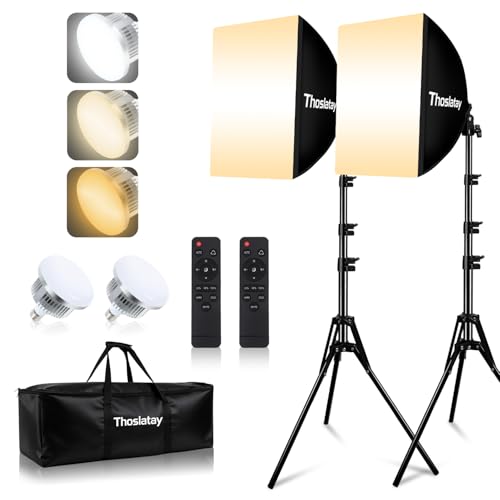
Softbox Lighting Kit 2pack,Thoslatay16x16in Soft Box Upgrade 85W 2700-6400K 100-240V LED Bulbs Professional Photography Lighting Kit, Photo Studio Lights for Photoshoot/Video Recording/Live Streaming
Check price on Amazon
2-Pack Photography Lighting Kit, NiceVeedi 25W LED Video Light Kit, 2900-7000K Dimmable Studio Light with Tripod Stand, 73" Stream Light for Video Recording
Check price on Amazon
NiceVeedi 2-Pack Photography Lighting Kit, 36W Bi-Color Studio Lights 2700-6500K CRI 95+, Dimmable LED Video Light Kit with Remote Control & 72” Tripod Stand, Lighting for Video Recording/Photography
Check price on Amazon
NEEWER 2 Pack Bi Color 660 LED Video Light and Stand Kit, 3200-5600K | (2) CRI 96+ Dimmable Light with U Bracket and Barndoor, (2) 75" Light Stand for Studio Photography, Video Recording (Black)
Check price on Amazon
EMART Photography Lighting Kit with 8.5x10Ft Backdrop Stand,6x9FT Backdrops | Softbox Lighting Kit with 5500K 50W LED, Reflector, Umbrellas&Soft Box, Photo Studio Equipment for Portrait Video Shoot Vlog
Check price on AmazonRelated Camera Guides
Explore more of our comprehensive guides to build your complete photography setup:
Face Cam Guide
Learn how to choose and set up the perfect face cam for streaming, vlogging, and video calls.
Photography Lighting Kits
Compare the best lighting kits for every budget and skill level.
Gimbal Stabilizers
Keep your footage smooth and professional with the right gimbal stabilizer.
Digital Night Vision
Explore night vision technology for low-light photography and surveillance.