
Wildlife Photography Camera: The Complete Guide
Capture the raw beauty of nature with the right gear. Learn how to choose a wildlife photography camera, from autofocus speed to telephoto reach, and get ready for your next adventure.
Explore Top PicksWhy Gear Matters for Wildlife: Wildlife photography is one of the most demanding genres. You need a camera that can track fast-moving subjects, a lens with incredible reach, and a body that survives dust, rain, and extreme temperatures. This guide will walk you through every critical specification.
What Makes a Great Wildlife Photography Camera?
Choosing a wildlife photography camera is about balancing speed, reach, and durability. Unlike portrait or landscape photography, you rarely have control over your subject or the environment. A cheetah won't wait for you to focus manually, and a sudden downpour won't pause for you to pack up. The ideal camera for wildlife must excel in three core areas: autofocus performance, burst rate, and weather sealing. Additionally, the lens you pair with your camera is just as important—often more so—than the camera body itself. For most wildlife shooters, a telephoto lens for wildlife photography is the single most critical investment, as it determines how close you can get to your subject without disturbing it. Whether you're photographing birds in your backyard or embarking on a safari, understanding these fundamentals will help you make an informed decision. If you're also considering a more versatile setup, a superzoom bridge camera can be a fantastic all-in-one option for beginners.
Key Features to Prioritize
⚡ Autofocus Speed & Tracking
Modern mirrorless cameras use AI-based subject detection to lock onto animals' eyes and bodies. Look for a camera with a dedicated animal eye-AF mode and a high number of phase-detection points covering the sensor. This is non-negotiable for birds in flight or running mammals.
📸 Burst Rate & Buffer
Wildlife action happens in fractions of a second. A camera that shoots 10–20 frames per second (fps) with a deep buffer lets you capture the perfect moment—a lion's yawn, a hummingbird's hover—without missing a beat. Consider a high-end camera if your budget allows.
🔭 Telephoto Reach & Crop Factor
Full-frame cameras offer excellent low-light performance, but APS-C and Micro Four Thirds sensors provide a crop factor that effectively multiplies your lens's reach. A 70-300mm lens on an APS-C body behaves like a 105-450mm lens, which is a huge advantage for distant subjects. Explore our guide to the 70-300mm lens for a versatile starting point.
🌧️ Weather Sealing & Durability
Dust, humidity, and rain are constant companions in the field. A weather-sealed body and lens are essential to protect your investment. Look for cameras with magnesium alloy bodies and extensive sealing. A full-frame camera often offers better build quality, but many APS-C models are also rugged.
🌙 Low-Light Performance
Many animals are crepuscular or nocturnal. A sensor with excellent high-ISO performance and minimal noise is crucial for dawn and dusk shoots. Full-frame sensors generally excel here, but recent APS-C sensors are closing the gap.
🔋 Battery Life & Dual Card Slots
You don't want to run out of power in the middle of a safari. Look for cameras with long battery life and the ability to charge via USB-C. Dual card slots provide instant backup, so you never lose a once-in-a-lifetime shot.
Which Camera Type Is Right for You?
There's no single "best" camera for wildlife—it depends on your budget, preferred subjects, and how much weight you're willing to carry. Here's a breakdown of the main options:
- Mirrorless Cameras: The modern standard for wildlife. They offer blazing-fast autofocus, high burst rates, and silent shooting. A mirrorless DSLR hybrid is an excellent choice for those transitioning from older systems. For budget-conscious shooters, an affordable full-frame mirrorless camera can be a game-changer.
- DSLR Cameras: Still incredibly capable, especially for those with existing lens collections. A cheap DSLR camera can be a great entry point, while a professional camera for photography offers unmatched reliability.
- Bridge & Superzoom Cameras: These all-in-one cameras offer incredible zoom ranges without the need to change lenses. They are perfect for travel and beginners. Check out our guide to superzoom bridge cameras and bridge cameras.
Best Wildlife Photography Cameras & Gear
⚠️ AFFILIATE DISCLOSURE: This website contains affiliate links. As an affiliate Associate, we earn from qualifying purchases. If you make a purchase through these links, we may receive a small commission at no additional cost to you. Read our full affiliate policy.

Canon EOS Rebel T7 DSLR Camera Double Zoom Lens Kit | EF-S 18-55mm & EF 75-300mm Lenses, 24.1 Megapixel CMOS (APS-C) Sensor, Full HD Videos, Wi-Fi, Beginner Photographers
Check price on Amazon
Canon EOS Rebel T7 DSLR Camera w/EF-S 18-55mm F/3.5-5.6 Zoom Lens + 420-800mm Super Telephoto Lens + 100S Sling Backpack + 64GB Memory Cards, Professional Photo Bundle (42pc Bundle) (Renewed)
Check price on Amazon
Canon EOS Rebel T7 DSLR Camera EF-S 18-55mm f/3.5-5.6 is II Lens Kit | 24.1 Megapixel CMOS (APS-C) Sensor, Full HD Videos, Built-in Wi-Fi, Beginner Photographers, Digital Camera
Check price on Amazon
Canon EOS Rebel T7 DSLR Camera with 18-55mm Lens & 420-800mm Telephoto Lens, 24.1MP, 64GB SD Card, Slave Flash & Accessory Bundle (Renewed)
Check price on Amazon
True 8K 64MP Digital Camera for Photography with Microphone(Black) | Autofocus & Anti-Shake,16X Zoom,WiFi,Wide-Angle Macro Lens,32GB TF Card,Vlogging Camera for YouTube & Travel
Check price on Amazon
Canon EOS 2000D / Rebel T7 DSLR Camera with EF-S 18-55mm + EF 75-300mm Daul Lens + SanDisk 64GB Memory Card + Tripod + Case + Wideangle Lenses + ZeeTech Accessory Bundle (21pc Bundle) (Renewed)
Check price on Amazon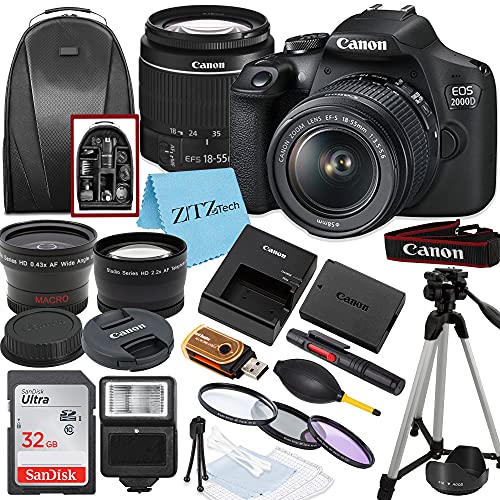
Canon EOS 2000D / Rebel T7 DSLR Camera with EF-S 18-55mm Lens + SanDisk 32GB Card Tripod Case Wideangle Lenses ZeeTech Accessory Bundle (20pc Bundle) (18-55MM, Card) Black (Renewed)
Check price on AmazonEssential Lenses & Accessories
Your camera body is only half the equation. For wildlife, your lens choice is paramount. A telephoto lens for wildlife photography is the most important purchase you'll make. Prime telephoto lenses (like 400mm f/2.8 or 600mm f/4) offer the best image quality and speed, but they are heavy and expensive. Zoom lenses (like 100-400mm or 200-600mm) offer flexibility and are more budget-friendly. If you're just starting, a 70-300mm lens is a versatile and affordable way to get started. Beyond lenses, consider these accessories:
- Sturdy Tripod or Monopod: A camera gimbal stabilizer or a solid tripod is essential for long lenses. A monopod offers mobility and stability for fast-paced shooting.
- Teleconverters: These multiply your lens's focal length (e.g., 1.4x or 2x) at the cost of some light. They are a cost-effective way to get more reach.
- Extra Batteries & Memory Cards: Always carry spares. A micro SD card for security camera is not suitable for wildlife; invest in fast UHS-II cards for your camera.
- Camera Bag: A digital camera case or a dedicated backpack with rain cover is vital for protecting your gear in the field.
Budget Considerations: What to Expect
Wildlife photography can be as expensive as you want it to be. Here's a realistic breakdown of what you can expect to spend:
- Entry-Level ($500–$1,500): A used DSLR or a crop-sensor mirrorless camera with a 70-300mm lens. This is a great way to learn the basics. You might also consider renting camera equipment for a special trip before committing to a purchase.
- Enthusiast ($1,500–$4,000): A modern APS-C mirrorless camera (like a Sony A6700 or Canon R7) paired with a 100-400mm or 150-600mm lens. This setup offers excellent autofocus and reach.
- Professional ($4,000–$12,000+): A full-frame mirrorless camera (like a Sony A1 or Nikon Z9) with a fast prime telephoto lens (e.g., 400mm f/2.8). This is the pinnacle of performance for the most demanding situations.
Remember that a good good camera is an investment. If you're on a tighter budget, a cheap vlogging camera or a small video camera can still capture beautiful wildlife footage, especially for casual use.
Final Thoughts
Choosing the right wildlife photography camera is a journey. Start by defining your budget and the subjects you love most. Prioritize autofocus and lens reach over megapixels. Remember that the best camera is the one you have with you—so don't be afraid to start with a bridge camera or a cheap DSLR camera and upgrade as your skills grow. With patience, practice, and the right gear, you'll be capturing stunning images of the natural world in no time.