
The Complete Guide to 35mm Film Photography
Rediscover the magic of analog. From choosing your first roll to mastering the art of grain, learn everything you need to know about 35mm film.
Explore Film CamerasWhy Shoot 35mm? 35mm film offers a unique aesthetic that digital cannot replicate. It teaches patience, improves your understanding of light, and delivers a timeless, organic look that is highly sought after by enthusiasts and professionals alike.
What Exactly is 35mm Film?
35mm film is a format that has been the standard for photography since the early 20th century. Originally used for motion pictures, it was adapted for still photography, giving birth to the ubiquitous 35mm film camera. The name comes from the width of the film strip itself, which is 35 millimeters. Each frame is typically 36mm x 24mm, offering a classic 3:2 aspect ratio that feels natural and immersive.
Unlike digital sensors, which capture data electronically, film uses a chemical process. Silver halide crystals suspended in gelatin react to light, creating a latent image that is later developed into a negative. This process results in the distinctive "grain" and dynamic range that film enthusiasts adore. If you're tired of the sterile perfection of digital, a vintage camera might be the perfect antidote.
Choosing Your Film Stock: Color vs. Black & White
The film stock you choose dramatically affects the final image. There are two main categories: Color Negative (C-41) and Black & White. Color negative film, like Kodak Portra or Gold, is the most popular for everyday shooting. It offers natural skin tones and forgiving exposure latitude, making it great for beginners. For a more dramatic, artistic look, black and white film, such as Ilford HP5 or Kodak Tri-X, is unmatched.
Film speed, measured in ISO, is another crucial factor. A lower ISO (e.g., 100 or 200) indicates a "slow" film that requires bright light but produces finer grain. A higher ISO (e.g., 400 or 800) is more sensitive to light, allowing you to shoot in dim conditions or at faster shutter speeds, but with more visible grain. Many professionals carry a point and shoot camera loaded with ISO 400 film for everyday versatility.
Types of 35mm Cameras: SLR, Rangefinder, and Point & Shoot
The 35mm format is incredibly versatile, offering several camera types to suit different shooting styles. The Single Lens Reflex (SLR) is the workhorse of film photography. It uses a mirror to show you exactly what the lens sees through the viewfinder. SLRs are known for their interchangeable lenses and manual controls, making them ideal for learning. The DSLR camera is the digital equivalent of this classic design.
Rangefinders are compact, quiet, and often favored for street photography. They don't show you the exact framing through the lens, but their small size makes them discreet. Finally, point-and-shoot cameras are the ultimate in convenience. They are fully automatic, pocket-sized, and perfect for capturing candid moments. While they lack manual control, a good point and shoot camera can produce surprisingly sharp results.
For those interested in the origins of the format, exploring an old camera or visiting a vintage camera store can be a fascinating journey. If you're looking for something more experimental, a pinhole camera can also use 35mm film, though it's a very different experience.
The Developing Process: From Latent Image to Print
Once you've finished a roll, the film must be developed. This involves a series of chemical baths: developer, stop bath, fixer, and wash. You can either send your film to a lab or develop it yourself at home. Developing your own film is a rewarding experience that gives you full control over the final result. After developing, you have a negative. To get a positive image, you can either scan the negative or use an enlarger to make prints in a darkroom.
Scanning is the most common method for digital sharing. A good film scanner, or even a dedicated digital camera setup with a macro lens, can extract incredible detail from a negative. This is where the "film look" is truly revealed—the grain, the halation, and the unique color rendition. For those who prefer a hybrid workflow, a mirrorless camera with a macro lens is an excellent tool for digitizing film.
Recommended 35mm Film Cameras
⚠️ AFFILIATE DISCLOSURE: This website contains affiliate links. As an affiliate Associate, we earn from qualifying purchases. If you make a purchase through these links, we may receive a small commission at no additional cost to you. Read our full affiliate policy.

Canon New EOS Kiss (AKA Rebel G in USA/Canada) SLR AF Film Camera With 35-80mm EF Lens (Renewed)
Check price on Amazon
Vintage Canon AE-1 35mm SLR Camera with 50mm 1:1.8 Lens (Renewed)
Check price on Amazon
KODAK Snapic A1 35mm Film Camera 35mm, Reusable, 2-Zone Focus, Lightweight, Compact (Rhino Grey) (Film & AAA Battery are not Included)
Check price on Amazon
KODAK Snapic A1 35mm Film Camera 35mm, Reusable, 2-Zone Focus, Lightweight, Compact (Ivory White) (Film & AAA Battery are not Included)
Check price on Amazon
KODAK EC35 35mm Film Camera 35mm, Reusable, Focus-Free, Built-in Flash, Slide Cover, Beginner Friendly (Film & AA Battery are not Included) (Single, Avocado Green)
Check price on Amazon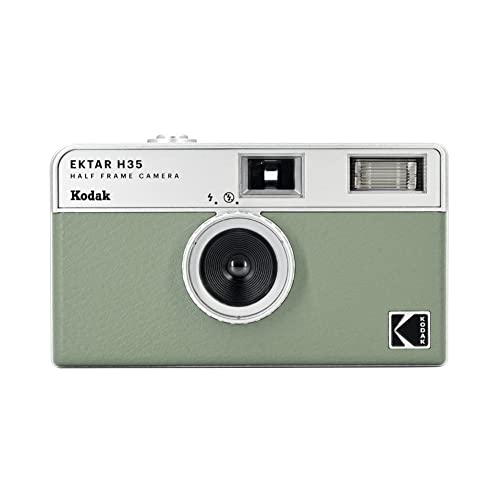
KODAK EKTAR H35 Half Frame Film Camera, 35mm, Reusable, Focus-Free, Lightweight, Easy-to-Use (Sage) (Film & AAA Battery are not Included)
Check price on Amazon
Kodak EKTAR H35 Half Frame Film Camera, 35mm, Reusable, Focus-Free, Lightweight, Easy-to-Use (Black) (Film & AAA Battery are not Included)
Check price on Amazon
PENTAX 17 35mm Film Camera, Half-Frame Format | Captures up to 72 Images per roll , Vertical (Half Frame) Orientation, 25mm F/3.5 Lens, Built-in Flash
Check price on AmazonEssential Tips for Your First Roll of 35mm Film
Shooting film requires a different mindset. Here are a few tips to get you started on the right foot. First, embrace the limitations. With only 24 or 36 exposures per roll, you'll naturally become more deliberate with your composition. This is a fantastic way to improve your photography skills. Second, learn the exposure triangle. Understanding the relationship between aperture, shutter speed, and ISO is crucial, even if your camera has automatic modes.
Third, don't be afraid to experiment. Try different film stocks, push the ISO, and see what happens. The beauty of film is its unpredictability. Finally, keep your gear clean. Dust and scratches are the enemies of film. A simple camera filter can protect your lens, and proper storage is key. If you're looking for a small camera to take everywhere, a compact 35mm point-and-shoot is a great choice. For those who want to capture the world in a different way, a fisheye lens or an anamorphic lens can create unique perspectives.