
600mm Lens: The Ultimate Guide to Super-Telephoto Reach
Unlock the power of extreme focal length. Whether you're capturing distant wildlife, fast-paced sports, or elusive subjects, a 600mm lens brings the impossible within reach. This guide covers everything you need to know before you buy.
Why a 600mm Lens is a Game-Changer
A 600mm lens is not just a piece of glass; it's a passport to a world of photography that is otherwise inaccessible. It allows you to fill the frame with subjects that are hundreds of feet away, from a soaring eagle to a quarterback's throw. For photographers specializing in sports photography or wildlife, this focal length is often considered the gold standard.
However, stepping into the world of super-telephoto lenses is a significant investment. It requires understanding not just the optics, but also the practicalities: weight, stabilization, and the sheer technique needed to get a sharp image. This guide will walk you through every critical aspect, from choosing between a prime and a zoom to selecting the right DSLR lens or mirrorless option for your camera body.
Who Needs a 600mm Lens?
Before you invest, consider if your photography aligns with what this lens excels at. It is a specialized tool, and for the right photographer, it is indispensable.
- Wildlife Photographers: This is the primary user base. A 600mm lens lets you capture candid, frame-filling shots of birds, mammals, and other skittish creatures without disturbing them. It's a cornerstone for anyone serious about top cameras for photography in nature.
- Sports Photographers: From the sidelines of a soccer field to the edge of a racetrack, a 600mm lens isolates the athlete, capturing the emotion and intensity of the moment from a safe distance. It pairs perfectly with a sports photography camera body.
- Aviation and Action Enthusiasts: Capturing planes, extreme sports, or distant landscapes with compressed perspective is another area where this lens shines.
If your interest lies in portraits, landscapes, or street photography, a 600mm lens is likely overkill. You would be better served by a prime lens or a standard zoom like an 18-55mm lens.
Prime vs. Zoom: The 600mm Dilemma
When shopping for a 600mm lens, you'll encounter two main types: fixed focal length (prime) and telephoto zoom lenses. Each has distinct advantages.
600mm Prime Lenses
A fixed 600mm lens is the pinnacle of optical performance. It is designed to do one thing exceptionally well.
Pros
- Superior sharpness and contrast
- Wider maximum aperture (often f/4)
- Faster, more accurate autofocus
- Better build quality and weather sealing
Cons
- Extremely heavy and bulky
- Very high cost ($8,000+)
- No flexibility in framing
- Requires a strong tripod and technique
Telephoto Zoom Lenses (e.g., 150-600mm, 200-600mm)
These lenses offer a range of focal lengths, with 600mm being the long end. They are the more versatile and affordable option.
Pros
- Flexible framing for changing subjects
- More affordable ($1,500 - $3,000)
- Lighter and more portable
- Ideal for travel and unpredictable situations
Cons
- Slightly softer at the long end
- Narrower maximum aperture (f/5.6 - f/6.3)
- Autofocus can be slower
For most enthusiasts, a high-quality zoom like a 150-600mm or 200-600mm offers the best balance of reach, versatility, and value. For professionals who demand the absolute best image quality and speed, a 600mm prime is the ultimate tool.
Key Specs to Look For
Understanding the specifications is crucial for making an informed decision. Here’s a quick reference table:
| Specification | What It Means for You |
|---|---|
| Maximum Aperture | A constant f/4 or f/5.6 is better for low light and faster shutter speeds than a variable f/5.6-6.3. It also gives a brighter viewfinder. |
| Image Stabilization (IS/VR/OS) | Essential for handheld shooting. Modern systems can offer 5+ stops of stabilization, which is invaluable at 600mm. |
| Autofocus Motor | Look for a fast, silent, and accurate system (e.g., USM, SSM, Nano USM). This is critical for tracking moving subjects. |
| Minimum Focus Distance | Determines how close you can get to your subject. Shorter is better for capturing small subjects that are relatively close. |
| Weight & Size | A 600mm prime can weigh 8-10 lbs. A zoom might be 4-6 lbs. Factor in the need for a sturdy camera tripod stand. |
| Mount Compatibility | Ensure it fits your camera. You may need a mirrorless interchangeable lens camera or a full-frame DSLR. |
Other factors like the use of a UV lens filter for protection and a lens hood to reduce flare are also important considerations for any super-telephoto lens.
Mastering the 600mm: Technique & Accessories
Owning a 600mm lens is only half the battle. Using it effectively requires a shift in technique.
Support System
Handholding a 600mm lens is possible with modern stabilization, but for critical sharpness, a tripod or monopod is your best friend. A ball head is often too unstable for this weight; a gimbal head is the professional's choice, allowing for smooth, balanced movement.
Technique
- Long Lens Technique: Rest your left hand on top of the lens barrel for support. Tuck your elbows in. Control your breathing.
- Shutter Speed: Even with stabilization, aim for a shutter speed of at least 1/600s or faster to freeze motion.
- Atmospheric Conditions: Heat haze and air pollution are magnified at 600mm. Shoot early in the morning for the clearest air.
Other useful accessories include a neck strap designed for heavy gear (or a sling), and a rain cover to protect your investment in bad weather. A camera cover can also be helpful for storage.
Recommended 600mm Lenses
⚠️ AFFILIATE DISCLOSURE: This website contains affiliate links. As an affiliate Associate, we earn from qualifying purchases. If you make a purchase through these links, we may receive a small commission at no additional cost to you. Read our full affiliate policy.

Canon RF600/11 is STM Super Telephoto Lens
Check price on Amazon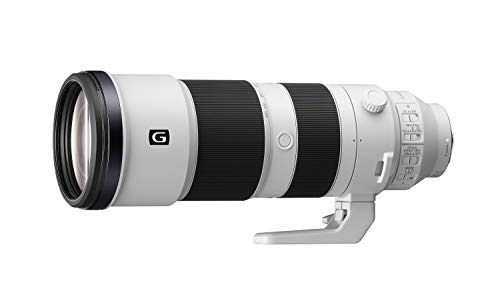
Sony FE 200-600mm f/5.6-6.3 G OSS Super Telephoto Zoom Lens
Check price on Amazon
NIKON NIKKOR Z 180-600mm f/5.6-6.3 VR
Check price on Amazon
Sigma 150-600mm 5-6.3 Contemporary DG OS HSM Lens for Nikon
Check price on Amazon
Sony FE 600mm F6.3 GM OSS | Lightweight 600mm F6.3 G MasterTM reach, built for handheld freedom.
Check price on Amazon
Sony FE 200-600mm F5.6-6.3 G OSS Super Telephoto Zoom Lens (SEL200600G) (Renewed)
Check price on Amazon
Tamron SP 150-600mm F/5-6.3 Di VC USD for Nikon DSLR Cameras (Tamron 6 Year Limited USA Warranty)
Check price on Amazon
NIKON NIKKOR Z 180-600mm f/5.6-6.3 VR (Renewed)
Check price on AmazonFinal Thoughts: Is a 600mm Lens Right for You?
Purchasing a 600mm lens is a commitment to a specific style of photography. It opens up a world of distant subjects but demands a new level of dedication to technique and equipment. If you are passionate about wildlife or sports and are ready to carry the weight (literally and financially), the images you can create are truly rewarding.
For those just starting, a more affordable zoom lens that reaches 600mm is an excellent entry point. For the seasoned professional, a 600mm prime is an investment in unparalleled optical excellence. Whichever path you choose, the ability to reach out and capture the world from a distance is a powerful tool in any photographer's arsenal.