
Beginner Camera with Interchangeable Lenses: Your Complete Guide
Discover the best entry-level mirrorless and DSLR cameras with interchangeable lenses. Learn how to choose your first camera, which lens mount to pick, and how to build a system that grows with your skills.
SEE TOP PICKSWhy an Interchangeable Lens Camera? Unlike a fixed-lens point-and-shoot, an interchangeable lens camera (ILC) lets you swap lenses as your skills grow. Start with a versatile kit lens, then add a fast prime for portraits, a telephoto for wildlife, or a macro for close-ups. This flexibility makes an ILC the smartest long-term investment for any beginner photographer. If you're still deciding between camera types, you might also consider a high-quality point-and-shoot digital camera or a compact camera with interchangeable lens for maximum portability.
Mirrorless vs DSLR: Which Is Right for You?
The two main types of beginner cameras with interchangeable lenses are mirrorless and DSLR. Both offer excellent image quality and lens flexibility, but they differ in size, weight, autofocus technology, and future-proofing. For most beginners today, a mirrorless camera is the better choice thanks to its compact size, advanced autofocus, and the industry's shift toward mirrorless lens mounts. However, DSLRs still offer incredible value on the used market and longer battery life. If you're leaning toward a mirrorless system, our guide to a mirrorless digital camera for beginners breaks down the top options.
Mirrorless Cameras
Lightweight, modern, and packed with the latest autofocus and video features. Perfect for beginners who want a camera that's easy to carry and grows with them.
- Compact and lightweight
- Advanced eye-tracking autofocus
- Excellent video capabilities (4K+)
- Electronic viewfinder (EVF)
- Growing lens ecosystem
DSLR Cameras
Traditional design with an optical viewfinder and superb battery life. Great for beginners on a tight budget or those who prefer a larger grip and legacy lens compatibility.
- Optical viewfinder (OVF)
- Longer battery life
- Extensive used lens market
- Larger, more rugged bodies
- Often cheaper entry points
| Feature | Mirrorless | DSLR |
|---|---|---|
| Size & Weight | Compact & lightweight | Bulkier & heavier |
| Autofocus | Advanced AI-based (eye/animal tracking) | Reliable but less advanced |
| Video Quality | Up to 4K/8K, no crop in most models | Good 4K, often with crop |
| Battery Life | 300–500 shots | 800–1,200 shots |
| Lens Ecosystem | New mounts, growing fast | Vast legacy & used options |
| Price (Body Only) | $500–$1,500 | $400–$1,200 |
What to Look For in a Beginner ILC
When shopping for your first interchangeable lens camera, don't get lost in spec sheets. Focus on the features that actually matter for learning and growth. A camera that feels comfortable in your hands and inspires you to shoot is far more valuable than one with the highest megapixel count. For a broader look at budget-friendly options, check out our guide to a budget-friendly camera for photography.
Sensor Size
APS-C and Micro Four Thirds sensors are ideal for beginners—they offer great image quality, smaller lenses, and lower prices. Full-frame is excellent but costs more and requires larger lenses. If you're curious about a versatile all-rounder, a digital camera for beginner photographer often uses an APS-C sensor.
Lens Mount & Ecosystem
Choose a mount with a healthy future. Sony E-mount, Canon RF-S, Nikon Z, and Fujifilm X are all excellent. Micro Four Thirds (Panasonic/OM System) offers the widest native lens selection for beginners. If you're considering a DSLR path, a DSLR camera for intermediate photographer can be a great next step after you outgrow your first body.
Autofocus System
Look for eye-detection autofocus and reliable tracking. This makes shooting portraits, pets, and kids dramatically easier. Modern mirrorless cameras excel here, especially at the beginner price point.
Video Capabilities
If you plan to vlog or record family videos, ensure the camera offers 4K video, a flip-out screen, and a microphone jack. A small vlogging camera with flip screen is a popular choice for content creators who want portability.
Ergonomics & Controls
Visit a store or watch reviews to see how the camera feels. Dials, grip size, and menu layout matter more than you think. A camera that's comfortable to hold will be used far more often.
Budget & Future Growth
Set a realistic budget that includes the body, a kit lens, a memory card, and a bag. Entry-level ILCs range from $400 to $900 for a kit. Mid-range options with better autofocus and video run $900 to $1,500.
Best Beginner Cameras with Interchangeable Lenses
⚠️ AFFILIATE DISCLOSURE: This website contains affiliate links. As an affiliate Associate, we earn from qualifying purchases. If you make a purchase through these links, we may receive a small commission at no additional cost to you. Read our full affiliate policy.

Canon EOS Rebel T7 DSLR Camera EF-S 18-55mm f/3.5-5.6 is II Lens Kit | 24.1 Megapixel CMOS (APS-C) Sensor, Full HD Videos, Built-in Wi-Fi, Beginner Photographers, Digital Camera
Check price on Amazon
Yatao 6K WiFi Flip Screen Digital Camera, Mic & Fill Light for Photography | Compact Vlogging Camera for YouTube & Beginners, 16X Zoom Dual Lens with 64GB Card, Perfect for Content Creators,Black
Check price on Amazon
NBD 8K Digital Cameras for Photography with 180°Flip Screen, Dual-Lens | WiFi Point and Shoot Camera Kit for Beginners, 16X Zoom, Wide Angle & Marco Lens, Autofocus, 2 Batteries, 32GB Card
Check price on Amazon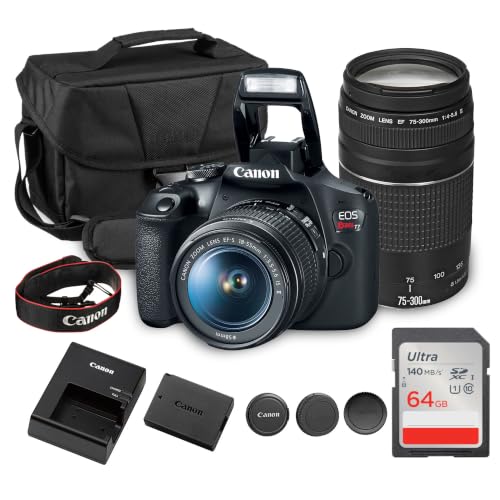
Canon EOS Rebel T7 DSLR Camera with 18-55mm & 75-300mm Double Lens Bundle | For Beginner Photography | 24.1MP APS-C DSLR Camera | Full HD 1080p Video + 64GB Memory Card + Camera Bag (2727C002)
Check price on Amazon
Canon EOS Rebel T7 DSLR Camera with 18-55mm Lens (Black) (Renewed) | 18-55mm
Check price on Amazon
Canon EOS R100 Mirrorless Camera RF-S18-45mm F4.5-6.3 is STM Lens Kit | 24.1 Megapixel CMOS (APS-C) Sensor, 4K Video, Wi-Fi & Bluetooth, Beginner Photographers & Creators, Digital Camera
Check price on Amazon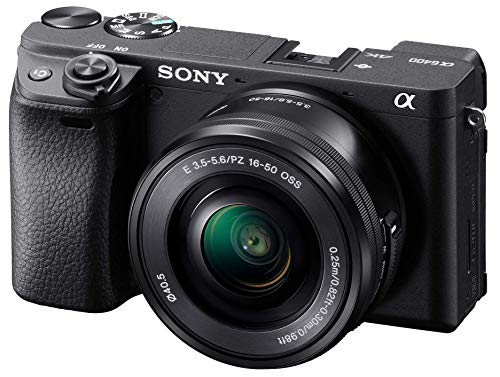
Sony Alpha a6400 Mirrorless Camera: Compact APS-C Interchangeable Lens Digital Camera with Real-Time Eye Auto Focus, 4K Video, Flip Screen & 16-50mm Lens - E Mount Compatible - ILCE-6400L/B, Black
Check price on Amazon
W & O 4K Digital Camera for Photography,180°Flip Screen Kids Digital Camera | 64MP Vlogging Camera for YouTube with SD Card,16X Zoom Autofocus,Point and Shoot digital cameras for Teens Beginner,Black
Check price on AmazonEssential Lenses for Your First Camera
The lens you pair with your camera has a bigger impact on image quality than the camera body. Most beginner cameras come with a versatile kit lens (typically 18-55mm or 15-45mm), which is perfect for learning. As you grow, consider adding a fast prime lens for portraits or low-light shooting, and a telephoto zoom for wildlife or sports. If wildlife photography excites you, our guide to an affordable camera for wildlife photography can help you plan your next upgrade.
Kit Lens (18-55mm f/3.5-5.6)
Comes bundled with most beginner cameras. Covers wide-angle to short telephoto—ideal for landscapes, portraits, and everyday shooting. Lightweight and affordable.
Fast Prime (35mm or 50mm f/1.8)
Perfect for portraits and low-light photography. The wide aperture creates beautiful background blur (bokeh) and lets in more light. Usually costs $150–$350.
Telephoto Zoom (55-200mm or 70-300mm)
Great for wildlife, sports, and travel. Adds reach without breaking the bank. Look for image stabilization to keep shots sharp. Typically $200–$500.
Macro Lens (60mm or 90mm)
For close-up photography of flowers, insects, and small objects. A dedicated macro lens offers 1:1 magnification and stunning detail. Usually $300–$600.
Pros and Cons of Starting with an ILC
✅ Pros
- Interchangeable lenses for any genre
- Superior image quality vs. smartphones
- Manual controls for learning photography
- System grows with your skills
- Excellent video capabilities
- Strong resale value for lenses
❌ Cons
- Larger and heavier than a smartphone
- Higher upfront cost than a point-and-shoot
- Requires learning curve for manual modes
- Lenses can become expensive over time
- Need to carry a bag for extra lenses
- Not as pocketable as a compact camera
Frequently Asked Questions
Is a mirrorless or DSLR better for a beginner?
For most beginners, mirrorless is the better choice. It's lighter, has more advanced autofocus, and the industry is investing heavily in mirrorless systems. That said, a DSLR is still a fantastic option if you're on a tight budget or prefer an optical viewfinder and longer battery life.
How much should I spend on my first interchangeable lens camera?
A solid entry-level kit with a body and lens costs between $400 and $900. If you want better autofocus, 4K video, and a more future-proof system, expect to spend $900 to $1,500. Remember to budget for a memory card, bag, and maybe a spare battery.
Do I need a full-frame camera as a beginner?
No. APS-C and Micro Four Thirds sensors offer excellent image quality and are more affordable, lighter, and paired with smaller lenses. Full-frame is great for low-light and professional work, but it's not necessary to learn photography.
What lens should I buy first after the kit lens?
A fast prime lens like a 35mm or 50mm f/1.8 is the best first upgrade. It teaches you about aperture, depth of field, and low-light shooting, and it dramatically improves portrait photos. If you enjoy a specific genre like a point-and-shoot camera for wildlife photography style, a telephoto zoom might be your next step instead.
Can I use vintage lenses on a beginner camera?
Yes! With inexpensive adapters, you can mount vintage lenses from Canon FD, Nikon F, Pentax K, and M42 mounts onto modern mirrorless cameras. This is a great way to experiment with different focal lengths and optical characters on a budget. However, you'll need to focus manually.
Is a compact camera with interchangeable lens a good alternative?
Absolutely. A compact camera with interchangeable lens (like the Sony a6000 series or Canon M-series) offers the flexibility of swapping lenses in a much smaller body. It's an excellent choice for travel and everyday carry.
Ready to Start Your Photography Journey?
Browse our top recommended beginner cameras with interchangeable lenses and find the perfect match for your budget and creative goals.
VIEW TOP PICKS