
Best Bird Camera Guide: Capture Stunning Avian Moments
Discover the ideal camera setup for bird photography, from backyard birding to wildlife expeditions. Expert recommendations for every budget and skill level.
VIEW TOP PICKSWhy a Dedicated Bird Camera Matters: Bird photography demands speed, reach, and precision. Unlike general-purpose cameras, a bird camera excels at capturing fast-moving subjects at long distances, often in challenging lighting conditions. This guide will help you understand the key features and choose the right gear for your birding adventures.
What Makes a Great Bird Camera?
Bird photography is one of the most rewarding yet demanding genres. Birds are small, fast, and often unpredictable. To capture them in stunning detail, you need a camera that can keep up. The ideal bird camera combines high-speed autofocus, a rapid burst rate, excellent low-light performance, and compatibility with long telephoto lenses. Whether you're photographing a cardinal in your backyard or a kingfisher in the wild, the right gear makes all the difference.
When choosing a bird camera, consider your typical shooting environment. Backyard birders may prioritize a camera with a silent shutter and excellent connectivity, while wildlife photographers need weather-sealed bodies and advanced tracking. For those who want to observe without disturbing, a camera bird feeder offers a unique, close-up perspective. If you're also interested in live streaming, live bird webcams provide an excellent way to share your passion with others.
Key specifications to look for include:
- Autofocus System: Advanced subject detection (bird-eye AF) is a game-changer.
- Burst Rate: At least 10 frames per second (fps) to capture wing positions.
- Buffer Depth: A deep buffer allows longer bursts before slowing down.
- Sensor Resolution: 20-45MP provides flexibility for cropping.
- ISO Performance: Clean images at ISO 3200+ are essential for dawn/dusk shooting.
- Lens Mount: Access to long telephoto lenses (300mm+) is critical.
Recommended Bird Cameras
⚠️ AFFILIATE DISCLOSURE: This website contains affiliate links. As an affiliate Associate, we earn from qualifying purchases. If you make a purchase through these links, we may receive a small commission at no additional cost to you. Read our full affiliate policy.

HEAPETS Bird Feeder with Camera Solar Powered, 2K HD Video, AI Bird ID | Best Gift for Bird Lovers, Instant Arrival Alerts, Easy Setup, Weatherproof Design for Effortless Birdwatching, Red
Check price on Amazon
Kiwibit Solar Powered Smart Bird Feeder with Camera 2 Mini, 4K Live Stream | 8MP Photos, AI Bird Species Identification, Slow-Motion Video, Outdoor Bird Watching Gifts for Bird Lovers
Check price on Amazon
Gyozol Bird Feeder with Camera,WiFi Smart Bird House with Cam Solar Powered | AI Identify,App Notification,Night Vision,2K Live View,Auto Record Video,Outdoor Birdwatching Gifts for Family,Birds Lover
Check price on Amazon
HARYMOR Smart Bird Feeder with Camera - AI Identify Birds Species, Solar Powered Bird House with Cam, 2L Large Capacity, 2K HD Video Live Stream, Instant Arrival Alerts - Green
Check price on Amazon
Cadrali 3K HD Smart Bird Feeder with Camera, 2.4GHz WiFi Solar Powered Smart Feeder, AI Bird Species Identification & Real-Time App Alerts, Chew-Proof & Waterproof for Outdoors
Check price on Amazon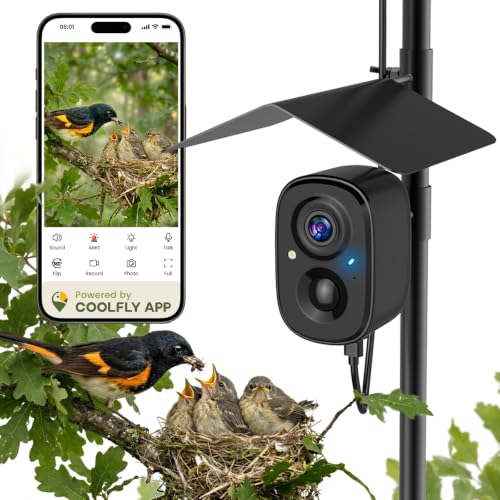
Smart Bird Camera Solar Powered with Pole for Feeder/Bath Birdwatching | 2.5K UHD Video Auto Capture, Free AI Bird Identification, Instant Alerts, Wireless Outdoor Cam, 2.4G, for Mom/Dad/Bird Lovers
Check price on Amazon
HEAPETS Smart Bird Feeder with Camera Solar Powered 2K HD Video,AI Bird ID | Bird Lover Gifts, Easy Setup, Real-Time App Alerts, Weatherproof Design for Effortless Birdwatching, Brown
Check price on Amazon
Fazoxo Bird Feeder with Camera,Birds House Camera,Solar Powered,AI Bird ID | Auto records FHD videos of birds in your backyard,Instant Notifications, Ideal gift for family and bird lovers,Navy Blue
Check price on AmazonTypes of Cameras for Bird Photography
Not all bird cameras are created equal. Your choice depends on your budget, portability needs, and the type of birding you do. Here's a breakdown of the main categories:
DSLR Cameras
Long the standard for wildlife photography, DSLRs offer excellent battery life, a vast lens ecosystem, and reliable performance. They are ideal for photographers who prioritize optical viewfinders and don't mind the bulk.
- Best for: Serious hobbyists and professionals
- Price Range: $1,200–$6,500
- Key Feature: Phase-detect AF through the viewfinder
Mirrorless Cameras
Mirrorless cameras have become the top choice for bird photography. They offer blazing-fast autofocus with AI-driven subject detection, silent shooting, and lighter bodies. The electronic viewfinder provides real-time exposure preview.
- Best for: All levels, especially those wanting cutting-edge AF
- Price Range: $800–$5,000
- Key Feature: Bird-eye AF and high-speed burst
Bridge & Superzoom Cameras
These all-in-one cameras feature built-in superzoom lenses, making them incredibly convenient for backyard birding and travel. While they can't match the image quality of interchangeable-lens systems, they are lightweight and affordable.
- Best for: Beginners and casual birders
- Price Range: $400–$1,200
- Key Feature: 50x+ optical zoom in a single package
Trail & Wildlife Cameras
For capturing birds without human presence, trail cameras are unbeatable. They are weatherproof, motion-activated, and can run for months on batteries. Perfect for monitoring nesting boxes or feeders.
- Best for: Remote monitoring and research
- Price Range: $100–$500
- Key Feature: Motion detection and night vision
Key Features to Look For in a Bird Camera
Understanding the technical specifications will help you make an informed decision. Here are the most critical features for bird photography:
| Feature | Why It Matters | Recommended Spec |
|---|---|---|
| Autofocus System | Birds move erratically; fast, accurate AF is essential. | Bird-eye AF, 400+ AF points |
| Burst Rate | Capture the perfect wing position or takeoff. | 10–30 fps (electronic shutter) |
| Buffer Depth | Allows longer bursts before the camera slows. | 50+ RAW frames |
| Sensor Resolution | More megapixels = more cropping flexibility. | 24–45 MP |
| ISO Performance | Birds are often active in low light. | Clean at ISO 3200–6400 |
| Weather Sealing | Protects your gear in rain, dust, and humidity. | Full weather sealing |
| Lens Mount | Determines access to long telephoto lenses. | Native mount with 300mm+ options |
Choosing the Right Lens for Bird Photography
The lens is just as important as the camera body—often more so. For bird photography, you'll need a telephoto lens with a focal length of at least 300mm (on a full-frame camera). Here are the most common options:
- 100-400mm Zoom: Versatile and portable, great for backyard birding and travel. Pairs well with a teleconverter for extra reach.
- 150-600mm Zoom: The sweet spot for most birders. Offers excellent reach without the premium price of a prime lens.
- 500mm or 600mm Prime: The ultimate choice for professionals. Maximum sharpness and light-gathering, but heavy and expensive.
- 300mm f/4 Prime: A lightweight option that works well with teleconverters. Ideal for hiking and travel.
When using long lenses, a sturdy tripod is essential. A tripod for telephoto lens provides the stability needed for sharp images. For added flexibility, consider a camera harness to support heavy gear during long walks. If you're shooting in bright conditions, a circular PL filter can help manage reflections and enhance color saturation.
Essential Camera Settings for Bird Photography
Once you have your gear, mastering the settings is key. Here's a starting point for different scenarios:
Birds in Flight
- Shutter Speed: 1/2000s or faster
- Aperture: f/5.6–f/8
- ISO: Auto (max 6400)
- Drive Mode: High-speed burst
- AF Mode: Continuous with subject tracking
Perched Birds
- Shutter Speed: 1/500s–1/1000s
- Aperture: f/4–f/5.6 for shallow depth of field
- ISO: 400–1600
- Drive Mode: Low-speed burst
- AF Mode: Single-point or bird-eye AF
Backyard Birding
- Shutter Speed: 1/250s–1/500s
- Aperture: f/5.6–f/8
- ISO: 200–800
- Drive Mode: Single or low-speed burst
- AF Mode: Single-point AF
Low-Light Conditions
- Shutter Speed: 1/500s minimum
- Aperture: Widest available (f/4 or f/2.8)
- ISO: 3200–12800 (use noise reduction)
- Drive Mode: Low-speed burst
- AF Mode: Single-point AF
Bird Camera Recommendations by Budget
Bird photography can be as affordable or as expensive as you make it. Here are our top recommendations for different budget levels:
Entry-Level ($500–$1,200)
Perfect for beginners and backyard birders. These cameras offer excellent value and can produce stunning images with practice.
- Best Option: APS-C mirrorless or superzoom
- Lens: 70-300mm or 100-400mm
- Key Features: Good AF, 8+ fps, 24MP
Mid-Range ($1,200–$3,000)
The sweet spot for serious hobbyists. These cameras offer advanced AF, better low-light performance, and faster burst rates.
- Best Option: Advanced APS-C or entry full-frame
- Lens: 150-600mm or 100-400mm
- Key Features: Bird-eye AF, 15+ fps, 30MP
Professional ($3,000–$8,000+)
The ultimate tools for wildlife photographers. These cameras deliver uncompromising performance in any condition.
- Best Option: Pro full-frame mirrorless
- Lens: 500mm or 600mm prime
- Key Features: 30+ fps, 45MP, weather-sealed
DSLR vs. Mirrorless for Bird Photography
The debate between DSLR and mirrorless is particularly relevant for bird photography. Here's a balanced look at the pros and cons of each:
Mirrorless Pros
- ✓ Advanced AI subject detection
- ✓ Silent shooting (no mirror slap)
- ✓ Real-time exposure preview
- ✓ Lighter and more compact
- ✓ Faster burst rates (20-30+ fps)
Mirrorless Cons
- ✗ Shorter battery life
- ✗ EVF lag in some models
- ✗ Limited native lens selection (improving)
DSLR Pros
- ✓ Longer battery life
- ✓ Vast used lens market
- ✓ Optical viewfinder (no lag)
- ✓ Proven reliability
DSLR Cons
- ✗ Heavier and bulkier
- ✗ Louder shutter
- ✗ Less advanced AF tracking
- ✗ Limited future development
Essential Accessories for Bird Photography
Beyond the camera and lens, a few key accessories can dramatically improve your bird photography experience:
- Sturdy Tripod: A carbon fiber tripod offers the best combination of stability and lightness. For heavy lenses, consider a survey tripod for maximum support.
- Camera Bag: A camera backpack for travel protects your gear and keeps it organized. For quick access, a camera sling bag is ideal.
- Extra Batteries: Cold weather drains batteries quickly. Always carry spares.
- Memory Cards: Fast UHS-II or CFexpress cards are essential for high-speed burst shooting.
- Lens Filters: A circular polarizing filter reduces glare and enhances colors. A camera lens filter protects your expensive glass.
- Cleaning Kit: A camera sensor cleaning kit keeps your images spot-free.
Tips for Beginner Bird Photographers
Getting started in bird photography can be overwhelming. Here are some practical tips to accelerate your learning:
- Start in Your Backyard: Set up a feeder and practice on common birds. They are predictable and allow you to refine your technique.
- Learn Your Camera: Master back-button focus, custom modes, and exposure compensation before heading into the field.
- Understand Bird Behavior: Learn the habits of your local species. Knowing when and where they'll appear is half the battle.
- Patience is Key: The best bird photographers spend hours waiting for the perfect moment. Don't rush.
- Practice Panning: For birds in flight, smooth panning is essential. Start with larger, slower birds like herons or geese.
- Use a Blind: A photography blind or even a simple tent can help you get closer without disturbing the birds.
- Join a Community: Connect with local birding groups or online forums to learn from experienced photographers.
For those interested in capturing birds without being present, a camera bird feeder or live bird webcam can provide endless entertainment and unique photo opportunities. If you're also interested in other wildlife, a wildlife trail camera is a great companion for your bird camera setup.
Final Thoughts: Choosing Your Bird Camera
Choosing the best bird camera is a personal decision that depends on your budget, experience level, and the type of bird photography you enjoy most. Whether you're capturing chickadees in your backyard or tracking eagles in the wild, the right gear will help you create images you'll treasure for a lifetime.
Remember that the camera is just a tool—your skills, patience, and understanding of birds will ultimately determine the quality of your photographs. Start with what you can afford, practice consistently, and upgrade as your needs evolve. The world of bird photography is endlessly rewarding, and with the right bird camera, you'll be amazed at what you can capture.
For more guidance on building your photography kit, explore our guides on camera systems, camera travel bags, and camera care and maintenance. Happy birding!