
Camera Monitor Guide: See Every Detail Clearly
Discover the best on-camera monitors for video production, photography, and field work. Learn how to choose the right external monitor to elevate your creative workflow.
EXPLORE TOP MONITORSWhy a Camera Monitor Matters: A high-quality external monitor transforms your shooting experience. Whether you're capturing cinematic video, checking critical focus, or framing the perfect shot, an on-camera monitor gives you the visibility and control you need to produce professional-grade content. From budget-friendly options to advanced field monitors, choosing the right one is essential for any serious creator.
Recommended Camera Monitors
⚠️ AFFILIATE DISCLOSURE: This website contains affiliate links. As an affiliate Associate, we earn from qualifying purchases. If you make a purchase through these links, we may receive a small commission at no additional cost to you. Read our full affiliate policy.

NEEWER F700 7" Camera Field Monitor, 2000nit HD 1920x1080 Touch Screen | IPS, 3D LUT, 4K HDMI Loop in/Out, Peak Focus DSLR Video Assist HDR Waveform, Cold Shoe Mount, 2 Batteries NP-F750 & Cable
Check price on Amazon
FEELWORLD S55 V3 6" 500nit 1920×1080 IPS Screen Field DSLR Camera Monitor | with F550 Battery and Bag, 4K HDMI In Out, 3D LUT, Waveform Focus Assist, for Beginner Videographer Filmmaker Video Shooting
Check price on Amazon
FEELWORLD F5 Prox 5.5" 1600nit Touch Field DSLR Camera Monitor | with F750 Battery Bag, 4K HDMI In Out, 3D LUT HDR Waveform Focus, for Profession Videographer Outdoor, F970 External Kit
Check price on Amazon
VILTROX DC-550 Touch Screen DSLR Camera Field Monitor 1200 Nits High-Bright 5.5 inch DSLR Camera Monitor with Sunshade Hood/Battery 3D LUT HDR 4K HDMI in and Out Exposure Focus Assist Waveform Monitor
Check price on Amazon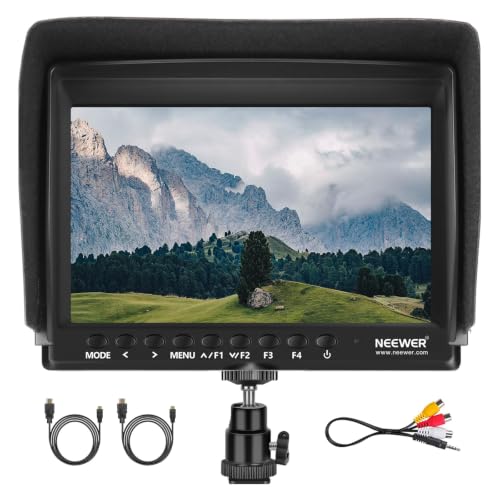
NEEWER F100 7 inch Camera Field Monitor Updated Version, 450nit HD | Video Assist IPS 1280x800, HDMI 1080p, Peak Focus Histogram, Sunshade, for DSLRs Stabilizer Filmmaking Rig, NO Battery
Check price on Amazon
Portkeys HD7H 1000nit DSLR Camera Field Monitor 7 Inch 1280x720 IPS Camera Monitor Support 4K30p HDMI Input with Top Shortcut Keys and Sunshade
Check price on Amazon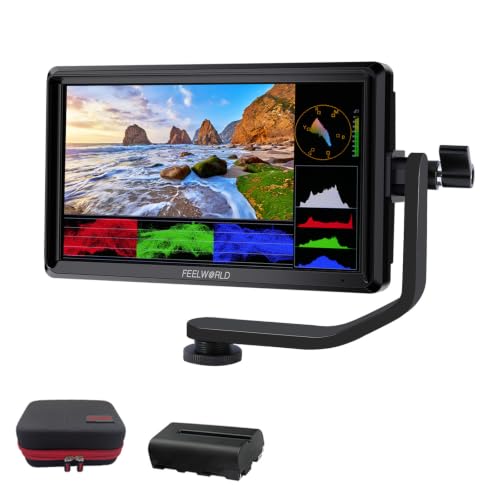
FEELWORLD S55 V3 6" 4K HDMI DSLR Field Monitor Battery Carry Case Bundle | Support 3D LUT Waveform,Ease of use,Compact size light weight,help photographers exporsure and monitor accurately
Check price on Amazon
Atomos Shinobi II 5.2" HDMI Camera Monitor with HDR Touchscreen Display | Lightweight Monitor for Photography with Battery, Charger and Camera Hot Shoe Mount Advanced Bundle Set
Check price on AmazonWhat Is a Camera Monitor and Why You Need One
A camera monitor is an external display that mounts on top of your camera or rig, providing a larger, brighter, and more detailed view of what you're shooting. Unlike the small built-in LCD screen on most cameras, an external monitor offers a significantly larger viewing area, making it easier to check focus, exposure, and composition—especially in challenging lighting conditions. For videographers and photographers who demand precision, a dedicated monitor is not just a luxury; it's a necessity.
One of the biggest advantages of using an external monitor is the ability to see critical details that are often missed on a small screen. When you're shooting in 4K or higher resolutions, the fine details matter. A monitor with camera functionality or a standalone field monitor allows you to zoom in and verify that your subject is perfectly in focus. This is particularly important for interviews, product photography, and any scenario where focus accuracy is non-negotiable.
Beyond focus, an external monitor gives you access to professional tools like waveforms, vectorscopes, false color, and peaking. These tools help you nail exposure and color balance before you even hit record. If you're serious about video production, investing in a quality monitor will pay dividends in post-production, saving you hours of correction work. For those just starting out, pairing a monitor with a beginner photography camera can accelerate your learning curve by providing immediate visual feedback.
Types of Camera Monitors: Which One Is Right for You?
On-Camera Field Monitors
The most common type for videographers and photographers. These mount directly to your camera's hot shoe or a rig and typically range from 5 to 7 inches. They are lightweight, battery-powered, and designed for portability.
- Best for: Run-and-gun shooting, interviews, vlogging
- Size range: 5" to 7"
- Price range: $150–$800
Director's Monitors
Larger monitors (typically 7 to 10 inches) designed for directors and focus pullers. They offer higher brightness, better color accuracy, and more professional connectivity options.
- Best for: Film sets, multi-camera productions
- Size range: 7" to 10"
- Price range: $500–$2,500
Wireless Video Monitors
These transmit video signal wirelessly from your camera to the monitor, eliminating cables. Ideal for gimbal work, drone operation, and situations where cable management is difficult.
- Best for: Gimbal work, live events, drone filming
- Size range: 5" to 7"
- Price range: $300–$1,500
Rack-Mounted Studio Monitors
Designed for studio environments, these monitors are typically larger (17" to 24") and offer exceptional color accuracy and connectivity. They are not portable but deliver the highest level of image quality.
- Best for: Studio production, color grading
- Size range: 17" to 24"
- Price range: $1,000–$5,000
Key Features to Consider When Buying a Camera Monitor
Before you purchase a camera monitor, it's important to understand the features that matter most. Not all monitors are created equal, and the right choice depends on your specific workflow. Here are the critical factors to evaluate:
- Resolution: Look for at least 1920x1080 (Full HD). 4K monitors are available but often overkill for on-camera use. Higher resolution means sharper focus checking.
- Brightness: Measured in nits. For outdoor shooting, you'll want at least 1000 nits. Indoor shooting can get by with 300–500 nits.
- Color Accuracy: Look for monitors that cover 100% of the Rec.709 color space. This ensures accurate color representation for video work.
- Inputs: HDMI is standard. SDI is preferred for professional workflows. Some monitors offer both.
- Power Options: Most monitors use Sony L-series or Canon LP-E6 batteries. Some offer DC input or USB-C power delivery.
- Weight: If you're mounting on a gimbal or handheld rig, weight matters. Look for monitors under 1 lb (450g) for mobile setups.
- Touchscreen: Touchscreen interfaces make navigating menus and using focus assist tools much faster and more intuitive.
- Monitoring Tools: Waveform, vectorscope, false color, peaking, zebras, and histogram are essential for professional work.
When selecting a monitor, consider how it will integrate with your existing gear. For example, if you're using a video recorder camera, you'll want a monitor that supports the same video formats and frame rates. If you're working with a professional DSLR camera, ensure the monitor's HDMI output matches your camera's capabilities. Additionally, a hot shoe mount or a magic arm may be needed to secure the monitor to your rig.
Camera Monitor Comparison: Key Specs at a Glance
| Feature | Budget Monitors | Mid-Range Monitors | Professional Monitors |
|---|---|---|---|
| Price Range | $150–$350 | $350–$800 | $800–$2,500+ |
| Resolution | 1280x720 to 1920x1080 | 1920x1080 | 1920x1080 to 4K |
| Brightness | 300–500 nits | 500–1000 nits | 1000–3000 nits |
| Color Accuracy | 70–90% Rec.709 | 90–100% Rec.709 | 100% Rec.709 + DCI-P3 |
| Inputs | HDMI only | HDMI + SDI (some) | HDMI + SDI + more |
| Monitoring Tools | Basic (peaking, zebras) | Advanced (waveform, vectorscope) | Comprehensive (all tools) |
| Build Quality | Plastic | Aluminum alloy | Rugged aluminum/magnesium |
How to Choose the Best Camera Monitor for Your Needs
Choosing the right camera monitor comes down to understanding your specific use case. A monitor that works perfectly for a wedding videographer might not be ideal for a landscape photographer. Here's a breakdown to help you decide:
For Videographers & Filmmakers
Prioritize color accuracy, monitoring tools, and brightness. You'll want a monitor that can display accurate colors for grading and has tools like waveforms and false color for exposure.
- Must-have: 1000+ nits, 100% Rec.709, waveform, false color
- Recommended size: 5" to 7"
- Budget: $300–$800
For Photographers
Focus on resolution and color accuracy. Photographers often use monitors for tethered shooting and client review, so a larger screen with excellent color reproduction is key.
- Must-have: High resolution, accurate colors, touchscreen
- Recommended size: 7" to 10"
- Budget: $200–$600
For Content Creators & Vloggers
Portability and ease of use are paramount. Look for lightweight monitors with simple interfaces and reliable battery life. A flip-screen design is a bonus.
- Must-have: Lightweight, long battery life, easy mounting
- Recommended size: 5"
- Budget: $150–$400
For Professional Productions
Reliability, connectivity, and advanced features are essential. You'll need SDI inputs, rugged build quality, and comprehensive monitoring tools for on-set use.
- Must-have: SDI, 1000+ nits, advanced tools, rugged build
- Recommended size: 7" to 10"
- Budget: $800–$2,500
Setting Up Your Camera Monitor for Optimal Performance
Once you've purchased your monitor, proper setup is crucial to get the most out of it. Start by calibrating the monitor's brightness and contrast to match your shooting environment. Most monitors come with preset color modes; choose the one that best matches your camera's output. If you're using a camera monitor for the first time, take time to explore its menu system and customize the function buttons to your liking.
Mounting your monitor securely is essential. A magic arm or a dedicated monitor mount will keep your screen stable and prevent accidental drops. If you're using a monopod for camera work, consider a monitor with a quick-release plate for easy setup and teardown. For studio environments, a telescope tripod or a sturdy light stand can serve as a stable monitor mount.
Power management is another consideration. Most monitors use standard camera batteries, so you can share power sources with your camera. However, if you're planning long shooting days, invest in multiple batteries or a DC power adapter. Some monitors support USB-C power delivery, which can be convenient if you're already carrying a power bank for other devices.
Common Mistakes to Avoid When Buying a Camera Monitor
- Ignoring brightness: A monitor that looks great indoors may be unusable outdoors. Always check the nit rating.
- Overlooking weight: A heavy monitor can throw off the balance of your rig, especially on gimbals.
- Skipping color calibration: Even the best monitors need calibration to match your camera's color science.
- Choosing the wrong size: Bigger isn't always better. A monitor that's too large can be cumbersome and distracting.
- Not checking compatibility: Ensure your monitor supports your camera's video output format and resolution.
- Forgetting about power: Budget for extra batteries or a power solution from the start.
Another common mistake is underestimating the importance of build quality. A cheaply made monitor may fail at the worst possible moment. Look for monitors with aluminum or magnesium alloy bodies, especially if you'll be shooting in challenging environments. If you're working with a camera without wifi, make sure your monitor doesn't rely on wireless connectivity for basic functions.
Ready to Elevate Your Production Quality?
Browse our curated selection of top-rated camera monitors and find the perfect match for your workflow.
VIEW RECOMMENDED MONITORSRelated Camera Guides
Complete Guide to Camera Accessories
From magic arms to hot shoe mounts, discover the essential accessories that complete your camera setup.
Read More →How to Choose a Video Recorder Camera
Learn what to look for in a video recorder camera and how to pair it with the right monitor for professional results.
Read More →Monitor with Camera: All-in-One Solutions
Explore monitor with camera options that combine display and capture functionality in a single device.
Read More →