
Large Format Camera: The Ultimate Guide to Analog Mastery
Discover the unparalleled detail, perspective control, and artistic satisfaction of large format photography. From 4x5 to 8x10, learn how to choose and use these magnificent cameras.
Start ExploringWhat is a Large Format Camera?
A large format camera is a type of camera that uses sheet film that is 4x5 inches or larger. Unlike roll film cameras, which use 35mm or 120/220 film, large format cameras expose individual sheets of film, one at a time. This format is renowned for its exceptional image quality, incredible detail, and the ability to control perspective and focus through camera movements.
Large format photography is often considered the pinnacle of analog photography. It is a deliberate, methodical process that forces photographers to slow down, think carefully about composition, and master the technical aspects of exposure and development. The result is a negative or transparency with stunning resolution and tonal range that is difficult to match with smaller formats.
While digital cameras have become the norm for most photographers, large format remains popular among fine art photographers, landscape artists, and those who appreciate the tactile, hands-on nature of analog photography. The format's unique characteristics—including its ability to tilt and shift the lens plane—make it indispensable for architectural photography and any situation requiring precise control over perspective and depth of field.
A Brief History of Large Format Photography
The history of large format cameras dates back to the earliest days of photography. The first practical photographic process, the daguerreotype, introduced in 1839, used silver-plated copper plates that were typically around 6.5 x 8.5 inches—effectively a large format size. Throughout the 19th and early 20th centuries, large format cameras were the standard for both professional and amateur photographers.
The introduction of roll film in the late 1880s, pioneered by George Eastman and Kodak, revolutionized photography by making it more portable and accessible. This led to the development of smaller formats like 35mm, which eventually became the dominant format for consumer and professional photography. However, large format cameras never disappeared entirely. They remained the tool of choice for commercial photographers, especially in advertising and architecture, where image quality and perspective control were paramount.
Today, large format photography has experienced a resurgence among artists and enthusiasts who value its unique aesthetic and the contemplative approach it demands. The format's enduring appeal lies in its ability to produce images with incredible depth, sharpness, and a distinctive "look" that is difficult to replicate digitally. For those interested in exploring other classic formats, the medium format camera offers a middle ground between large format and smaller systems, while the 35mm camera provides a more portable and versatile option.
Types of Large Format Cameras
There are two primary types of large format cameras: view cameras and field cameras. Each has its own advantages and disadvantages, and the choice between them depends on your shooting style and needs.
View Cameras (Monorail Cameras)
View cameras, also known as monorail cameras, are the most versatile type of large format camera. They consist of a front standard (which holds the lens) and a rear standard (which holds the film), both mounted on a long rail or monorail. This design allows for a wide range of movements, including tilts, swings, shifts, and rises, giving the photographer precise control over perspective and focus.
View cameras are typically used in studio settings or for architectural photography, where their extensive movements are essential. However, they are bulkier and heavier than field cameras, making them less suitable for hiking or travel. Popular brands include Sinar, Linhof, and Toyo.
Field Cameras (Folding Cameras)
Field cameras are designed for portability. They fold into a compact box shape, making them easy to transport. While they offer fewer movements than view cameras, they still provide enough control for landscape and outdoor photography. Field cameras are typically made of wood or lightweight metal and are prized for their craftsmanship and durability.
Famous field camera brands include Chamonix, Wista, and Tachihara. These cameras are ideal for photographers who want to explore the great outdoors while still enjoying the benefits of large format photography.
💡 Pro Tip: If you're just starting with large format photography, a field camera is often the better choice due to its portability and ease of setup. As you become more experienced, you may want to add a view camera for studio work or situations requiring extensive movements.
Film Formats and Sizes
Large format cameras use sheet film, which is available in a variety of sizes. The most common sizes are 4x5, 5x7, and 8x10 inches. Each size offers different benefits in terms of image quality, portability, and cost.
| Film Size | Image Area | Best For | Portability | Film Cost (per sheet) |
|---|---|---|---|---|
| 4x5 inches | ~3.75 x 4.75 in | General use, landscapes, portraits | High | $2–$4 |
| 5x7 inches | ~4.75 x 6.75 in | Landscapes, architectural | Medium | $3–$6 |
| 8x10 inches | ~7.75 x 9.75 in | Fine art, contact printing | Low | $6–$12 |
| 11x14 inches | ~10.75 x 13.75 in | Ultra-large fine art | Very Low | $15–$25 |
For most beginners, 4x5 is the recommended starting point. It offers an excellent balance of image quality, film availability, and portability. The cameras and lenses are also more affordable and easier to find than larger formats. For those interested in alternative film types, the 620 film format is a vintage roll film option that can sometimes be adapted for use in older cameras, though it is not a large format size.
Understanding Camera Movements
One of the most powerful features of large format cameras is their ability to perform movements. These movements allow you to control perspective, focus, and depth of field in ways that are impossible with smaller cameras. There are two main types of movements: front movements and rear movements.
Front Movements (Lens Plane)
- Tilt: Tilting the lens forward or backward changes the plane of focus. This is useful for keeping foreground and background sharp simultaneously (Scheimpflug principle).
- Swing: Swinging the lens left or right changes the plane of focus horizontally. Useful for photographing subjects that are not parallel to the film plane.
- Shift: Moving the lens left or right (or up and down) allows you to capture a wider view without moving the camera, useful for architectural photography.
- Rise/Fall: Moving the lens up or down allows you to include more of the foreground or background without tilting the camera.
Rear Movements (Film Plane)
- Rear Tilt: Tilting the film plane changes the shape of the subject. Useful for correcting or exaggerating perspective.
- Rear Swing: Swinging the film plane changes the horizontal perspective. Useful for correcting converging lines.
- Rear Shift: Moving the film plane left or right allows you to crop the image without moving the camera.
Mastering these movements takes time and practice, but they are what make large format photography so rewarding. For those who enjoy the technical aspects of photography, the rangefinder camera offers a different kind of precision, focusing on composition and timing rather than movements.
Choosing Lenses for Large Format Cameras
Large format lenses are different from those used on smaller cameras. They are typically mounted on lens boards and do not have built-in shutters (the shutter is usually in the lens or a separate unit). When choosing a lens, consider the following factors:
- Focal Length: For 4x5, a "normal" lens is around 150mm. Wide-angle lenses are 90mm or less, and telephoto lenses are 210mm or more.
- Image Circle: The image circle must be large enough to cover the film size and allow for movements. Lenses with larger image circles are more versatile but often larger and more expensive.
- Maximum Aperture: Large format lenses typically have maximum apertures between f/5.6 and f/9. Smaller apertures (f/22, f/32, f/45) are common for achieving maximum depth of field.
- Shutter Type: Most large format lenses use a leaf shutter (e.g., Copal) built into the lens. Some use a separate shutter (e.g., Sinar DB) or a focal plane shutter in the camera body.
Popular large format lens brands include Schneider, Rodenstock, Nikkor, and Fujinon. For those interested in exploring other camera systems, the pro camera market offers a range of options, including high-end digital and film cameras, while the cinema camera is designed for motion picture production.
Essential Accessories for Large Format Photography
Large format photography requires a range of accessories to ensure successful shooting. Here are the essentials:
- Tripod: A sturdy tripod is non-negotiable. Large format cameras are heavy and require a stable platform. Look for a tripod with a large, flat head (e.g., a 3-way pan-tilt head) that can support the weight of your camera.
- Film Holders: These are used to hold the sheet film. Each holder typically holds two sheets of film. You'll need several holders for a day of shooting.
- Dark Cloth: Used to block light when focusing on the ground glass. A dark cloth is essential for composing and focusing in bright conditions.
- Loupe: A high-quality loupe (e.g., 4x–8x) is used to check focus on the ground glass. Critical focus is essential in large format.
- Light Meter: While some photographers use their phone or a digital camera as a meter, a dedicated light meter (e.g., Sekonic) is more accurate and reliable.
- Changing Bag or Tent: Used for loading and unloading film holders in the field, away from a darkroom.
- Lens Cleaning Kit: Keep your lenses clean with a blower, brush, and microfiber cloth. For sensor cleaning (if using a digital back), refer to our sensor clean guide.
For those who also shoot digital, a camera hot shoe can be useful for mounting accessories like flash or a microphone on smaller cameras, but large format cameras typically do not have a hot shoe.
Large Format vs. Medium Format vs. 35mm
Understanding how large format compares to other film formats can help you decide if it's right for you. Here's a quick comparison:
| Feature | Large Format (4x5) | Medium Format (6x6) | 35mm |
|---|---|---|---|
| Image Quality | Exceptional | Excellent | Good |
| Portability | Low | Medium | High |
| Cost per Shot | $2–$4 | $0.50–$1.50 | $0.10–$0.50 |
| Camera Movements | Extensive | Limited | None |
| Learning Curve | Steep | Moderate | Low |
While large format offers the highest image quality and the most control, it is also the most demanding in terms of time, cost, and effort. For those who want a more portable film experience, a point and shoot camera or a small camera for recording might be more practical. The CCD camera is another option for those interested in the unique look of early digital sensors.
How to Choose Your First Large Format Camera
When buying your first large format camera, consider the following factors:
- Format: 4x5 is the best starting point for most people. It offers a good balance of quality, portability, and affordability.
- Type: A field camera is more portable and easier to use in the field. A view camera offers more movements but is heavier and bulkier.
- Condition: Used cameras are common and can be a great value. Check the bellows for light leaks, the ground glass for cracks, and the movements for smooth operation.
- Lens: A 150mm f/5.6 lens is a great all-around choice for 4x5. Look for a lens with a reliable shutter (e.g., Copal) and a large enough image circle for movements.
- Accessories: Budget for film holders, a dark cloth, a loupe, and a sturdy tripod.
For those who prefer the convenience of digital but want the large format experience, a medium format digital camera or a high-resolution mirrorless camera might be a better fit. However, nothing quite matches the tactile, deliberate process of shooting with a true large format camera. If you're looking for a budget-friendly film option, a cheap video camera or a digital camera for sale might be more accessible, but they won't offer the same level of control or image quality.
Frequently Asked Questions
Is large format photography still relevant today?
Yes, absolutely. While digital photography dominates the market, large format photography remains relevant for fine art, archival work, and photographers who value the unique aesthetic and process. The incredible detail and tonal range of large format film are still unmatched by most digital cameras.
How much does a large format camera cost?
Entry-level used 4x5 cameras can be found for $300–$800. A complete setup with a lens, film holders, and accessories typically costs $800–$2,500. High-end 8x10 systems can cost $2,500+.
Can I use a digital back on a large format camera?
Yes, some large format cameras can be adapted to use digital backs. However, this is an expensive option, and the digital back must be matched to the camera's movements and image circle. For most people, a dedicated medium format digital camera is a more practical choice.
Where can I buy film for large format cameras?
Film is available from specialty retailers like B&H Photo, Adorama, and Freestyle Photographic. Popular brands include Ilford, Kodak, and Fujifilm. You can also find film on online marketplaces, but be cautious about expired or improperly stored film.
What is the best large format camera for beginners?
A 4x5 field camera from a reputable brand like Chamonix, Wista, or Tachihara is an excellent choice for beginners. These cameras are relatively portable, easy to set up, and offer enough movements for most types of photography. Pair it with a 150mm lens and a sturdy tripod, and you're ready to start.
Ready to Explore Large Format Photography?
Whether you're a seasoned film photographer or a digital shooter looking to try something new, large format photography offers a rewarding and enriching experience. Browse our recommended cameras and gear below to get started on your journey.
View Recommended GearRecommended Large Format Cameras & Gear
⚠️ AFFILIATE DISCLOSURE: This website contains affiliate links. As an affiliate Associate, we earn from qualifying purchases. If you make a purchase through these links, we may receive a small commission at no additional cost to you. Read our full affiliate policy.

Intrepid Camera 4x5 View Camera (Black Edition)
Check price on Amazon
VIISAN Large Format Book & Document Scanner, Capture Size A2/A3, 26MP USB Document Camera with Auto-Flatten, Fingerprint Removal Technologies, Multi-Language OCR, Compatible with Windows & macOS
Check price on Amazon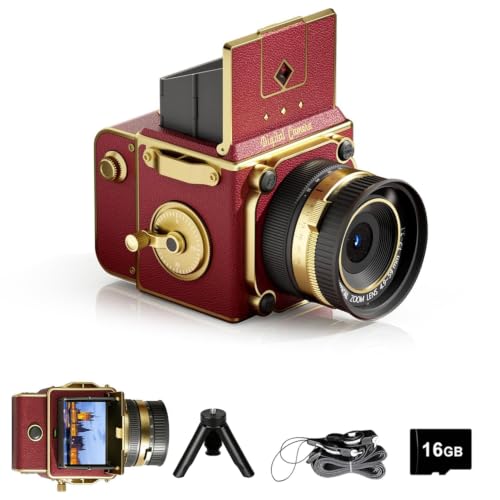
EJXHKNF Vintage Digital Camera, 64MP 2.7K Mini Vintage Camera with Autofocus, 2" IPS Waist-Level Screen, 16GB TF Card, 16X Zoom Retro Point and Shoot Camera for Beginners, Red Vintage Decor
Check price on Amazon
Hasselblad X2D 100C 100MP Medium Format Mirrorless Camera
Check price on Amazon
Photography With Large-Format Cameras (Kodak publication)
Check price on Amazon
Fujifilm GFX 100S Body - Black
Check price on Amazon