
Solar Security Camera with Motion Sensor: The Ultimate Wire-Free Monitoring Solution
Discover how solar-powered cameras with intelligent motion detection deliver 24/7 security without wiring, monthly fees, or frequent battery changes.
SEE RECOMMENDED MODELSWhy go solar? A solar security camera with a motion sensor combines the freedom of wireless installation with the reliability of continuous solar charging. You get round-the-clock surveillance, instant alerts when movement is detected, and zero dependence on power outlets or Wi-Fi in many cases. This guide breaks down everything you need to know before choosing one.
What You'll Learn in This Guide
How Solar Security Cameras with Motion Sensors Work
A solar security camera with a motion sensor operates on a simple but powerful principle. The camera's built-in solar panel continuously converts sunlight into electricity, which charges an internal rechargeable battery. This battery powers the camera, the motion sensor, and the wireless communication module. When the passive infrared (PIR) sensor detects heat signatures from moving objects—people, animals, or vehicles—the camera instantly wakes from its low-power sleep mode, begins recording, and sends a push notification to your smartphone.
The beauty of this system is its self-sufficiency. Unlike traditional battery-powered cameras that require periodic manual recharging, a solar model can theoretically run indefinitely as long as it receives adequate sunlight. This makes it ideal for locations where running electrical wiring is impractical or expensive, such as remote gates, barns, or construction sites.
However, not all solar cameras are equally independent. Some models still rely on your home Wi-Fi network to transmit video, while others include a built-in cellular module for true off-grid operation. If you need a solution that works far from any network infrastructure, look for a security camera with built-in cellular service. For areas with unreliable Wi-Fi, a wireless camera that works without Wi-Fi offers greater flexibility.
Key Features That Actually Matter
When comparing solar security cameras with motion sensors, not all specifications are equally important. Here are the features that directly impact your experience and security coverage.
Motion Detection Range & Accuracy
The PIR sensor's range determines how far away the camera can detect movement. Look for a range of at least 25–30 feet for residential use. Advanced models use AI to distinguish between humans, animals, and vehicles, reducing false alerts. If you need coverage across a large property, consider a security camera with long-range motion detection.
Solar Panel Efficiency
The solar panel's wattage and placement affect how quickly the battery recharges. A panel that is separate from the camera body allows for optimal sun exposure even when the camera is mounted in a shaded area. High-efficiency monocrystalline panels perform better in low-light conditions.
Night Vision Quality
Most solar cameras use infrared LEDs for black-and-white night vision. Some premium models offer color night vision using a spotlight or advanced sensor. For critical nighttime surveillance, a solar-powered night vision security camera ensures you never miss an incident after dark.
Storage & Subscription
Decide whether you want local storage (microSD card) or cloud storage. Many brands push subscription plans for cloud recording, but you can find excellent outdoor security cameras with no subscription that support local storage. For free cloud options, explore outdoor security cameras with free cloud storage.
Weather Resistance
An outdoor solar camera must withstand rain, dust, and temperature extremes. Look for an IP65 or IP66 rating at minimum. If you live in an area with heavy storms, a higher IP rating is strongly recommended.
Two-Way Audio
Built-in microphone and speaker allow you to listen and speak through the camera. This is useful for warning off intruders or communicating with visitors. Some models also include a siren that triggers automatically when motion is detected.
Solar vs. Battery vs. Wired: Which Is Right for You?
Understanding the trade-offs between different power sources helps you make an informed decision. Here is a direct comparison of the three main types of outdoor security cameras.
| Feature | Solar-Powered | Battery-Powered | Wired |
|---|---|---|---|
| Installation | Easy; no wiring, no outlet needed | Easy; no wiring, but requires recharging | Difficult; requires professional wiring |
| Power Source | Sunlight (continuous) | Rechargeable battery (manual) | Home electrical system |
| Maintenance | Minimal; occasional cleaning of panel | Regular recharging every few weeks/months | Very low; occasional checks |
| Ideal Location | Sunny areas, remote locations | Areas with some sun, temporary setups | Areas with existing wiring |
| Upfront Cost | $100–$350 | $80–$250 | $150–$500+ (plus installation) |
| Ongoing Cost | None (optional cloud subscription) | None (optional cloud subscription) | Electricity cost; optional subscription |
| Best For | Off-grid, eco-friendly, set-and-forget | Renters, temporary monitoring | Permanent, high-bandwidth setups |
If you are still undecided, consider the specific challenges of your property. For instance, if you need a camera in a location without any power source at all, a outdoor camera without Wi-Fi connection and solar power is your best bet. If you want to avoid monthly fees entirely, explore outdoor security cameras without monthly fees.
Pros and Cons of Solar Security Cameras with Motion Sensors
Advantages
- No wiring or electrical outlet required
- Continuous power from sunlight—no manual recharging
- Environmentally friendly and energy-efficient
- Easy DIY installation in remote locations
- Motion alerts keep you informed in real time
- Often works without Wi-Fi (cellular models)
- Low maintenance once installed
Limitations
- Performance depends on sunlight availability
- Battery may deplete during extended cloudy periods
- Initial cost can be higher than basic wired models
- Some models require a subscription for cloud storage
- Motion detection may trigger false alerts without AI
- Video quality may be limited compared to wired 4K
To mitigate the limitations, choose a model with a high-capacity battery and an efficient solar panel. If you live in an area with harsh winters, consider a solar-powered outdoor security camera with night vision that is designed for low-temperature operation. For those who want the convenience of solar without the complexity, a wireless outdoor solar security camera offers an excellent balance of features and ease of use.
Best Use Cases and Placement Tips
Solar security cameras with motion sensors excel in specific scenarios. Here are the most common and effective use cases, along with practical placement advice.
1. Remote Gates and Driveways
If your driveway is far from your home and lacks power, a solar camera can monitor arrivals and departures without trenching cables. Mount the camera high enough to avoid tampering and angle the solar panel toward the sun. For a comprehensive overview of outdoor options, see our guide to the best outdoor security cameras.
2. Construction Sites
Construction sites rarely have reliable power or internet. A solar-powered security camera for construction sites can be deployed quickly and moved as the project progresses. Cellular models are ideal here because they don't rely on local Wi-Fi.
3. Farms, Barns, and Rural Properties
Large rural properties often have blind spots where wiring is impractical. Solar cameras with motion sensors can cover barns, sheds, and equipment storage. If you need to monitor wildlife or livestock, a wireless bird box camera with night vision or a deer hunting camera might also be useful.
4. Home Perimeters and Backyards
For residential use, solar cameras can monitor backyards, side gates, and pool areas. Place them where they receive at least 4–6 hours of direct sunlight daily. If your home already has a wired system, you might consider a wired home security camera system for higher reliability.
5. Temporary or Rental Properties
Renters and those in temporary housing can benefit from solar cameras because they require no permanent installation. A wireless security camera that does not require internet is perfect for situations where you cannot modify the property.
Ready to Secure Your Property with Solar Power?
Explore our top-rated solar security cameras with motion sensors, chosen for reliability, ease of use, and value.
VIEW RECOMMENDED MODELSFrequently Asked Questions
Do solar security cameras work at night?
Yes. The camera runs on its rechargeable battery at night, which is charged by the solar panel during the day. Most models include infrared LEDs for night vision, and some offer color night vision with a built-in spotlight.
What happens during cloudy weather?
The camera continues to operate on battery power. A high-capacity battery can last several days to weeks without sunlight, depending on usage. To maximize uptime, choose a model with a large battery and an efficient solar panel.
Do I need Wi-Fi for a solar security camera?
Not necessarily. Many solar cameras connect via Wi-Fi, but there are also cellular models that use a 4G LTE network. If you need a camera in a location without Wi-Fi, look for a security camera that works with a mobile hotspot or a cellular-enabled model.
Are solar security cameras worth the investment?
For many users, yes. They eliminate wiring costs, reduce maintenance, and provide continuous power. If you value a set-and-forget solution and have adequate sunlight, a solar camera is an excellent choice.
Can I use a solar security camera without a subscription?
Absolutely. Many models support local storage via microSD card, allowing you to record and review footage without any monthly fees. Look for outdoor security cameras with no monthly fee if this is a priority.
Recommended Solar Security Cameras with Motion Sensor
⚠️ AFFILIATE DISCLOSURE: This website contains affiliate links. As an affiliate Associate, we earn from qualifying purchases. If you make a purchase through these links, we may receive a small commission at no additional cost to you. Read our full affiliate policy.

Solar Security Cameras Wireless Outdoor, 2K Pan/Tilt 360° View Solar/Battery Powered WiFi Cameras for Home Security with AI Motion Detection, Spotlight, 2-Way Audio, Siren, IP65, SD/Cloud Storage
Check price on Amazon
Fazoxo 2K Security Camera Wireless Outdoor, WiFi Cameras for Home Security | Solar Powered,Motion Detection,Color Night Vision(Spotlight),Instant Alert,2-Way Audio,Siren&SD/Cloud Storage,IP65,2.4GHz
Check price on Amazon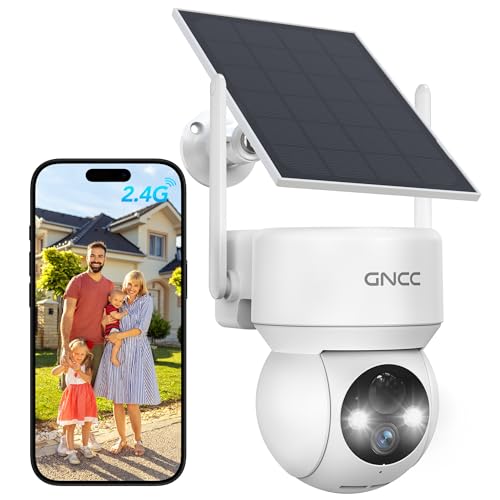
GNCC Solar Security Cameras Wireless Outdoor 2.4G WiFi, SD/Cloud Storage | Solar & Battery 360° Security Cameras, Color Night Vision, PIR Motion Detection, Spotlight & Siren Alarm, IP65 Waterproof
Check price on Amazon
GALAYOU Solar Camera Outdoor Wireless for Home Security 2.4GWiFi, R6 1Pack | 2K Cameras for Home Security/Garage/Farm/Outside Surveillance, Detachable Solar Panel, Color Night Vision, SD/Paid Cloud
Check price on Amazon
FAMVIVA 2K Solar Security Cameras Wireless Outdoor, 360°PTZ Battery Powered Cameras for Home Security, 2.4G WiFi Outdoor Camera with Color Night Vision, IP66 Waterproof, Motion Sensor Alarm, Black-4P
Check price on Amazon
SEHMUA Solar Security Cameras Wireless Outdoor, 2K 360° View Battery Powered Outdoor Camera, WiFi Home Security with Spotlight Color Night Vision, PIR Sensor
Check price on Amazon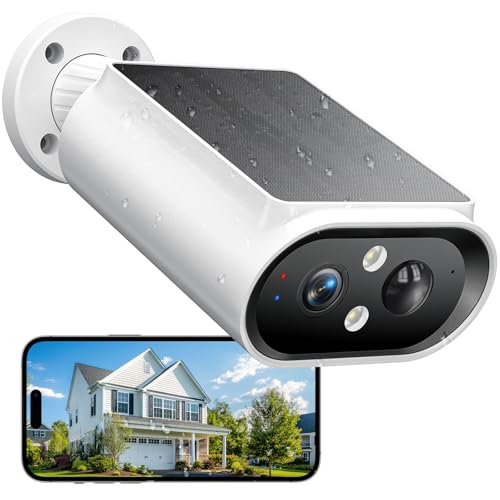
AlkiVision Solar Security Cameras Wireless Outdoor - 2K Night Color Vision Cameras for Home Security, AI Motion Detection, 360° View, Spotlight, 2-Way Audio, Siren, IP67 Waterproof, SD/Cloud Storage
Check price on Amazon
SEHMUA 4G LTE Cellular Solar Security Camera Wireless Outdoor, No Wi-Fi Solar Powered Camera, 360° Live View, 2K Color Night Vision, PIR Motion Sensor, Two-Way Talk, Built-in SIM Card
Check price on AmazonFinal Thoughts: Choosing the Right Solar Security Camera
A solar security camera with a motion sensor is more than just a gadget—it is a reliable, self-sufficient guardian for your property. By understanding how these cameras work, which features matter, and where they perform best, you can make a confident purchase that meets your specific needs. Whether you are protecting a remote cabin, a suburban home, or a commercial site, the right solar camera will deliver peace of mind without the hassle of wiring or frequent maintenance.
Before you buy, double-check the solar panel's efficiency, the battery capacity, and the storage options. If you want to avoid subscriptions, prioritize models with microSD card slots. If you need off-grid operation, choose a cellular model. And if you are still exploring, browse our guide to the top 10 outdoor wireless security cameras for more inspiration.