
The Complete Guide to Video Cassette Camcorders
Rediscover the charm of analog video. From VHS to Hi8, learn everything you need to know about choosing, using, and digitizing footage from a video cassette camcorder.
VIEW RECOMMENDED MODELSWhy Go Analog? In an era of 4K and 8K digital video, the warm, nostalgic look of a video cassette camcorder offers a unique aesthetic. Whether you're a filmmaker seeking a vintage feel or a enthusiast wanting to preserve family memories, understanding these classic devices is key.
What is a Video Cassette Camcorder?
A video cassette camcorder is a portable electronic device that combines a video camera and a videocassette recorder (VCR) into a single unit. Unlike modern digital cameras that record to memory cards or hard drives, these camcorders record analog video and audio signals onto magnetic tape housed in a cassette. This technology was the standard for home video recording from the mid-1980s through the early 2000s.
These devices are prized today for their distinct visual characteristics—soft resolution, color bleeding, and tape noise—which are often emulated in modern software but are impossible to perfectly replicate. For many, the physical media of a VHS tape holds a tangible history that digital files cannot match. If you are looking for a different type of camera, perhaps a night vision camcorder for ghost hunting or a cheap vlogging camera with flip screen, the principles of choosing a device still apply.
Popular Video Cassette Formats Explained
Not all video cassette camcorders are the same. The format determines the size of the tape, the recording quality, and the availability of accessories. Here are the main types you'll encounter:
- VHS (Video Home System): The most common format. Full-size VHS camcorders are large, heavy, and typically shoulder-mounted. They offer standard resolution (around 240 lines) and are known for their long recording times (up to 6 hours on a standard tape in EP mode).
- VHS-C (Compact VHS): A smaller version of VHS. These camcorders are much more portable. The VHS-C tapes require an adapter to play in a standard VCR. They were popular for their convenience and palm-sized design.
- Hi8 and Video8: Sony's proprietary formats. Video8 is the standard 8mm format, while Hi8 offers higher resolution (around 400 lines). These tapes are smaller than VHS-C and are known for better audio quality. They are a favorite among enthusiasts for their balance of portability and quality.
- MiniDV: While technically a digital format, MiniDV camcorders replaced analog models in the late 90s and early 2000s. They record digitally onto small cassettes, offering superior picture quality. They are not analog video cassette camcorders but are often grouped with them in discussions about vintage camcorders.
When searching for a used model, you'll likely encounter these formats. For those interested in modern digital alternatives for specific needs, consider a beginner camera for nature photography or a camera for sports photography.
How to Choose a Working Video Cassette Camcorder
Buying a vintage camcorder requires caution. These devices are decades old and may have failing components. Here’s what to check:
- Test the Tape Mechanism: This is the most common point of failure. Ensure the camcorder accepts, loads, and ejects a tape smoothly. Listen for any grinding or clicking noises.
- Check the Battery: Original batteries are often dead. Many camcorders can run on AC power, which is a good way to test them. Look for models that use standard, easily replaceable batteries.
- Inspect the Lens and Viewfinder: Look for scratches on the lens or fungus inside. Check that the viewfinder displays an image. If you need a reliable night vision camcorder for ghost hunting, a working viewfinder is essential.
- Firewire/AV Outputs: To digitize footage, you'll need a working output. Most camcorders have RCA (AV) or S-Video outputs. Some later models have Firewire (IEEE 1394).
- Brand and Model Research: Sony, Panasonic, JVC, and Canon were the leaders. Research specific models for known issues.
Preserving Your Memories: How to Digitize Tapes
Once you have a working camcorder, the next step is to convert your analog tapes to a digital format. This prevents further degradation and allows you to share your videos easily.
You have a few options:
- USB Video Capture Device: A cost-effective method. You connect the camcorder's AV output to a USB capture card, which plugs into your computer. Software then records the video.
- Dedicated DVD Recorder: A standalone unit that records directly from the camcorder to a DVD. This is a simple, no-computer-needed solution.
- Professional Service: If you have irreplaceable footage, a professional service can clean and digitize your tapes with high-quality equipment.
While setting up a digitization workflow, you might also be interested in a digital camera for beginner photographers to capture new memories in a modern format.
Recommended Video Cassette Camcorders & Accessories
⚠️ AFFILIATE DISCLOSURE: This website contains affiliate links. As an affiliate Associate, we earn from qualifying purchases. If you make a purchase through these links, we may receive a small commission at no additional cost to you. Read our full affiliate policy.

VHS-C Tape Cassette Adapter for Camcorders Motorized VHS VHS-C to VHS – Ideal for VCR Player, Video Cassette Player and VHS to Digital Converting
Check price on Amazon
Sony Standard Grade 8mm Camcorder Videotape Cassette, 120 Minutes
Check price on Amazon
Sony Hi-8 HMPD 120 minute 2-Pack Video Camcorder Cassette Tapes
Check price on Amazon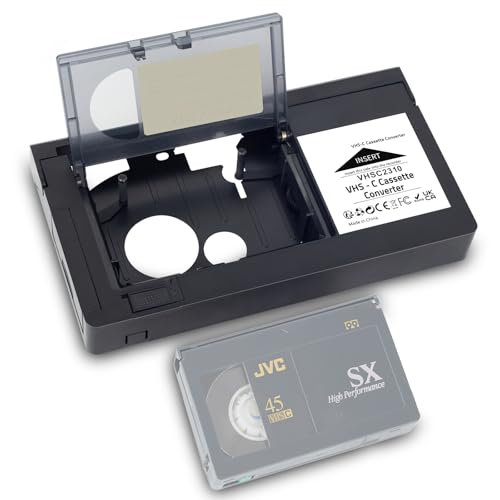
WAXMEVL Motorized VHS-C to VHS Cassette Adapter, VHS-C Video Tape Converter for 12mm VHS-C & S-VHS-C Camcorder Tapes, NOT Compatible with 8mm, Hi8 & MiniDV Tapes
Check price on Amazon
Portta VHS to Digital Converter, Video to Digital Recorder with Remote, Compatible with VHS, VCR, DVR, DVD, Hi8, Mini DV Players, Camcorder, Gaming Consoles (VHS/Tapes/DVD Player Not Included)
Check price on Amazon
ottosing New and Upgraded VHS VHSC to VHS Adapter for Camcorders – Ideal for VCR Player Video Cassette 12MM Tapes Adapter.
Check price on AmazonBuying Guide: What to Expect in Terms of Price
The price of a video cassette camcorder varies wildly depending on its condition, brand, and whether it includes accessories like batteries, chargers, and original packaging.
- For Parts or Repair: $20–$60. These units are non-functional and are for hobbyists who can fix them.
- Untested/As-Is: $60–$150. The seller cannot confirm it works. There is a risk, but it can be a bargain if you're lucky.
- Tested and Working: $150–$400. These are fully functional and have often been serviced. This is the safest bet for immediate use.
- Mint in Box/Collector's Item: $400+. Rare, high-end models in pristine condition with all original accessories can command a premium.
Keep in mind that you may also need to budget for a hard case for protection, a solar panel if you plan to use it outdoors for extended periods (though unlikely with these power-hungry devices), or a mini tripod for phone if you plan to film the camcorder itself for a video review.
Final Thoughts on Video Cassette Camcorders
Embracing a video cassette camcorder is an exercise in patience and nostalgia. The process is not as instant as modern digital recording, but the results have a unique, irreplaceable character. Whether you're a retro tech enthusiast, a filmmaker looking for an authentic vintage look, or someone wanting to preserve family history, these cameras offer a tangible connection to the past. Remember to consider your needs: if you're more interested in still photography, a superzoom camera or a mirrorless camera for wildlife photography might be more appropriate. However, for the love of the moving image on magnetic tape, the video cassette camcorder remains a fascinating and rewarding device.