
Outdoor IR Lights for Security Cameras
Everything you need to know about infrared illuminators for security cameras — how they work, how to choose the right one, and how to get crystal-clear night vision footage in complete darkness.
SEE TOP PICKSWhy This Matters: Your security camera's night vision is only as good as its infrared light source. Built-in IR LEDs often fall short beyond 30 feet, leaving blind spots that intruders can exploit. Adding a dedicated outdoor IR light extends your coverage, sharpens image detail, and ensures reliable 24/7 surveillance — even in pitch-black conditions.
What Are Outdoor IR Lights for Security Cameras?
Outdoor IR (infrared) lights — also called IR illuminators or IR floodlights — are dedicated light sources that emit infrared radiation invisible to the human eye but fully detectable by security camera sensors. Unlike standard white-light floodlights that illuminate an area visibly, IR lights bathe a scene in near-infrared light (typically 730nm to 940nm wavelengths) that only the camera can "see."
This means your property stays dark to neighbors and passersby while your camera captures bright, detailed footage. IR lights are essential for any surveillance setup where wireless night vision security cameras need to perform reliably after sunset.
Most outdoor security cameras include built-in IR LEDs, but their range is limited — usually 15 to 30 feet. A standalone IR illuminator can extend that range to 100 feet or more, covering driveways, backyards, parking lots, and perimeters that would otherwise be blind spots.
How Infrared Illuminators Work
Security camera image sensors (CMOS or CCD) are sensitive to both visible light and near-infrared light. During the day, cameras use an IR-cut filter to block infrared and preserve natural color. At night, the filter mechanically switches out, allowing the sensor to capture IR light reflected off objects in the scene.
An IR illuminator floods the area with infrared light. Objects reflect that light back to the camera lens, and the sensor renders it as a monochrome (black-and-white) image. The stronger and more evenly distributed the IR light, the clearer and farther-reaching your night vision footage will be.
Key factors that determine performance include:
- Wavelength: 850nm IR lights produce a faint red glow visible to the human eye but offer slightly better range. 940nm IR lights are completely invisible but have shorter effective range.
- Power output: Measured in milliwatts (mW) or watts, higher output means longer throw distance.
- Beam angle: Narrow beams (30°–45°) reach farther; wide beams (90°–120°) cover more area but with less distance.
- LED count and quality: More LEDs and higher-grade chips produce brighter, more uniform illumination.
For cameras that operate without any internet connection, such as security cameras without WiFi, a standalone IR light is especially valuable because it doesn't depend on network infrastructure to improve night vision.
Why Add an External IR Light to Your Security Setup?
If you've ever reviewed nighttime footage from your camera and seen grainy, dark, or washed-out images, the culprit is almost always insufficient IR illumination. Here's what a dedicated outdoor IR light solves:
- Extended range: Built-in IR often maxes out at 30 feet. External illuminators push usable night vision to 80–150 feet.
- Eliminates dark spots: Wide-angle cameras tend to have hot spots near the center and dark edges. A separate IR floodlight creates even coverage.
- Reduces motion blur: More IR light means the camera can use a faster shutter speed, freezing motion and reducing blur on moving subjects.
- Improves license plate and face capture: Critical detail like faces and plates requires sharp, well-lit IR footage — especially for outdoor security cameras with spotlight that switch between modes.
- Reduces spider webs and insects: Some IR lights attract fewer insects than camera-mounted IR LEDs, minimizing false triggers.
Pro Tip: If your camera is mounted near a light source (like a porch light), placing the IR illuminator a few feet away from the camera reduces the "moth effect" — insects and spiders drawn to the IR glow directly in front of the lens.
Types of Outdoor IR Lights
Not all IR illuminators are the same. Understanding the main categories helps you match the right light to your camera and location.
1. IR Floodlights
These are the most common standalone illuminators. They project a wide, even beam of IR light across a broad area — ideal for driveways, yards, and parking areas. Many models are weatherproof (IP66 or IP67) and can be wall- or pole-mounted. Some combine IR with a visible white LED floodlight, so you get both covert IR surveillance and a deterrent light in one unit.
2. IR Spotlights
Narrow-beam illuminators that throw IR light much farther — often 150–300 feet. Best for long driveways, alleys, or perimeters where you need to identify subjects at distance. They cover a smaller area but penetrate deeper into the scene.
3. IR Bullet Illuminators
Shaped like a bullet camera, these mount alongside your existing camera and are available in both flood and spot beam patterns. They're compact, discreet, and easy to aim precisely where you need coverage.
4. Hybrid White Light + IR Units
These switch between IR mode (covert) and white light mode (deterrent). Some can be set to activate white light only on motion, giving you the best of both worlds. They pair well with smart WiFi flood light security cameras that already combine illumination and recording.
5. Solar-Powered IR Lights
For locations without easy access to power, solar IR illuminators use a built-in panel and rechargeable battery. They're less powerful than wired units but are perfect for remote gates, sheds, or fence lines. Pair them with small solar panels for security cameras to build a fully off-grid surveillance setup.
Key Specifications Compared
When comparing outdoor IR lights, focus on these four specs. The table below shows how they affect real-world performance.
| Specification | Typical Range | What It Means for You |
|---|---|---|
| Wavelength | 730nm, 850nm, 940nm | 850nm = faint red glow, best range. 940nm = invisible, shorter range. 730nm = visible red, rarely used outdoors. |
| IR Range | 30 ft – 300 ft | Match to the distance you need to cover. Add 20% buffer for reliable identification. |
| Beam Angle | 30° – 120° | Narrow = long throw. Wide = broad coverage. Choose based on area vs. distance priority. |
| Power Output | 1W – 30W+ | Higher wattage = brighter IR and longer range. Also means more power consumption. |
| IP Rating | IP65 – IP67 | IP66 or higher is recommended for outdoor use. IP67 can handle temporary submersion. |
| Power Source | Wired, battery, solar | Wired = most reliable and powerful. Battery/solar = flexible placement but lower output. |
For most residential setups, an 850nm IR floodlight with a 60°–90° beam angle, 10W–20W output, and IP66 rating covers a typical driveway or backyard perfectly. For long perimeters, step up to a 940nm spotlight with 100+ foot range.
How to Choose the Right Outdoor IR Light
Follow this checklist to match an IR illuminator to your specific camera and environment.
- Check your camera's IR sensitivity. Most security cameras are sensitive to 850nm. Some also support 940nm. Verify before buying a 940nm unit.
- Measure your coverage distance. Walk from the camera to the farthest point you need to monitor. Add 20% to that distance and choose an IR light rated for at least that range.
- Determine beam width. Wide areas (yards, parking) need 90°–120° floodlights. Narrow zones (gates, alleys) need 30°–45° spotlights.
- Confirm power availability. If you have an outlet nearby, go wired for maximum performance. If not, choose solar or battery models.
- Check weatherproofing. IP66 or IP67 is a must for permanent outdoor installation. Avoid IP65 or lower for exposed locations.
- Consider integration. Some IR lights work with wired and wireless security camera systems and can be triggered by the camera's motion detection. Others run independently.
- Plan for power backup. If your area has frequent outages, pair your IR light with a UPS or choose a battery-powered model.
- Think about aesthetics and discretion. 940nm units are invisible to the eye, which is ideal for covert surveillance. 850nm units show a faint red glow that can deter some intruders.
If you're building a complete system from scratch, start with our guide to where to install security cameras outdoors to plan camera and IR light placement together for maximum coverage.
Installation Tips for Best Results
Proper installation makes the difference between usable night vision and wasted hardware. Follow these best practices:
- Mount at least 1–2 feet away from the camera. Placing the IR light directly beside the camera causes glare, lens flare, and "eye shine" reflections from animals.
- Aim the IR beam to overlap the camera's field of view. Test at night by viewing the camera feed while adjusting the light angle.
- Angle downward slightly. IR light reflects off rain, fog, and dust. A slight downward tilt reduces backscatter and improves clarity.
- Secure all cables. Use cable clips or conduit to prevent wind damage and tampering. For cameras that screw into a light socket, ensure the IR light has its own separate power source.
- Test before permanent mounting. Temporarily tape the light in place, check the camera feed at night, then finalize the position.
- Keep IR lights away from reflective surfaces. Metal siding, windows, and car bodies can bounce IR light back into the lens and wash out the image.
Important: If your camera is a wireless security camera with cloud storage, adding an external IR light does not affect recording or storage. It only improves the image quality that gets recorded and uploaded.
Common Mistakes to Avoid
- Buying an IR light that's too weak. Always oversize slightly. A 30-foot rated light in a 30-foot space will underperform.
- Using a 940nm light with a camera that only supports 850nm. The result is little to no improvement in night vision.
- Mounting the IR light too close to the camera. This causes hot spots and glare. Keep separation.
- Ignoring the IP rating. A non-weatherproof light will fail within months outdoors.
- Forgetting about power. Wired IR lights need an outdoor-rated outlet or PoE injector. Plan the power run before mounting.
- Not testing at night. Always verify performance in real darkness before finalizing installation.
Avoiding these mistakes ensures your investment actually improves your security coverage. For a broader overview of system planning, see our guide to commercial security surveillance systems, which covers multi-camera IR planning.
Best Outdoor IR Lights for Security Cameras
⚠️ AFFILIATE DISCLOSURE: This website contains affiliate links. As an affiliate Associate, we earn from qualifying purchases. If you make a purchase through these links, we may receive a small commission at no additional cost to you. Read our full affiliate policy.
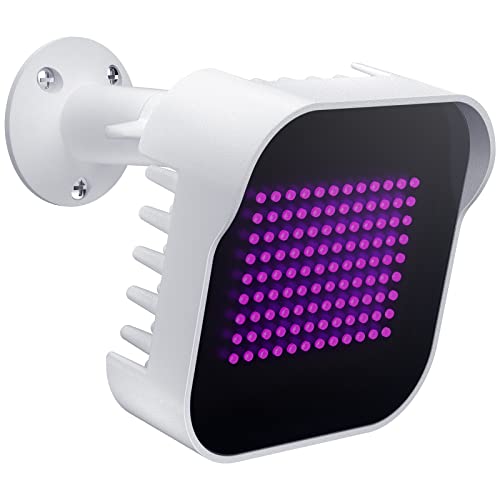
Tendelux DI20 IR Illuminator, Long Range IR Floodlight for Security Camera | Compact 850nm Infrared Light, Wide Angle Even Illumination, 360° Adjustable Mount, Power Adapter Included (White)
Check price on Amazon
210ft IR Illuminator,Wide Angle Flood Light for Security Camera,w/Adapter | power adapter,850nm infrared light,waterproof,long range,night vision,cctv accessory,outdoor&indoor,infrared flood light
Check price on Amazon
Tendelux DI20B IR Illuminator, Long Range IR Floodlight for Security Camera | Compact 850nm Infrared Light, Wide Angle Even Illumination, 360° Adjustable Mount, Power Adapter Included (Black)
Check price on Amazon
Univivi 8-LEDs IR Illuminator 850nm Infrared Flood Light for Night Vision | Long Range Infrared Illuminator for Security Camera, 90 Degree Wide Angle Infrared Light, IP67 Waterproof for Outdoor&Indoor
Check price on Amazon
UQISOVI Night Vision IR Illuminators 940nm Invisible 6-LEDs Infrared Light IP65 Water-Resistant Outdoor Floodlight for Security Cameras (940nm IR, 90° Angle for 4mm Lens)
Check price on Amazon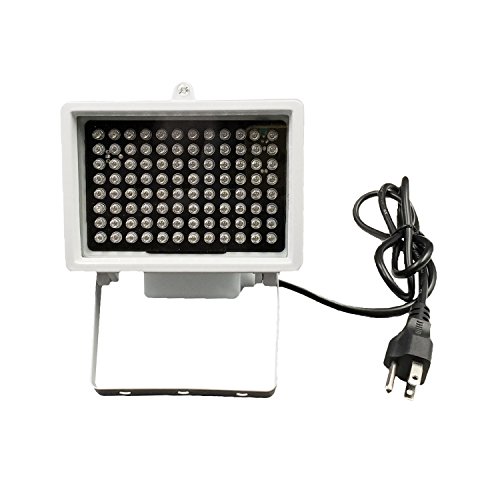
DMetric IR Illuminator, AC 110V - 220V 850nm Infrared 96 LED Night Vision Waterproof Lamp for Indoor Outdoor Security CCTV Camera, Long Range 80m (263 feet) and Wide Angle 60 Degree
Check price on Amazon
Tendelux DI10 IR Illuminator, Mid-Range IR Floodlight for Security Camera | Compact 850nm Infrared Light, Wide Angle Even Illumination, 360° Adjustable Mount, Power Adapter Included
Check price on Amazon