
Outdoor Wireless Security Camera System: Solar Powered
Harness the power of the sun for reliable, wire-free surveillance. Your complete guide to choosing, installing, and maintaining solar-powered outdoor security cameras.
VIEW TOP PICKSWhy Solar-Powered Wireless Security Cameras Are Changing Outdoor Surveillance
Traditional outdoor security cameras often require complex wiring, professional installation, and a constant power source. For homeowners and businesses looking to secure remote locations, construction sites, or properties without existing electrical infrastructure, these limitations can be frustrating and expensive. Enter the outdoor wireless security camera system solar powered — a revolutionary solution that combines renewable energy with advanced surveillance technology.
These systems use high-efficiency solar panels to continuously charge internal batteries, eliminating the need for power outlets and reducing your carbon footprint. When paired with wireless connectivity, they offer a truly hassle-free security solution that can be installed virtually anywhere the sun shines. Whether you're protecting a rural property, monitoring a vacation home, or securing a construction site, solar-powered cameras provide the flexibility and reliability you need.
In this comprehensive guide, we'll walk you through everything you need to know about solar-powered wireless security camera systems — from how they work and what features to look for, to installation tips and top product recommendations. By the end, you'll have the confidence to choose the perfect system for your specific needs.
How Do Solar-Powered Wireless Security Cameras Work?
Understanding the technology behind these systems will help you make an informed purchasing decision. Here's a breakdown of the key components and how they work together:
The Core Components
- Solar Panel: Converts sunlight into electrical energy. Most systems use monocrystalline or polycrystalline panels with power outputs ranging from 2W to 10W. The panel's efficiency and size directly impact how quickly the battery recharges.
- Rechargeable Battery: Stores energy for nighttime and cloudy days. Lithium-ion batteries are standard, with capacities typically ranging from 5,000mAh to 15,000mAh. Larger capacities mean longer runtime during periods of low sunlight.
- Camera Unit: Captures video and images. Modern solar cameras feature HD or 4K resolution, night vision, motion detection, and two-way audio.
- Wireless Connectivity: Transmits video to your smartphone or NVR. Most systems use Wi-Fi (2.4GHz or 5GHz) or cellular (4G LTE) networks. Some offer local storage via SD card as a backup.
- Mounting Hardware: Allows flexible positioning. Adjustable mounts let you optimize both the camera angle and solar panel orientation for maximum sun exposure.
The Energy Cycle
During daylight hours, the solar panel converts sunlight into electricity, which powers the camera and charges the battery. At night or during overcast conditions, the camera draws power from the battery. A well-designed system with a properly sized panel and battery can operate continuously for days or even weeks without direct sunlight.
💡 Key Insight: The efficiency of your solar security camera depends on three factors: the amount of direct sunlight it receives, the capacity of its battery, and the power consumption of the camera. Choosing a system with a larger solar panel and battery than you think you need is always a smart investment.
Essential Features to Look For in a Solar-Powered Security Camera
Not all solar security cameras are created equal. When evaluating your options, pay close attention to these critical features:
1. Video Resolution and Image Quality
Resolution is measured in megapixels (MP) or the horizontal pixel count (e.g., 1080p, 2K, 4K). For outdoor security, a minimum of 1080p is recommended, but 2K or 4K provides clearer details for identifying faces, license plates, and other important information. Consider a system with a 4K wireless security camera system with DVR if you need the highest level of detail.
2. Night Vision Capabilities
Most solar cameras use infrared (IR) LEDs for night vision, which provides black-and-white footage in complete darkness. Some advanced models offer color night vision using a built-in spotlight or starlight sensor. Look for a range of at least 30 feet and consider whether you need infrared light bulbs for security cameras to supplement the built-in IR.
3. Motion Detection and Alerts
Advanced motion detection is crucial for minimizing false alarms and conserving battery life. Look for cameras with PIR (passive infrared) sensors, which detect body heat rather than just movement. Features like adjustable sensitivity zones, human detection, and customizable alert schedules are highly valuable. For areas requiring precise monitoring, consider an outdoor security camera with motion detection that includes these advanced features.
4. Battery Life and Solar Efficiency
Battery life is typically measured in months, but this varies greatly depending on usage, weather, and settings. A high-quality system with a 10,000mAh+ battery and efficient solar panel can last indefinitely with adequate sunlight. If you live in an area with harsh winters or extended cloudy periods, consider a system with a larger battery or a rechargeable battery-powered security camera as a backup.
5. Connectivity and Storage Options
Wi-Fi is the most common connectivity method, but it requires a strong signal at the camera's location. For remote areas without Wi-Fi, cellular (4G LTE) models are available. Storage options include cloud subscriptions (convenient but with recurring fees) and local storage via SD card or NVR (no monthly fees). A solar security camera without subscription is ideal if you want to avoid ongoing costs.
6. Weatherproofing and Durability
Your outdoor camera will be exposed to rain, snow, dust, and extreme temperatures. Look for an IP66 or IP67 rating, which indicates resistance to water and dust. The operating temperature range should match your local climate. For areas with heavy snowfall, ensure the solar panel is positioned to avoid snow accumulation.
7. Two-Way Audio and Smart Home Integration
Two-way audio allows you to communicate with visitors or deter intruders remotely. Integration with smart home platforms like Amazon Alexa or Google Assistant adds convenience. An outdoor security camera with 2-way audio is particularly useful for monitoring deliveries or greeting guests.
Pros and Cons of Solar-Powered Wireless Security Cameras
Like any technology, solar-powered security cameras have their advantages and limitations. Here's an honest assessment to help you decide if they're right for your situation:
✅ Advantages
- No Wiring Required: Install anywhere with sunlight, no electrician needed.
- Eco-Friendly: Uses renewable energy, reduces carbon footprint.
- Low Operating Costs: No electricity bills, often no monthly fees.
- Flexible Placement: Ideal for remote locations, gates, barns, and construction sites.
- Easy Installation: DIY-friendly, typically mounts with screws and brackets.
- Reliable Backup: Battery ensures operation during power outages.
⚠️ Limitations
- Weather Dependent: Performance varies with sunlight availability.
- Higher Upfront Cost: Generally more expensive than wired cameras.
- Battery Degradation: Batteries may need replacement after 2-3 years.
- Wi-Fi Range: May require a strong signal or mesh network.
- Video Quality Trade-offs: Some models reduce quality to save battery.
- Limited Continuous Recording: Most are motion-triggered to conserve power.
💰 Price Reality Check: A quality outdoor wireless solar security camera system typically ranges from $150 to $500 per camera, depending on resolution, brand, and features. Multi-camera systems can range from $400 to $1,500+. While the upfront investment is higher than wired alternatives, the elimination of wiring costs and monthly fees often results in long-term savings.
How to Install Your Solar-Powered Security Camera System
One of the biggest advantages of solar-powered wireless cameras is their ease of installation. Most homeowners can complete the setup in under an hour per camera. Follow these steps for optimal results:
-
Choose the Right Location
Select a spot that provides a clear view of the area you want to monitor and receives at least 4-6 hours of direct sunlight daily. South-facing positions are ideal in the Northern Hemisphere. Avoid locations where trees, buildings, or other obstacles cast shadows on the solar panel. If you need help identifying the best angles, consider a wireless home camera system for outdoor use with adjustable mounts.
-
Check Your Wi-Fi Signal
Before mounting, test the Wi-Fi signal strength at your chosen location using your smartphone. If the signal is weak, consider a mesh Wi-Fi system or a camera that supports 5GHz Wi-Fi for better performance. For areas with no Wi-Fi, a cellular 4G LTE solar camera is an excellent alternative.
-
Mount the Camera and Solar Panel
Use the included mounting hardware to secure the camera. Most systems come with adjustable brackets that allow you to tilt and swivel the camera for the perfect angle. Ensure the solar panel is positioned to capture maximum sunlight throughout the day. Some models have integrated panels, while others have separate panels that can be positioned independently for optimal charging.
-
Connect to Your Network
Download the manufacturer's app and follow the in-app instructions to connect your camera to your Wi-Fi network. This typically involves scanning a QR code or entering your network credentials. Once connected, you can customize settings, set up motion detection zones, and configure alerts.
-
Test and Optimize
After installation, test the camera's live view, motion detection, and night vision. Adjust sensitivity settings to minimize false alerts from passing cars, animals, or swaying trees. Monitor the battery level over the first few days to ensure the solar panel is adequately charging the battery. If the battery drains quickly, try repositioning the panel or reducing video quality settings.
🔧 Pro Installation Tip: If you're not comfortable mounting cameras yourself, many brands offer professional installation services. Alternatively, a local handyman can typically handle the job for $50-$150 per camera. For large properties, a professional home surveillance system with multiple solar cameras may be the best solution.
Maintenance Tips for Long-Lasting Performance
Solar-powered security cameras are designed for low maintenance, but a little care goes a long way in ensuring they perform reliably for years:
- Clean the Solar Panel Regularly: Dust, pollen, bird droppings, and snow can reduce charging efficiency. Wipe the panel with a soft, damp cloth every few months. In snowy regions, gently remove snow accumulation after storms.
- Check the Battery: Monitor battery levels through the app. If you notice a significant drop in performance, the battery may need replacement. Most lithium-ion batteries last 2-3 years before needing replacement.
- Update Firmware: Manufacturers regularly release firmware updates that improve performance, add features, and fix security vulnerabilities. Enable automatic updates if available.
- Inspect Mounts and Cables: Periodically check that mounts are secure and cables (if any) are not damaged. Tighten screws as needed.
- Clean the Lens: Use a microfiber cloth to gently clean the camera lens. Avoid harsh chemicals that could damage the lens coating. For detailed instructions, see our lens cleaning guide.
- Adjust for Seasons: The sun's position changes throughout the year. You may need to adjust the solar panel angle in winter to maximize sunlight exposure.
Ideal Use Cases for Solar-Powered Wireless Security Cameras
These versatile cameras are suitable for a wide range of applications. Here are some of the most common and effective use cases:
Remote and Rural Properties
For cabins, farms, ranches, and other properties far from power lines, solar cameras provide a practical and affordable security solution. They can monitor gates, driveways, barns, and equipment sheds without the need for expensive trenching and wiring. A solar camera without Wi-Fi that uses cellular connectivity is ideal for these locations.
Construction Sites
Construction sites are prime targets for theft and vandalism. Solar-powered cameras can be quickly deployed to monitor equipment, materials, and perimeter security. Their wire-free design makes them easy to relocate as the project progresses. Many companies offer construction site security camera rentals for short-term projects.
Vacation Homes and Rental Properties
Protect your investment property year-round without relying on tenants or property managers to manage wiring. Solar cameras continue working even during power outages, providing peace of mind. Pair them with a doorbell camera and home security system for comprehensive coverage.
Parking Lots and Driveways
Monitor vehicles and detect suspicious activity in parking areas. Solar cameras with motion detection can alert you to unexpected movement and record high-quality footage for evidence. For comprehensive coverage, consider a PTZ (pan-tilt-zoom) security camera system that can cover a wider area.
Wildlife and Trail Monitoring
Solar cameras are excellent for observing wildlife, monitoring trails, and securing hunting properties. Some models are specifically designed as trail cameras with night vision and motion activation. For hunters, a deer hunting camera that sends pictures to your phone offers real-time updates on game movement.
Top-Rated Solar-Powered Wireless Security Cameras
⚠️ AFFILIATE DISCLOSURE: This website contains affiliate links. As an affiliate Associate, we earn from qualifying purchases. If you make a purchase through these links, we may receive a small commission at no additional cost to you. Read our full affiliate policy.

Hiseeu Security Cameras Wireless Outdoor,4MP 6-Cam Kit,1TB HDD | 2.4G & 5G WiFi,Solar-Powered,Color Night Vision,360° View,Pan & Tilt,No Subscription
Check price on Amazon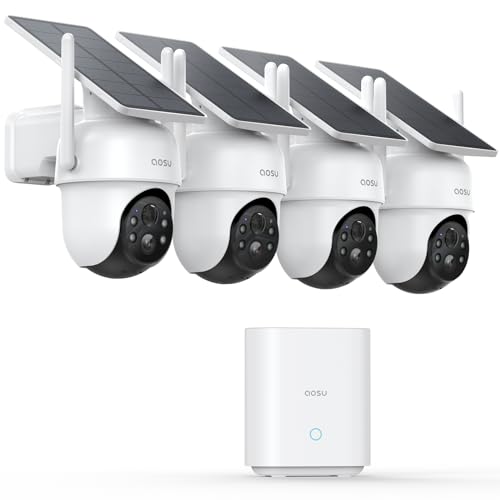
aosu D1 Classic 4-Cam Kit, Security Cameras Wireless Outdoor, Solar Powered | No Subscription Required, 32GB Built-in Storage, 360° Auto Tracking, 2K (3MP) Full-Color Night Vision, Easy Install
Check price on Amazon
4MP Security Cameras Wireless Outdoor, No Subscription 128GB Local Storage, Solar Powered Cameras For Home Security, PTZ Auto Tracking, 4Cam-Kit, Color Night Vision Home Security Camera System,5G&2.4G
Check price on Amazon
2K Security Camera System, 5GHz&2.4GHz WiFi Solar Wireless Cameras for Home Security, Wire-free Installation, AI Detection, Two-way Audio, Mobile alerts, SD/Cloud Storage, Color Night Vision, 4 Packs
Check price on Amazon
Security Cameras Wireless Outdoor 5G& 2.4G, No Subscription, 2 Cam-Kit,4MP Solar Powered Home Security Cameras System With 360°PTZ,128GB Local Storage,Color Night Vision WiFi Cameras for Home Security
Check price on Amazon
aosu 2K Solar Security Cameras Wireless Outdoor System, 6-Cam-Kit | True 2K HD, Color Night Vision, Cross-Camera Tracking, PIR + AI Human Detection, Local Storage, No Subscription Required
Check price on Amazon
BOTSLAB 4K Security Camera Wireless Outdoor, 4 Cam-Kit, 32GB Local Storage | No Subscription, Full Color Night Vision, 360° PTZ, Solar Powered, AI Human&Motion Recognition, 2.4GHz WiFi
Check price on Amazon
SEHMUA 2K Solar Security Cameras Wireless Outdoor, 2 Pack 360° View Pan/Tilt WiFi Security Camera Outside with Color Night Vision,Easy to Install, PIR Alarm, 2-Way Audio
Check price on AmazonHow to Choose the Right Solar Security Camera System
With so many options on the market, selecting the perfect system can feel overwhelming. Here's a simple framework to guide your decision:
Step 1: Define Your Security Needs
Start by identifying what you want to monitor and why. Are you protecting against burglars, monitoring wildlife, or keeping an eye on a remote property? The answers will determine the number of cameras, resolution requirements, and features you need.
Step 2: Assess Your Environment
Consider the amount of sunlight your installation location receives, your Wi-Fi coverage, and local weather conditions. These factors will influence your choice of solar panel size, battery capacity, and connectivity options. If Wi-Fi is unreliable, look for a security camera that doesn't require a subscription and uses cellular or local storage.
Step 3: Set a Realistic Budget
Solar security cameras range from budget-friendly models under $100 to premium 4K systems over $500 per camera. Determine your budget and prioritize features that matter most to you. Remember to factor in potential savings from avoided wiring costs and monthly fees.
Step 4: Compare Features and Reviews
Read professional reviews and user feedback to understand real-world performance. Pay attention to battery life, video quality, app usability, and customer support. A wireless security camera review can provide valuable insights before you buy.
Step 5: Check Compatibility and Integration
If you already have a smart home ecosystem, ensure your new cameras are compatible with your existing devices. Look for cameras that support your preferred voice assistant (Alexa, Google Assistant) and can integrate with your current security setup.
Final Thoughts: Is a Solar-Powered Security Camera Right for You?
An outdoor wireless security camera system solar powered offers an unbeatable combination of flexibility, sustainability, and cost-effectiveness. If you have a location that receives adequate sunlight and needs surveillance without the hassle of wiring, a solar-powered system is an excellent choice.
While the upfront cost may be higher than traditional wired cameras, the long-term savings from eliminated electricity costs, reduced installation expenses, and no monthly subscription fees make them a smart investment. Plus, the peace of mind that comes from knowing your property is protected — even during power outages — is priceless.
Whether you're securing a remote cabin, monitoring a construction site, or simply want a hassle-free way to keep an eye on your home, there's a solar-powered security camera system that fits your needs and budget. Use the recommendations and buying guide above to make an informed decision and start enjoying the benefits of wire-free, eco-friendly surveillance today.
For more information on related topics, explore our guides on solar-powered surveillance cameras without Wi-Fi, battery-operated outdoor cameras with no subscription, and highest-rated outdoor security cameras.