
Solar Powered Trail Camera: The Ultimate Off-Grid Scouting Solution
Never miss a moment in the wild again. Discover how solar powered trail cameras provide uninterrupted surveillance, reduce battery waste, and keep you connected to nature's most elusive creatures.
View Top PicksWhy Go Solar? Traditional trail cameras rely on disposable batteries that can die at the worst moment. A solar powered trail camera uses a small photovoltaic panel to continuously charge an internal battery, ensuring your camera stays operational for months—even in remote locations with no power source. This guide will help you understand the technology and choose the best model for your needs.
Why a Solar Powered Trail Camera is a Game-Changer
For wildlife enthusiasts, hunters, and property owners, trail cameras are indispensable tools for monitoring activity in remote areas. However, the biggest pain point has always been power. Constantly trekking out to swap batteries is time-consuming and costly. Solar powered trail cameras solve this problem by harnessing the sun's energy to keep your camera running indefinitely.
These cameras are particularly valuable for long-term scouting projects, security in remote cabins, and observing wildlife patterns without human interference. With advances in low-power electronics and efficient solar panels, modern solar trail cameras can operate for weeks or even months without direct sunlight, thanks to integrated rechargeable batteries.
How Solar Trail Cameras Work
A solar powered trail camera integrates three key components: a high-efficiency solar panel, a rechargeable lithium or NiMH battery, and a power management system. The solar panel converts sunlight into electricity, which is stored in the internal battery. The camera then draws power from this battery for all its functions—motion detection, infrared night vision, image capture, and wireless transmission.
Most modern models use a separate solar panel that connects to the camera via a waterproof cable, allowing you to position the panel for maximum sun exposure while placing the camera at the optimal angle. Some compact models have the panel built directly into the top of the housing. When choosing, consider your local climate; even in cloudy conditions, many panels can harvest enough diffuse light to maintain a charge. For those who need to extend the life of an existing non-solar camera, a standalone trail camera solar panel is an excellent accessory.
Key Features to Look For in a Solar Powered Trail Camera
Solar Panel Efficiency
Look for panels with high conversion efficiency (typically 18-22%). A larger panel doesn't always mean better performance, but it helps in low-light conditions. Monocrystalline panels are generally more efficient than polycrystalline.
Battery Capacity & Type
Most solar trail cameras use lithium-ion or lithium-polymer batteries. A capacity of 2000mAh to 5000mAh is common. Higher capacity means the camera can run longer during extended cloudy periods.
Image & Video Quality
For clear identification, aim for at least 12MP stills and 1080p video. Many newer models offer 4K video and 20MP+ stills. Check the megapixels rating—higher resolution is better for zooming in on details.
Night Vision
Infrared (IR) LEDs provide night vision. "No-glow" IR is best for covert monitoring as it doesn't emit visible light. The range should be at least 20-30 feet for most applications.
Trigger Speed & Recovery
A fast trigger speed (under 0.5 seconds) ensures you capture animals as they move. Recovery time is how quickly the camera can take another photo—important for bursts of activity.
Wireless Connectivity
Some models offer cellular or Wi-Fi connectivity to send images to your phone. This is a huge convenience, but it also consumes more power. Ensure the solar panel can keep up with the added drain.
Solar vs. Traditional Battery-Powered Trail Cameras
| Feature | Solar Powered Trail Camera | Traditional Battery-Powered |
|---|---|---|
| Power Source | Solar panel + rechargeable battery | Disposable AA or D batteries |
| Operating Cost | Virtually zero after initial purchase | Ongoing cost of replacing batteries |
| Maintenance | Minimal; occasional cleaning of panel | Frequent battery swaps |
| Best For | Remote locations, long-term scouting | Short-term use, areas with easy access |
| Initial Cost | $100–$300 | $50–$150 |
| Environmental Impact | Low; uses renewable energy | High; generates battery waste |
Installation and Placement Tips
Proper placement is crucial for maximizing both solar charging and wildlife detection. Mount your camera at a height of 3-4 feet, angled slightly downward. For solar models, ensure the panel faces south (in the Northern Hemisphere) to capture the most sunlight. If you're using a separate panel, you can mount it on a trail camera mount or even a tripod tree stand for flexibility.
Consider the animal you're targeting. For deer, place the camera along trails or near food plots. For predators, set it up near carcasses or known travel routes. If you need night vision capabilities, look for a trail camera with night vision that includes a solar panel. And if you're specifically looking for motion detection, a motion activated trail camera with solar charging is ideal.
For security purposes, a scouting camera with solar power can be used to monitor remote property. If you're concerned about theft, consider a camera case with a lock. And for those who want to monitor wildlife without disturbing them, a digital night vision trail camera is a great choice.
Recommended Solar Powered Trail Cameras
⚠️ AFFILIATE DISCLOSURE: This website contains affiliate links. As an affiliate Associate, we earn from qualifying purchases. If you make a purchase through these links, we may receive a small commission at no additional cost to you. Read our full affiliate policy.
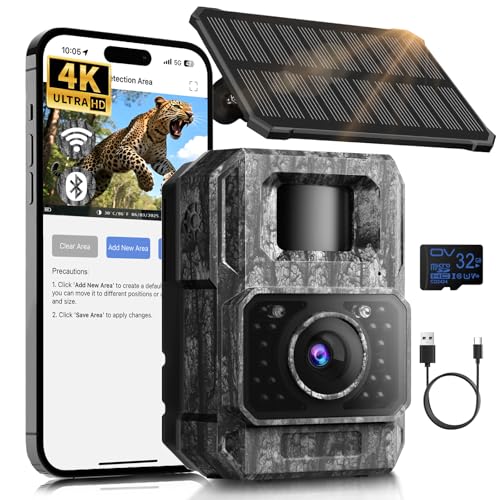
MAXDONE Solar Trail Camera, 4K 64MP WiFi Bluetooth Night Vision Game Camera | Trail Cam with Night Vision Motion Activated, 6000mAh Power & 32GB Included, Deer Cameras for Outdoor Backyard IP66
Check price on Amazon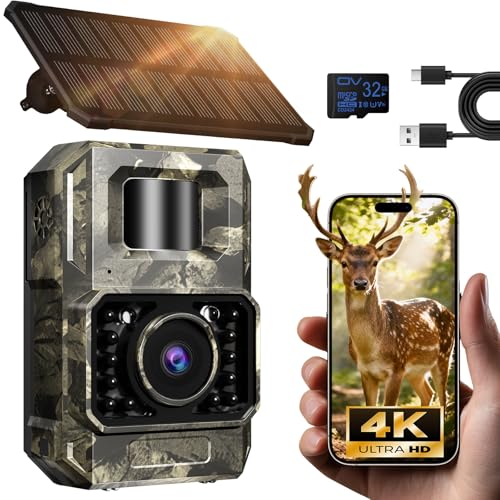
MAXDONE Solar WiFi Trail Camera, 4K 64MP Bluetooth Night Vision Game Camera | Solar Trail Camera for Deer Hunting Wildlife, WiFi Bluetooth game cameras with night vision motion activated IP66 waterproof
Check price on Amazon
CEYOMUR 4K 68MP Solar WiFi Trail Camera, Game Camera with 32GB TF Card | 5200mAh Battery, 120° Detection Angle Night Vision Motion Activated,IP66 Waterproof for Wildlife Monitoring
Check price on Amazon
MAXDONE Solar Trail Camera WiFi Bluetooth, 4K 64MP Night Vision Game Camera | Built-in 6000mAh Rechargeable Battery, 0.1s Trigger, IP66 Waterproof Trail Cam with 32GB SD Card for Outdoor Backyard
Check price on Amazon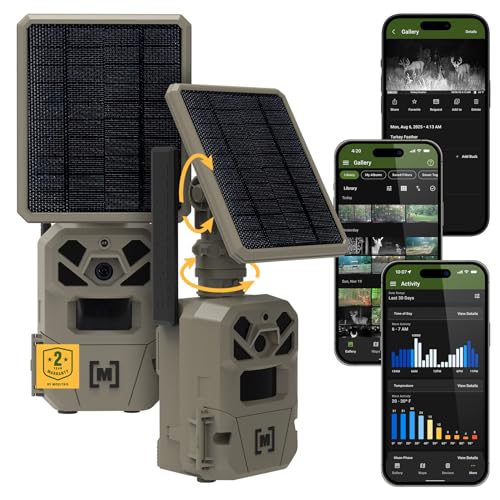
Moultrie Edge Solar Cellular Trail Camera - 2-Pack, Integrated Solar, 40MP | Removable Li-ion battery, Scout from Anywhere, HD photos via Mobile app, 1080p video, Two Pack
Check price on Amazon
Moultrie Edge Solar Cellular Trail Camera - Integrated Solar, 40MP | Removable Li-ion battery, Scout from Anywhere, HD photos via Mobile app, 1080p video, multi-carrier, night vision
Check price on Amazon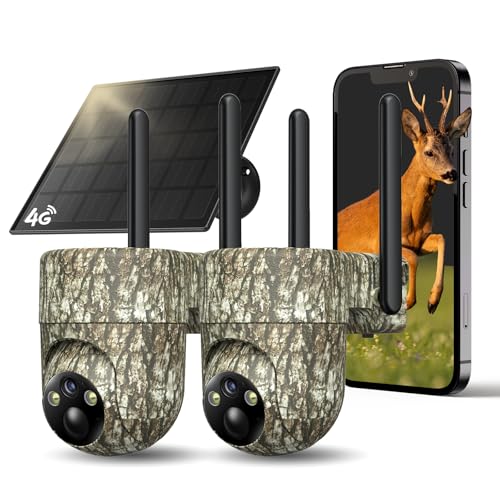
TKENPRO Trail Cameras, 4G LTE Cellular Game Camera with Live Streaming | 360° View, Built-in SIM Card, PIR Motion Activated, 2K Night Vision & No WiFi Needed, Camo Print-2 Pack
Check price on AmazonBuying Guide: Choosing the Right Solar Trail Camera
When selecting a solar powered trail camera, consider your specific needs. If you're a hunter who needs to pattern deer, prioritize trigger speed and detection range. If you're a property owner looking for security, focus on night vision clarity and wireless connectivity. For general wildlife observation, a balance of image quality and battery life is key.
Budget is another factor. Entry-level solar trail cameras start around $80–$120, offering basic features like 12MP stills and 720p video. Mid-range models ($150–$250) typically provide 1080p video, better night vision, and faster trigger speeds. Premium models ($250–$400+) offer 4K video, cellular connectivity, and advanced features like time-lapse and hybrid modes.
Remember to check the warranty and customer reviews. A good solar trail camera should last at least 2-3 years with proper care. Look for models with a proven track record of reliability in your climate. If you're on a tight budget, consider a refurbished camera from a reputable brand, which can offer significant savings.
Ready to Go Solar?
Invest in a solar powered trail camera today and enjoy uninterrupted scouting, lower costs, and a smaller environmental footprint. Your next great wildlife discovery is just a sunbeam away.
Shop Top Solar Trail CamerasMaintenance and Troubleshooting
Solar trail cameras are low-maintenance, but a few simple practices will keep them running smoothly. Periodically clean the solar panel with a soft, damp cloth to remove dust and debris. Check the battery level through the camera's app or LCD screen if available. During extended periods of heavy snow or overcast weather, you may need to bring the camera indoors to recharge via USB.
If your camera stops charging, check the cable connections and ensure the panel isn't shaded. Some models have a power button that needs to be pressed after a deep discharge. Always use the manufacturer's recommended charger and avoid exposing the camera to extreme temperatures for prolonged periods.
For those who want to monitor their camera remotely, a camera connect feature is invaluable. And if you're looking for a camera that works without Wi-Fi, consider a cameras that don't need wifi model—many solar trail cameras operate entirely offline, storing images on an SD card.
Disclaimer
The information provided on AllCameraGuide is for educational and informational purposes only. We are not professional camera technicians or photographers, and our content should not replace professional advice. Always consult with a qualified expert regarding camera compatibility, safety, or technical concerns. Some content may use AI assistance. Always check product warranties and safety standards before purchasing. If you do not agree, please do not use this website. Read the full disclaimer.