
Thermal Binoculars: See the Unseen in Total Darkness
Whether you're tracking wildlife at night, securing a property perimeter, or navigating completely dark terrain, thermal binoculars give you the power to detect heat signatures when no other optical tool can. This guide will walk you through everything you need to know before buying.
START EXPLORINGWhy Thermal Binoculars Matter: Unlike night vision that amplifies faint light, thermal imaging detects infrared radiation (heat) emitted by objects. This means you can see clearly in complete darkness, through smoke, fog, and light foliage. For hunters, security professionals, and outdoor enthusiasts, thermal binoculars are not a luxury—they're a game-changing tool.
What Exactly Are Thermal Binoculars?
Thermal binoculars are handheld optical devices that capture infrared radiation and convert it into a visible image. Instead of relying on visible light, they detect temperature differences between objects and their surroundings. Warm-blooded animals, vehicles, and even recently walked-on ground stand out clearly against cooler backgrounds. Unlike standard mirrored cameras or traditional bridge cameras, thermal binoculars work perfectly in zero-light conditions.
These devices are used across many industries: law enforcement, search and rescue, wildlife management, building inspection, and of course, hunting. For homeowners, combining thermal tech with a DIY security camera system creates an incredibly robust perimeter defense. If you're looking for something smaller and more discreet, a small spy camera with audio serves a different purpose, but thermal binoculars excel when you need long-range detection in darkness.
Key Specifications You Must Understand
Before you buy, you need to understand the numbers that define performance. Here are the critical specs:
Thermal Resolution
Measured in pixels (e.g., 160×120, 320×240, 640×480). Higher resolution means more detail and better identification at distance. 320×240 is a good starting point for hunters; 640×480 is professional-grade.
Detection Range
The maximum distance at which a human-sized heat signature can be detected. Ranges vary from 500 yards to over 2,000 yards. Consider your typical use environment.
Refresh Rate
Measured in Hertz (Hz). 50Hz is standard; 60Hz or higher provides smoother motion tracking. Lower refresh rates can feel choppy when panning.
NETD (Noise Equivalent Temperature Difference)
Measured in millikelvins (mK). Lower is better. Under 40mK is excellent and provides crisp images even in low-contrast conditions.
Magnification
Typically 1x to 5x optical, with digital zoom up to 8x or more. High magnification with low resolution creates a blurry image, so balance is key.
Battery Life
Look for at least 4–6 hours of continuous use. Some models offer 10+ hours. Rechargeable lithium-ion is standard in modern units.
Who Needs Thermal Binoculars?
Hunters: Spot game before dawn or after dusk. Thermal binoculars reveal animals that would be invisible to the naked eye or traditional optics. Combine them with a telephoto lens for wildlife photography for daytime shots, and thermal for night scouting.
Security & Law Enforcement: Monitor large properties, detect intruders, and conduct surveillance. Pair with small wireless security cameras for a comprehensive setup.
Search & Rescue: Locate missing persons in forests, mountains, or water. Thermal signatures cut through darkness and light vegetation.
Outdoor Enthusiasts: Hikers, campers, and boaters use thermal binoculars for navigation and safety. Even a solar-powered dash cam benefits from thermal integration in some advanced vehicles.
Homeowners: Detect heat loss, find air leaks, and monitor property at night. For interior monitoring, a baby camera or small camera for home is better, but thermal binoculars are unmatched for outdoor perimeter checks.
Types of Thermal Binoculars
Handheld Thermal Binoculars: The most common type. Lightweight, portable, and easy to use. Ideal for hunting and security patrols.
Thermal Monoculars: Single-eye devices that are more compact and often cheaper. Great for hiking and quick scans, but binoculars provide more comfortable extended viewing.
Thermal Imaging Scopes: Designed to be mounted on rifles. They offer higher magnification and rugged construction. Not handheld, but worth mentioning for hunters.
Clip-On Thermal: Attach to existing daytime optics. Allows you to switch between thermal and visible light without changing devices. These are often used with a high-end camera setup or a professional camera for photography when documentation is needed.
Pros and Cons of Thermal Binoculars
✅ Pros
- Works in complete darkness
- Sees through smoke, fog, and light foliage
- Detects heat signatures at long range
- No visible light emitted—covert operation
- Durable and weather-resistant
❌ Cons
- Expensive compared to night vision
- Cannot see through glass (thermal reflection)
- Battery dependent
- Image is monochrome (not full-color)
- Higher resolution models are bulky
How to Choose the Right Thermal Binoculars
Step 1: Define Your Primary Use. Are you hunting hogs at 300 yards? Monitoring a 50-acre property? Or just exploring the woods at night? Your use case determines required resolution and range. For casual use, a 160×120 resolution with 500-yard detection is fine. For professional hunting, go for 640×480 with 1,500+ yard detection.
Step 2: Set a Realistic Budget. Entry-level thermal binoculars start around $800. Mid-range models with 320×240 resolution run $1,500–$2,500. Professional-grade 640×480 units cost $3,000–$6,000+. Don't overspend if you only need basic detection.
Step 3: Consider Ergonomics. You'll hold these for extended periods. Look for lightweight designs, comfortable eyecups, and intuitive controls. Some models offer video output, which is useful if you want to record footage for later analysis or share with a cam recorder system.
Step 4: Check Battery and Storage. Rechargeable batteries are standard. Ensure the device has enough onboard storage or a memory card slot for images and video. If you plan to use it for security, integration with a mini WiFi camera network can be beneficial.
Step 5: Read Reviews and Compare. Look for real-world tests of detection range and image clarity. Don't just trust marketing specs. For those who also need daytime observation, a high-resolution camera or good quality camera complements thermal binoculars perfectly.
Maintenance and Care Tips
Thermal binoculars are precision instruments. Keep the lens clean with a microfiber cloth and avoid touching the germanium lens element—it's delicate and expensive to replace. Store in a dry, cool place. If you use them in humid environments, consider a dry cabinet or silica gel packs. For overall camera gear maintenance, techniques similar to those for a digital camera case apply.
Battery care is crucial. Lithium-ion batteries degrade if stored fully depleted or fully charged. Aim for 50% charge for long-term storage. Always carry spare batteries for extended field use.
Recommended Thermal Binoculars
⚠️ AFFILIATE DISCLOSURE: This website contains affiliate links. As an affiliate Associate, we earn from qualifying purchases. If you make a purchase through these links, we may receive a small commission at no additional cost to you. Read our full affiliate policy.

AGM Global Vision ObservIR LRF 25-256 Fusion Thermal Imaging Binoculars | 25mm Lens, 256×192 12μm Thermal Sensor, 4K Optical Channel, Built-in Laser Rangefinder, OLED Display, WiFi
Check price on Amazon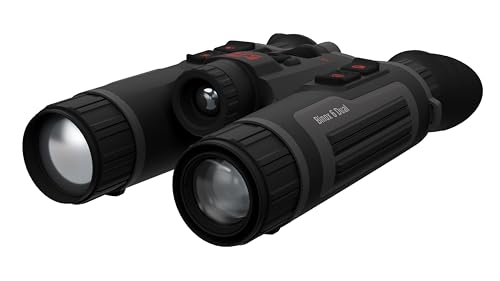
ATN Binox 6 Dual Thermal Imaging Binoculars, 640x512, Laser Rangefinder | Night Vision + 4K Day/Night Photo & Video | Multispectral IR, Wildlife View
Check price on Amazon
Pulsar Merger LRF XT50 Thermal Binoculars with Laser Rangefinder | 1280x1024 12 µm sensor, 2-16x magnification, dual-eye viewing, laser rangefinder, video recording, IPX7 waterproof
Check price on Amazon
TOPDON TS004 Thermal Imaging Monocular, 13mm 50Hz Night Vision | 320 x 240 TISR 256 x 192 IR Resolution, Supported Wireless Connection, 11h Battery Life, IP67 Monocular for Hunting, Green
Check price on Amazon
AGM Global Vision ObservIR LRF 35-384 Fusion Thermal Imaging Binoculars | 35mm Lens, 384×288 12μm Thermal Sensor, 4K Optical Channel, Built-in Laser Rangefinder, OLED Display, WiFi
Check price on Amazon
ATN Binox 6 Dual Thermal Imaging Binoculars, 256x192, Laser Rangefinder | Night Vision + 4K Day/Night Photo & Video | Multispectral IR, for Hunting
Check price on Amazon
Pulsar Merger LRF XP50 Thermal Binoculars with Laser Range Finder, 640x480 17 µm Sensor, 2.5-20x Magnification, Long Range Binoculars
Check price on Amazon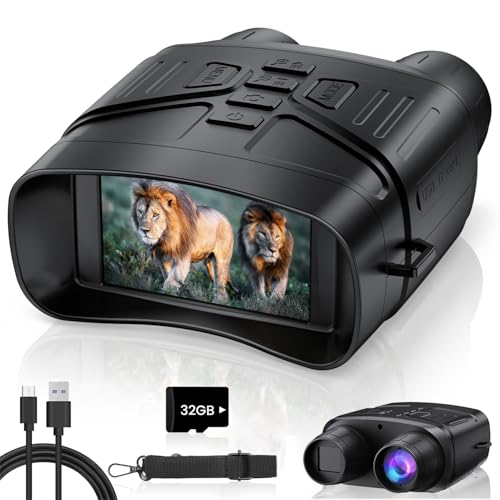
Vtiisamao Night Vision Goggles, 4K Night Vision Binoculars for Adults | 3" HD Display, 5000mAh Rechargeable Battery, 32GB TF Card Included for Wildlife, Camping & Security
Check price on AmazonFinal Thoughts: Is a Thermal Binocular Worth It?
If you regularly find yourself in low-light or no-light situations where detecting heat signatures is critical, thermal binoculars are absolutely worth the investment. They outperform night vision in complete darkness and offer capabilities no other handheld optic can match. Whether you're a hunter, security professional, or outdoor adventurer, a quality thermal binocular will become an indispensable tool.
Remember to balance resolution, range, and budget. Start with a mid-range 320×240 model if you're unsure—it offers excellent performance for most users. And always pair your thermal gear with reliable accessories. For nighttime photography documentation, a 4K camera or high-end camera can capture what you see. For quick sharing, a mini digital camera or even a spy camera with audio and video recording can be useful in covert scenarios.
Now that you understand the technology, specs, and use cases, you're ready to make an informed purchase. Explore our recommended products above to find the perfect thermal binoculars for your needs.