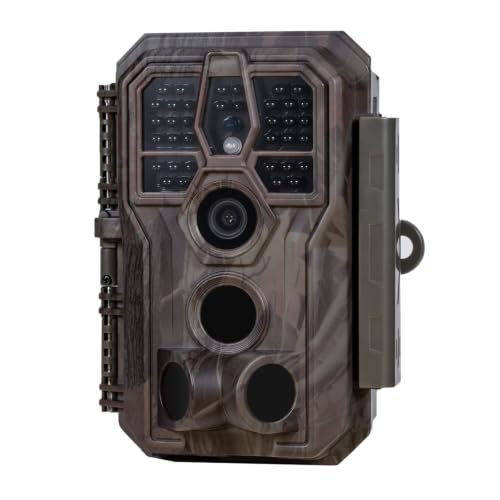
Trail Camera That Sends Photos to Phone
Stop driving to the woods just to check an SD card. Discover how cellular trail cameras deliver real-time wildlife photos straight to your smartphone — and learn exactly what to look for before you buy.
SEE TOP PICKSWhy this matters: A trail camera that sends photos to phone transforms scouting. Instead of weekly trips to swap cards, you get instant alerts when a buck, bear, or trespasser crosses your property. This guide explains the technology, the costs, and the features that separate a reliable camera from a frustrating one.
What Is a Trail Camera That Sends Photos to Phone?
A cellular trail camera — often called a wireless game camera — looks like a traditional scouting camera but contains a built-in SIM card and cellular modem. When the passive infrared (PIR) motion sensor detects movement, the camera captures a still image or short video and transmits it over a 4G LTE or LTE-M network to a cloud server. From there, the image is pushed to a mobile app on your phone, usually within seconds to a few minutes.
The core appeal is remote monitoring. Hunters, wildlife enthusiasts, and property owners can track activity without physically disturbing the area. If you already use trail cameras with night vision, motion activation, and waterproof housings, adding cellular transmission is the natural next step.
Some models also support Wi-Fi or Bluetooth for local transfer, but the true "sends to phone" convenience comes from cellular connectivity. If you want a camera that works even where Wi-Fi is unavailable, a cellular model is the answer — much like a trail camera with cell phone notification that operates independently of your home network.
How Cellular Trail Cameras Work
Understanding the workflow helps you choose the right model:
- Motion trigger: The PIR sensor detects heat and movement within its field of view.
- Capture: The camera takes a photo (or video clip) using its image sensor.
- Transmission: The built-in modem sends the compressed image over the cellular network to the manufacturer's cloud service.
- Notification: The companion app sends a push notification to your phone. You can view, download, or organize the image.
- Local backup: Most cameras also save a full-resolution copy to an SD card, so nothing is lost if the signal drops.
This is similar in principle to how game cameras that connect to your phone operate — the difference is usually in the app quality, data plan flexibility, and transmission speed.
Key Features to Compare Before Buying
1. Cellular Network and Coverage
Most cameras support 4G LTE, and some newer models offer LTE-M or 5G for faster uploads. The most important factor is which carrier the camera uses and whether that carrier has strong coverage where you plan to deploy it. Some cameras are carrier-locked; others accept a universal SIM. Check coverage maps before committing.
2. Photo and Video Resolution
A 12MP to 20MP sensor is standard for scouting. Higher megapixels help with identifying antler points or facial features, but remember that transmitted images are often compressed for speed. Look for a camera that sends a clear preview and allows you to request the full-resolution file on demand.
Video resolution matters too. Many cellular cameras now record 1080p or even 4K video locally, while transmitting shorter clips. If video is important, prioritize a model with strong local recording and reasonable transmission limits.
3. Data Plans and Subscription Costs
This is where many buyers get surprised. Almost all cellular trail cameras require a data plan. Plans vary widely:
- Prepaid monthly: Typically $5–$15 per camera per month, depending on the number of photos.
- Annual bundles: Often cheaper per month but require upfront payment.
- Free tier: A few brands offer a limited number of free photos per month, then charge overages.
- No subscription: Rare, but some cameras use Wi-Fi or Bluetooth only — these are not truly cellular. If avoiding fees is critical, explore security cameras that don't require a subscription as a comparison point, though they serve a different purpose.
Always factor the subscription into your total cost of ownership. A $100 camera with a $10/month plan costs $220 in the first year.
4. Trigger Speed and Recovery Time
Trigger speed is the time between motion detection and image capture. For wildlife, 0.2–0.5 seconds is excellent. Recovery time is how quickly the camera can take the next photo. A fast recovery time (under 1 second) means you won't miss a second animal in the same group.
5. Night Vision and Illumination
Most trail cameras use infrared (IR) LEDs for night images. Look for a camera with a no-glow or low-glow IR array if you don't want visible red light spooking animals. The effective range should match your deployment distance — 50 to 100 feet is typical.
If you're also considering fixed security cameras for your home, the night vision principles are similar to those in outdoor security cameras with motion detection, though trail cameras are optimized for battery life and remote locations.
6. Battery Life and Power Options
Cellular transmission drains batteries faster than local recording. Most cameras run on 8–12 AA batteries, but many support external power sources:
- Solar panels: Ideal for long-term deployment. A small solar panel can keep the camera topped off in sunny areas.
- 12V external batteries: Common for extended scouting.
- Lithium AA batteries: Perform better in cold weather than alkaline.
If you're already familiar with solar-powered surveillance cameras that work without Wi-Fi, the same solar principles apply here — just on a smaller scale.
7. App Quality and Ease of Use
The mobile app is your primary interface. A good app lets you:
- View and download photos
- Adjust camera settings remotely
- Organize images by date, time, and camera
- Receive customizable notifications
- Monitor data usage
Read user reviews about the app before buying. A great camera with a buggy app is a daily frustration.
8. Weatherproofing and Durability
Trail cameras live outdoors in rain, snow, and heat. Look for an IP66 or IP67 rating, a sturdy housing, and a secure latch. A camera that leaks will fail quickly.
Cellular Trail Camera vs. Traditional Trail Camera
| Feature | Cellular Trail Camera | Traditional Trail Camera |
|---|---|---|
| Remote photo delivery | Yes — via app | No — manual SD card retrieval |
| Monthly cost | Usually $5–$15 | None |
| Battery drain | Higher due to transmission | Lower |
| Best for | Remote scouting, real-time alerts | Budget setups, close-range monitoring |
| Setup complexity | Moderate — SIM and app required | Simple — insert SD card and go |
If you need real-time awareness, cellular is worth the cost. If you're on a tight budget and can check the camera weekly, a traditional model may suffice. Many hunters use a mix of both.
How to Set Up a Trail Camera That Sends Photos to Phone
- Choose a location: Aim for game trails, water sources, or fence lines. Mount the camera at chest height, angled slightly downward.
- Insert the SIM card and batteries: Follow the manufacturer's instructions. Activate the SIM and data plan before heading out.
- Format the SD card: Use a Class 10 or UHS-I card for reliable recording.
- Download the app: Create an account and pair the camera. Test the connection before leaving the site.
- Adjust settings: Set photo or video mode, resolution, trigger interval, and sensitivity. Enable night mode.
- Test the trigger: Walk in front of the camera and confirm you receive a notification.
- Secure the camera: Use a lockable cable or security box to prevent theft.
If you're setting up multiple cameras, consider how you'll manage them. The workflow is similar to managing security cameras you can watch from your phone, though trail cameras are optimized for low-power, long-term deployment.
Common Mistakes to Avoid
- Ignoring coverage: Buying a camera that uses a carrier with weak signal in your area.
- Underestimating data costs: A camera that sends every photo can burn through a data plan quickly. Look for plans that let you limit transmissions or send only during certain hours.
- Using alkaline batteries in cold weather: Lithium batteries perform far better below freezing.
- Mounting too high or too low: This causes missed triggers or partial animal shots.
- Not testing before deployment: Always test the camera and app at home before leaving it in the field.
- Forgetting to check local regulations: Some areas restrict cellular cameras or require specific permits.
Who Should Buy a Cellular Trail Camera?
This category is ideal for:
- Hunters who want to monitor deer movement without disturbing the area.
- Wildlife photographers who want to capture candid shots remotely.
- Property owners who want to monitor remote gates, driveways, or trails.
- Farmers and ranchers checking livestock or equipment.
- Anyone who values real-time information over weekly manual checks.
If your primary goal is home security rather than wildlife, a dedicated outdoor security camera with motion detection may be more appropriate. Trail cameras are built for battery life and remote locations, not continuous 24/7 monitoring.
Pro Tip: If you're comparing cellular trail cameras to other remote monitoring options, consider how they stack up against security cameras that use Ethernet cable for reliability. Cellular wins on flexibility; wired wins on consistency. Choose based on your location and needs.
Frequently Asked Questions
How does a trail camera send photos to my phone?
A cellular trail camera contains a built-in SIM card and modem that connects to a mobile network such as 4G LTE. When the motion sensor triggers, the camera captures a photo and transmits it wirelessly to a cloud server or app, which then pushes the image to your smartphone.
Do trail cameras that send photos to phone require a subscription?
Most cellular trail cameras require a data plan subscription to transmit photos. Some brands offer prepaid plans, while a few models support Wi-Fi or Bluetooth transfer that avoids monthly fees when you are within range. Always check the plan details before buying.
What is the best resolution for a cellular trail camera?
A 12MP to 20MP sensor is sufficient for scouting. Higher megapixel counts help with identification, but the transmitted photo is often compressed. Look for models that send a clear thumbnail plus allow full-resolution download on demand.
Can I use a trail camera without cellular signal?
Yes, many cellular trail cameras also record to a local SD card. If there is no signal, photos are stored on the card and can be retrieved manually. Some models will send the backlog once signal returns.
How long do batteries last in a cellular trail camera?
Battery life depends on transmission frequency, signal strength, and temperature. In good conditions with a moderate number of triggers, 8–12 AA lithium batteries can last 2–4 months. Solar panels can extend this indefinitely in sunny areas.
Final Thoughts: Choosing the Right Trail Camera for Your Phone
A trail camera that sends photos to phone is a powerful tool for anyone who wants remote visibility. The key is to match the camera to your environment, your budget, and your data needs. Prioritize cellular coverage, a reliable app, and a data plan that won't surprise you. With the right setup, you'll receive real-time photos of wildlife, trespassers, or livestock — all from the comfort of your home.
If you're also considering cameras for home security, the same principles of connectivity and remote viewing apply. Explore options like cameras for inside home that connect to phone or wireless cameras that don't require Wi-Fi to build a complete monitoring ecosystem.
Recommended Trail Cameras That Send Photos to Phone
⚠️ AFFILIATE DISCLOSURE: This website contains affiliate links. As an affiliate Associate, we earn from qualifying purchases. If you make a purchase through these links, we may receive a small commission at no additional cost to you. Read our full affiliate policy.

SPYPOINT Flex-M Twin, Cellular Trail Camera, Night Vision, Free Photo Plan | Auto Multi Cell-Network, LTE, GPS, Waterproof, 0.5 Second Trigger, 28MP Photo, 720p Video+ Sound, 90Ft Motion Dection & Flash
Check price on Amazon
SEHMUA 3rd 4G LTE Cellular Trail Cameras with 48MP Photo 2K Live Streaming | Unlimited Data Plan Built-in SIM Card, 4W Solar Powered Game/Deer Cam, No Glow Flash with Motion Activated, Camouflage
Check price on Amazon
TACTACAM Reveal Ultra Cellular Trail Camera: 4K Photo, 1080p Video, Live View, GPS Tracking-Enabled, Switchable No-Glow/Low-Glow Flash, LTE Connectivity, LCD Screen - Best Hunting, Game Camera
Check price on Amazon
SPYPOINT Flex-Plus Cellular Trail Camera, 36MP Photos and 1080p Videos w/Sound, Double The Battery Capacity, GPS-Enabled, Dual-SIM LTE Connectivity, 100' Flash & Detection Range, 4 Capture Modes
Check price on Amazon
RECOTAC Sense Cellular Trail Camera - 32MP 1296P Game Camera with AI Photo Upscale,4G LTE Trail Cam No WiFi Need,No Glow Night Vision Motion Activated 0.2s Trigger Time Trail Cam for Outdoor Wildlife
Check price on Amazon