Beginner Point and Shoot Digital Camera
New to photography? Start with a camera that balances simplicity, control, and image quality.
Read More →
Why a viewfinder still matters in a pocketable camera — and how to choose the best compact for travel, street, and everyday photography.
EXPLORE THE GUIDEWhy a viewfinder? In bright sunlight, LCD screens wash out and become nearly useless. A viewfinder lets you frame accurately, save battery, and shoot with greater stability. For compact cameras, a built-in electronic viewfinder (EVF) or optical viewfinder (OVF) is a premium feature that transforms the shooting experience.
Compact cameras with viewfinders occupy a special niche. They offer the portability of a point-and-shoot with the handling and precision of a more serious camera. Whether you are a street photographer who wants to remain discreet, a traveler who needs reliable framing under harsh light, or a parent capturing fast-moving kids, a viewfinder-equipped compact gives you a tangible advantage.
In this guide, we break down what makes these cameras special, the different types of viewfinders, key features to prioritize, and how to match a camera to your shooting style. If you are exploring other beginner-friendly options, you might also consider a beginner point and shoot digital camera or a point and shoot digital camera with viewfinder for broader comparisons. For those leaning toward interchangeable lenses, a beginner mirrorless camera for photography might be worth a look.
An EVF shows a digital preview of your exposure, white balance, and focus. It works in bright light and lets you review settings without taking your eye off the subject. Look for high resolution (2.36M dots or more) and a fast refresh rate.
An OVF uses a direct optical path, offering zero lag and natural color. It is less common in compact cameras but prized by purists. Hybrid viewfinders (like those in some Fujifilm X100 series) combine both.
Larger sensors (1-inch or APS-C) deliver better low-light performance and depth of field control. If image quality is your top priority, prioritize sensor size over zoom range.
The best camera is the one you carry. Look for a slim profile, durable body, and intuitive controls. Some models are truly shirt-pocketable, while others fit in a small pouch.
A bright fixed lens (f/1.8–f/2.8) excels in low light. A zoom lens offers flexibility for travel. Fixed-lens compacts with prime lenses often deliver superior sharpness.
Fast, reliable autofocus is crucial for street and family photography. Look for phase-detection AF and eye/face detection if you shoot people.
| Type | Pros | Cons | Best For |
|---|---|---|---|
| Electronic (EVF) | Exposure preview, bright light visibility, compact size | Battery drain, slight lag, digital look | Travel, street, everyday shooting |
| Optical (OVF) | Zero lag, natural view, battery efficient | No exposure preview, limited framing accuracy | Purists, action, fast-paced shooting |
| Hybrid | Best of both worlds, switchable | Bulky, expensive, limited models | Enthusiasts who want flexibility |
Start by defining your primary use case. If you shoot mostly travel and street, prioritize portability and a bright lens. For family and events, fast autofocus and a versatile zoom are key. If you want the best image quality, look for a 1-inch or larger sensor. Budget also plays a role: compact cameras with viewfinders generally range from $500 to $2,500 depending on sensor size, lens, and brand.
For those just starting out, a cheap but good camera for photography or an affordable digital camera with good quality can be a smart entry point. If you are also considering a camera for video, a professional video camera for beginners may overlap with your needs. And if wildlife is your passion, a digital camera for wildlife photography or a budget camera for wildlife photography could be a better fit.
⚠️ AFFILIATE DISCLOSURE: This website contains affiliate links. As an affiliate Associate, we earn from qualifying purchases. If you make a purchase through these links, we may receive a small commission at no additional cost to you. Read our full affiliate policy.



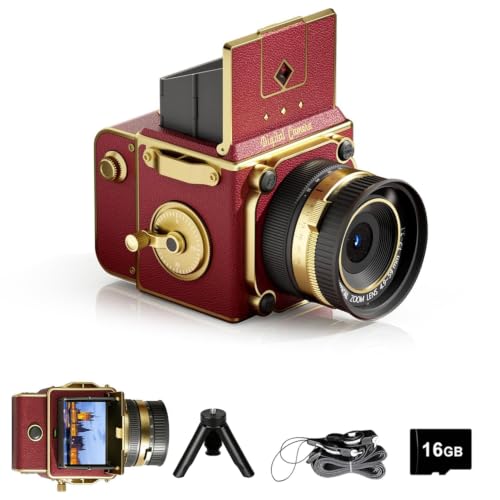
New to photography? Start with a camera that balances simplicity, control, and image quality.
Read More →Explore our full guide to viewfinder-equipped point-and-shoots, including top models and buying tips.
Read More →Discover budget-friendly options that don't compromise on the features that matter most.
Read More →A compact point and shoot camera with a viewfinder is more than a nostalgic throwback; it is a practical tool that enhances your ability to capture the world around you. By understanding the different viewfinder types, sensor sizes, and lens options, you can choose a camera that fits your lifestyle and creative goals. Whether you are documenting street scenes, traveling light, or simply want a reliable everyday companion, the right compact will keep you shooting — not fiddling with menus.
If you are still exploring, consider a semi-professional camera for beginners or a good beginner camera for photography and video for more flexibility. For those who want a camera that connects to their phone, a camera that can connect to your phone might be ideal. And if security is your focus, our small security camera that connects to phone guide is a great resource.
The information provided on AllCameraGuide is for educational and informational purposes only. We are not professional camera technicians or photographers, and our content should not replace professional advice. Always consult with a qualified expert regarding camera compatibility, safety, or technical concerns. Some content may use AI assistance. Always check product warranties and safety standards before purchasing. If you do not agree, please do not use this website. Read the full disclaimer.