
Indoor Hidden Security Camera with Audio: The Complete Guide
Discover how to choose the perfect indoor hidden security camera with audio for discreet monitoring. Learn about features, installation tips, legal considerations, and top recommendations for home and office use.
VIEW TOP RECOMMENDATIONSWhat You'll Learn
Why Choose an Indoor Hidden Security Camera with Audio?
An indoor hidden security camera with audio offers a unique advantage over traditional visible cameras: discretion. Whether you're monitoring a nanny, keeping an eye on elderly family members, or protecting your home office, a covert camera captures both video and sound without drawing attention. This dual capability provides a complete picture of what's happening in your space, making it an invaluable tool for comprehensive surveillance.
Unlike standard security cameras that can be easily spotted and potentially disabled, hidden cameras blend seamlessly into their environment. They can be disguised as everyday objects like smoke detectors, clock radios, phone chargers, or even picture frames. This makes them ideal for situations where you need to observe without alerting others to the camera's presence. For those who need flexibility in placement, consider exploring indoor-use wireless surveillance cameras that offer similar discretion with added connectivity benefits.
Audio capability is a game-changer in surveillance. It allows you to not only see but also hear what's happening—whether it's a conversation, a disturbance, or simply the reassuring sounds of daily activity. This is particularly valuable for parents monitoring children, pet owners checking on their animals, or business owners ensuring proper conduct in their establishment. If audio isn't your primary concern, you might also want to look at indoor wireless security cameras without subscription for no-fee monitoring options.
Key Features to Look For in a Hidden Audio Camera
Not all hidden cameras are created equal. When shopping for an indoor hidden security camera with audio, pay close attention to these critical features:
🎥 Video Resolution
Look for at least 1080p Full HD. 4K options provide superior detail but require more storage. Higher resolution means clearer identification of faces and objects.
🎤 Audio Quality
Built-in microphones should capture clear sound within 15-20 feet. Check for noise cancellation features and whether the camera supports two-way audio for communication.
🌙 Night Vision
Infrared LEDs enable recording in complete darkness. Look for cameras with automatic IR activation and a range of at least 15-20 feet for indoor use.
📶 Connectivity
Wi-Fi enabled cameras allow remote viewing via smartphone apps. Some models support cellular or local storage only for added security. Consider security systems that don't require Wi-Fi if you want to avoid network dependency.
🔋 Power Source
Battery-powered models offer flexible placement, while plug-in cameras provide continuous operation. For long-term use, consider battery-operated indoor security cameras that balance convenience and performance.
💾 Storage Options
Local SD card storage (up to 128GB or more) eliminates monthly fees. Cloud storage offers backup but typically requires a subscription. Check for security cameras that record to SD card for no-fee options.
📱 Remote Access
View live feeds and recordings from your smartphone anywhere. Ensure the app is user-friendly and supports both iOS and Android. For alternatives, see security cameras I can watch from my phone.
🕵️ Disguise Quality
The best hidden cameras are indistinguishable from the objects they mimic. Look for realistic designs that won't raise suspicion during casual observation.
Types of Indoor Hidden Cameras with Audio
Hidden cameras come in various form factors, each suited to different surveillance needs. Understanding the options helps you choose the best fit for your situation:
1. Smoke Detector Cameras
These are among the most popular hidden cameras because smoke detectors are ubiquitous and rarely questioned. They offer a high vantage point for wide-angle coverage and often include audio recording. Installation is typically ceiling-mounted, providing an excellent overhead view of a room.
2. Clock and Radio Cameras
Functioning as actual clocks or radios, these cameras blend perfectly into bedrooms, offices, and living rooms. They're ideal for nightstand or desk placement, offering a straight-on view. Many models include audio and motion detection. For those who prefer no ongoing fees, indoor wireless security cameras without subscription in this form factor are excellent choices.
3. Phone Charger and Adapter Cameras
These plug into wall outlets and look like standard USB chargers. They're perfect for monitoring areas near power sources and offer a discreet, always-powered solution. Audio recording is standard in most models.
4. Picture Frame Cameras
Blending into home decor, these cameras hide behind or within picture frames. They're ideal for shelf or mantel placement and can capture audio along with video. They work well in living rooms and hallways.
5. Plant and Decorative Object Cameras
These cameras are embedded in artificial plants, books, or other decorative items. They offer maximum flexibility in placement and are virtually undetectable. Audio capability varies by model.
For specialized needs, such as monitoring pets, you might consider an indoor pet camera without subscription that offers similar discretion with pet-specific features. If you need a camera that connects to your phone without Wi-Fi dependency, explore options for cameras for inside home that connect to phone.
Installation Tips for Optimal Performance
Proper installation is key to getting the most out of your indoor hidden security camera with audio. Follow these guidelines for best results:
Positioning for Maximum Coverage
- Height matters: Place cameras at a height that captures faces clearly—typically 5-7 feet off the ground for tabletop objects, or ceiling height for smoke detector models.
- Angle for audio: Since audio quality diminishes with distance, position the camera within 15-20 feet of the primary area you want to monitor.
- Avoid backlighting: Don't place cameras facing windows or bright lights, as this can wash out the image and reduce audio clarity.
- Consider traffic patterns: Place cameras where people naturally gather or pass through, such as near entryways, seating areas, or hallways.
Power and Connectivity
- Battery models: Place within easy reach for battery changes, or choose models with long battery life (3-6 months).
- Plug-in models: Ensure the outlet location aligns with your surveillance target and doesn't look suspicious.
- Wi-Fi strength: Test your Wi-Fi signal at the camera location. Weak signals cause dropped connections and poor video quality. If Wi-Fi is unreliable, consider security cameras not connected to internet for local-only recording.
Testing Before Going Live
- Record test footage during different times of day to check lighting and audio quality.
- Verify that the camera's field of view covers your intended area.
- Test the mobile app's responsiveness and notification settings.
- Ensure the disguise looks natural in its environment—no obvious wires or unnatural placement.
Legal and Ethical Considerations
⚠️ IMPORTANT: Laws regarding hidden camera use vary significantly by jurisdiction. Always consult local laws before installing any surveillance device. In many places, recording audio without consent is illegal, even in your own home in certain circumstances.
While hidden cameras are legal in many contexts, there are important restrictions you must understand:
- Privacy expectations: It's generally illegal to record in areas where people have a reasonable expectation of privacy, such as bathrooms, bedrooms (in shared living situations), or changing rooms.
- Audio recording laws: Many jurisdictions require at least one-party consent (you) for audio recording, while others require all-party consent. Always verify your local laws.
- Workplace surveillance: Employers generally have the right to monitor workplaces, but must disclose surveillance in some regions. Never install cameras in restrooms or locker rooms.
- Nanny cams: While legal in most places for monitoring childcare providers, audio recording may have additional restrictions.
Ethically, hidden cameras should be used responsibly. They're appropriate for legitimate security and safety purposes, not for invading privacy or gathering information maliciously. If you're considering surveillance for a rental property or shared space, explore smart professional surveillance systems that offer transparent monitoring options.
Hidden Cameras vs. Traditional Security Cameras
Understanding the differences helps you decide which type of camera best suits your needs:
| Feature | Hidden Camera with Audio | Traditional Security Camera |
|---|---|---|
| Visibility | Covert, disguised as everyday objects | Visible, often with warning signs |
| Deterrent Effect | Low—intruders don't know it's there | High—visible cameras deter crime |
| Audio Capability | Common, often built-in | Less common, sometimes add-on |
| Installation | Simple, no wiring needed for battery models | Complex, often requires professional installation |
| Coverage Area | Limited to one room or area | Can cover large areas with multiple cameras |
| Best For | Discreet monitoring, nanny cams, evidence gathering | General security, perimeter protection, deterrence |
| Cost | $30–$200 per camera | $100–$500+ per camera (plus installation) |
For comprehensive home protection, many people use both types: visible cameras as deterrents and hidden cameras for discreet monitoring. If you're building a full system, consider professional home surveillance systems that can integrate both approaches. For budget-conscious buyers, cheap easy to install security cameras offer accessible entry points into home monitoring.
Best Indoor Hidden Security Cameras with Audio
⚠️ AFFILIATE DISCLOSURE: This website contains affiliate links. As an affiliate Associate, we earn from qualifying purchases. If you make a purchase through these links, we may receive a small commission at no additional cost to you. Read our full affiliate policy.

Hidden Camera Photo Frame 1080P Mini Spy Nanny Cam with Motion Detection | Small Video Recorder, Indoor Security Camera, Loop Recording, No WiFi Needed, Pet, Baby, Home, Office, No Audio
Check price on Amazon
Only 0.9 inch Hidden Camera with Audio/Video Mini Small Spy Home Nanny | Indoor Night Vision Motion Detection Baby Monitor Wireless Outdoor WiFi espias Security Secret System Doorbell (1,black,mini)
Check price on Amazon
4 Pack WiFi Hidden Camera 1080P Night Vision Home Security for Pet Baby | Portable Wireless Indoor Security Cam, Motion Detection, Remote Live Viewing, Easy Setup for Home Surveillance Video Only
Check price on Amazon
1080p Hidden Camera WiFi, HD Spy Camera, Nanny cam for Home Security | Motion Detection, Loop Recording, Remote Viewing, for Indoor Security Home & Office, WIFI & SD Storage
Check price on Amazon
ZMDCAM Mini WiFi Camera 1080P Security Camera for Home Use | Security Wireless Camera Indoor Night Vision Nanny Cam for Baby, Pets, Compatible with Smartphone, Tablets(Video Only)
Check price on Amazon
Chasvon Indoor Security Camera | 2.4G/5G Clock & Wireless Charging, 1080P WiFi Cameras, Motion Detection, Night Vision, Local & Cloud Storage, Black
Check price on Amazon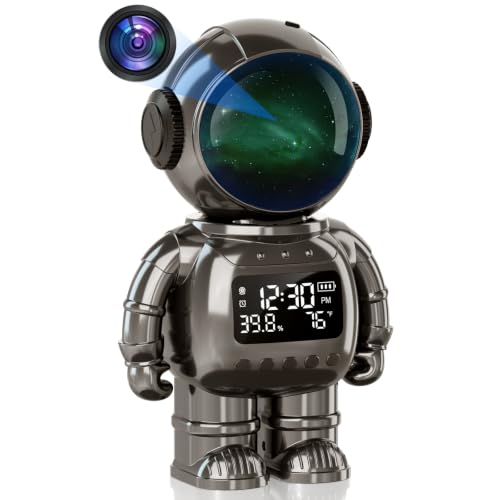
Noahlink 2K Clock Indoor Camera, 2.4G/5G WiFi Cameras for Home Security with Temperature & Humidity Display, 2-Way Audio, AI Motion Detection, Color Night Vision, Baby Monitor & Pet Camera (Gray)
Check price on AmazonPros and Cons of Indoor Hidden Cameras with Audio
✅ Advantages
- Discreet monitoring without alerting subjects
- Audio captures conversations and disturbances
- Easy installation with no professional help needed
- Affordable compared to full security systems
- Remote viewing via smartphone apps
- Can be moved easily between locations
- Evidence gathering for legal or HR purposes
❌ Disadvantages
- Legal restrictions on audio recording vary by location
- Battery models require regular charging
- Limited field of view compared to traditional cameras
- May violate privacy if misused
- Wi-Fi dependency for remote viewing
- Storage limitations without cloud subscription
- Can be discovered and disabled
Frequently Asked Questions
Are indoor hidden cameras with audio legal?
Legality depends on your jurisdiction and how you use the camera. In many places, hidden cameras are legal in your own home for security purposes, but audio recording laws are stricter. Always check local laws and never record in areas with reasonable privacy expectations like bathrooms or bedrooms.
How long do batteries last in hidden cameras?
Battery life varies widely based on usage, features, and model. Most battery-powered hidden cameras last between 2 weeks and 6 months. Cameras with motion-activated recording and lower resolution settings tend to have longer battery life. For continuous recording, plug-in models are recommended.
Do hidden cameras need Wi-Fi?
Not necessarily. Many hidden cameras support local SD card recording without any internet connection. However, Wi-Fi is required for remote viewing and cloud storage. If you want to avoid Wi-Fi dependency, explore cameras that don't need Wi-Fi to record.
Can hidden cameras see in the dark?
Yes, most quality indoor hidden cameras with audio include infrared night vision. They automatically switch to IR mode in low light, allowing clear recording in complete darkness up to 15-30 feet, depending on the model.
How do I view footage from a hidden camera?
Most modern hidden cameras connect to a smartphone app via Wi-Fi, allowing live viewing and playback from anywhere. Some models support local viewing via SD card or direct connection. For remote access options, see security cameras I can watch from my phone.
What's the best disguise for a hidden camera?
The best disguise depends on the room. Smoke detectors work well on ceilings, clock radios on nightstands, phone chargers near outlets, and picture frames on shelves. Choose something that fits naturally into the environment and won't be moved or examined closely.
Do hidden cameras require a subscription?
Not all do. Many models offer local SD card storage with no monthly fees. Cloud storage typically requires a subscription. For no-fee options, look for security cameras that don't require subscription.
Can I use a hidden camera in a rental property?
This is legally complex. In most places, landlords cannot install hidden cameras in tenant-occupied spaces. Tenants may have limited rights to install cameras in their own units, but common areas are restricted. Always consult local laws and your lease agreement.
Final Thoughts: Choosing the Right Hidden Camera
An indoor hidden security camera with audio is a powerful tool for discreet monitoring, whether you're concerned about home security, childcare, elderly care, or workplace conduct. The key is choosing a model that balances video quality, audio clarity, ease of use, and legal compliance.
Before purchasing, clearly define your surveillance goals. Do you need remote viewing? How long do you need to record? What's your budget? Answering these questions will guide you to the right camera. For those who need outdoor coverage as well, consider complementing your indoor setup with outdoor security cameras with motion detection for complete property protection.
Remember that with great surveillance power comes great responsibility. Use hidden cameras ethically and legally, respecting others' privacy while protecting what matters most to you. With the right approach, an indoor hidden camera with audio can provide invaluable peace of mind and security for your home or business.