
Infrared Wildlife Camera with Motion Sensor
Capture stunning nocturnal wildlife footage without disturbing animals. Learn how to choose the perfect trail camera for hunting, research, or backyard observation.
VIEW RECOMMENDED CAMERAS📋 What You'll Learn
Why This Guide Matters: An infrared wildlife camera with motion sensor is one of the most powerful tools for observing animals without human presence. Whether you're a hunter scouting game, a researcher tracking elusive species, or a homeowner curious about nighttime visitors, the right trail camera can reveal a hidden world. This guide covers everything you need to make an informed purchase decision.
What Is an Infrared Wildlife Camera with Motion Sensor?
An infrared wildlife camera with motion sensor is a rugged, weatherproof digital camera designed to automatically capture photos or videos when it detects movement. Unlike traditional cameras, these devices are built to operate unattended for weeks or even months in harsh outdoor conditions. They use passive infrared (PIR) sensors to detect body heat and motion, triggering the camera to record the scene.
The "infrared" aspect refers to the camera's ability to illuminate the scene at night using IR LEDs. These LEDs emit light in the invisible spectrum (typically 850nm or 940nm), allowing the camera to capture clear black-and-white images in complete darkness without emitting a visible flash that could spook wildlife. This makes them ideal for observing nocturnal animals like deer, coyotes, raccoons, and foxes in their natural behavior.
Modern trail cameras have evolved far beyond simple image capture. Many now offer high-definition video, time-lapse functionality, and even cellular connectivity that sends images directly to your phone. If you're interested in remote monitoring options, you might explore cellular trail cameras that link together for comprehensive coverage of large properties.
How Motion Sensor Technology Works
Understanding how motion detection works will help you choose the right camera and position it effectively. The core technology behind most trail cameras is the passive infrared (PIR) sensor, which detects changes in infrared radiation (body heat) within its field of view.
When a warm-blooded animal moves across the sensor's detection zones, the PIR sensor triggers the camera to wake from its low-power standby mode and begin recording. The camera then uses its IR LEDs to illuminate the scene if it's dark, capturing either a still image, a video clip, or a burst of photos.
Key factors that affect motion detection performance include:
- Detection range: Typically 50–100 feet, with premium models reaching 120 feet or more.
- Trigger speed: The time between motion detection and image capture. Faster is better (0.2–0.5 seconds ideal).
- Recovery time: How quickly the camera can trigger again after capturing an image.
- Detection zones: The number of PIR zones determines how precisely the camera detects motion.
- Field of view: Wider angles (up to 120°) cover more area but may reduce detection distance.
For those interested in remote monitoring beyond trail cameras, similar motion detection technology is used in security cameras that will alert your phone, giving you real-time notifications wherever you are.
Recommended Infrared Wildlife Cameras with Motion Sensor
⚠️ AFFILIATE DISCLOSURE: This website contains affiliate links. As an affiliate Associate, we earn from qualifying purchases. If you make a purchase through these links, we may receive a small commission at no additional cost to you. Read our full affiliate policy.
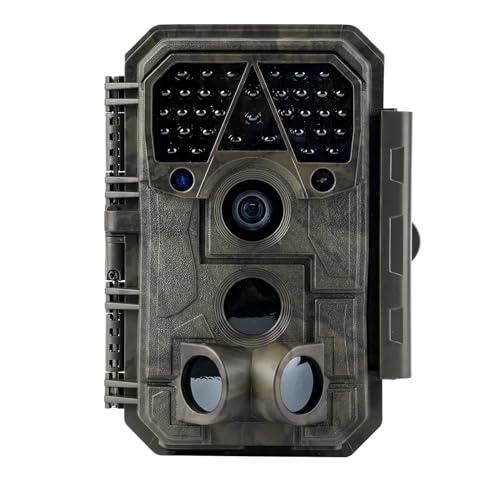
Meidase P70 (Non-Cellular,Non-WiFi) Trail Camera, 64MP 1296p, Game Cameras with No-Glow IR Night Vision, Motion Activated, Waterproof for Wildlife Deer Cams, Hunting
Check price on Amazon
KJK Trail Camera 4K 64MP WiFi Bluetooth Game Camera, Night Vision Wildlife Hunting Camera, 0.1s Trigger Motion Activated, IP67 Waterproof, 130° Wide Angle for Deer & Farm Security
Check price on Amazon
WOSPORTS Mini Trail Camera,30MP 1080P HD Game Camera Motion Activated with IR Night Vision Waterproof Video Deer Cam for Outdoor Wildlife Monitoring
Check price on Amazon
Solar Trail Camera WiFi Bluetooth -5K 60MP Game Camera with 5200mAh Battery | Rechargeable Trail Cam with 64GB SD Card, Wildlife Cameras Deer Cams for Outdoor Backyard
Check price on Amazon
Trail Camera Starlight Night Vision WiFi, Dual Lens Bluetooth 60MP 4K 30FPS | 850NM Solar Game Camera, Trail Cameras with Night Vision Motion Activated Waterproof Loop Recording for Wildlife Monitoring
Check price on Amazon
Wildgame Innovations Terra Extreme Trail Camera 2-Pack, 26MP Game Camera, 80 ft Night Vision, <0.8s Trigger Speed, HD 720p Video, PIR Motion Sensor, Hunting & Wildlife Monitoring
Check price on Amazon
WOSODA 3 Pack Trail Cameras, 48MP 4K No-Glow Night Vision Game Camera, Trail Cam with Motion Activated, IP66 Waterproof,2''LCD Screen,120° Wide Lens Wildlife Camera,Outdoor Scouting & Security
Check price on Amazon
Misstech Solar Trail Camera, 4K/64MP Clear Night Vision for Game & Outdoor | Wildlife Camera with 0.1s Motion-Activated to Record Wild Animal, No Monthly Fee, App Control, IP66 Waterproof, Local Storage
Check price on AmazonKey Features to Look For
Not all trail cameras are created equal. When shopping for an infrared wildlife camera with motion sensor, pay close attention to these critical specifications:
🌙 Night Vision Range
The effective distance the IR LEDs can illuminate. Look for at least 60–80 feet for general wildlife, or 100+ feet for open fields and food plots.
⚡ Trigger Speed
How fast the camera captures an image after detecting motion. A speed of 0.2–0.5 seconds is ideal for capturing fast-moving animals.
📸 Resolution
Higher megapixels (12MP–30MP) provide more detail for identifying animals. Video resolution of 1080p or 4K is increasingly common.
🔋 Battery Life
Look for cameras with efficient power management. Models using 8–12 AA batteries typically last 3–12 months in standby mode.
💾 Storage Capacity
Support for SD cards up to 128GB or 256GB allows extended deployment without needing to retrieve the camera frequently.
📡 Connectivity
Cellular models send images to your phone. Wi-Fi models allow local transfer. Standard models require manual SD card retrieval.
🌧️ Weatherproofing
IP66 or IP67 rating ensures the camera survives rain, snow, dust, and extreme temperatures from -20°F to 140°F.
🎥 Video Capabilities
Look for adjustable video length (5–60 seconds), audio recording, and time-lapse modes for comprehensive wildlife documentation.
Types of Infrared Cameras
Infrared trail cameras come in several varieties, each suited to different applications and budgets:
No-Glow (940nm) vs. Low-Glow (850nm)
No-glow cameras use 940nm IR LEDs that are completely invisible to both humans and animals. They're the best choice for hunting wary game like mature bucks or predators that are easily spooked. However, no-glow cameras often have slightly shorter effective range and produce darker night images.
Low-glow cameras use 850nm LEDs that emit a faint red glow visible to some animals. They typically provide brighter, clearer night images and longer effective range. Many hunters find the trade-off acceptable, especially for deer that don't seem bothered by the subtle red light.
Cellular vs. Non-Cellular
Cellular trail cameras transmit images and videos over mobile networks, allowing you to monitor your property from anywhere. They're ideal for large properties, remote locations, or when you can't visit frequently. Be aware that cellular models require a data plan, and it's worth understanding the monthly cost for cellular trail camera before committing.
Non-cellular cameras store images on an SD card that you retrieve manually. They're more affordable, have no ongoing costs, and are perfect for backyard wildlife observation or properties you visit regularly.
Specialty Applications
Infrared camera technology extends beyond trail cameras. For property monitoring, you might consider infrared surveillance cameras for home that offer similar night vision capabilities. For detecting heat loss in buildings, infrared cameras for heat loss detection serve a completely different purpose. And for detecting hidden water issues, using infrared cameras to detect water leaks is a valuable diagnostic technique.
Comparison Table: Key Specifications
Use this table to compare typical specifications across different price tiers:
| Feature | Budget ($50–$100) | Mid-Range ($100–$200) | Premium ($200–$400+) |
|---|---|---|---|
| Resolution | 12–16 MP | 16–24 MP | 24–36 MP |
| Night Vision Range | 50–60 ft | 70–90 ft | 90–120+ ft |
| Trigger Speed | 0.5–0.8 sec | 0.3–0.5 sec | 0.1–0.3 sec |
| Video | 720p–1080p | 1080p–4K | 4K with audio |
| Battery Life | 3–6 months | 6–9 months | 9–12+ months |
| Connectivity | None | Wi-Fi (some models) | Cellular + Wi-Fi |
| Weatherproofing | IP54–IP55 | IP65–IP66 | IP66–IP67 |
| Best For | Backyard watching | Hunting, research | Professional, remote |
Pros and Cons of Infrared Wildlife Cameras
✅ Advantages
- Operates 24/7 in complete darkness without visible light
- Does not disturb or spook wildlife
- Weatherproof and designed for year-round outdoor use
- Long battery life with efficient power management
- Captures high-resolution images and video
- Motion activation conserves storage and battery
- Cellular models offer remote monitoring
- Relatively affordable compared to professional wildlife photography gear
❌ Limitations
- Night images are typically black-and-white (not color)
- No-glow models may have reduced night range
- Cellular models require ongoing data plan costs
- Motion detection can be triggered by moving branches or heat sources
- Image quality may not match dedicated wildlife photography cameras
- Some animals may notice low-glow IR LEDs
- Placement requires experimentation for optimal results
- Extreme temperatures can affect battery performance
Setup and Placement Tips
Even the best trail camera will underperform if placed incorrectly. Follow these guidelines for optimal results:
- Height: Mount cameras 3–4 feet above ground level, angled slightly downward. This positions the PIR sensor at the core body height of most animals.
- Distance: Position the camera 10–20 feet from the target area (trail, feeder, scrape). This balances detection range with image quality.
- Angle: Avoid pointing the camera directly east or west, as sunrise and sunset can cause false triggers and washed-out images.
- Clear the view: Remove tall grass, branches, and leaves from the camera's field of view to prevent false triggers and obstructions.
- Secure mounting: Use a sturdy tree mount, strap, or Python lock cable. Cameras can be knocked down by bears or stolen if not secured.
- Test first: Use the camera's test mode to verify detection range and framing before leaving it for extended periods.
- Check regulations: Some public lands restrict trail camera use. Always verify local laws before deployment.
- Format SD card: Always format the SD card in the camera before first use to ensure compatibility.
For those interested in monitoring other types of property, similar principles apply to motion detection cameras outdoor wireless used for security purposes. And if you're looking to capture time-lapse footage of long-term projects, time-lapse cameras for construction projects offer specialized features for that application.
Frequently Asked Questions
For deer feeders, position the camera 15–25 feet away, angled slightly downward. This distance allows the PIR sensor to detect deer approaching the feeder while keeping the entire feeding area in frame. If you place it too close, you'll only capture partial body shots. Too far, and you risk missed triggers or poor image quality. Experiment with placement during daylight hours using a test mode before leaving the camera unattended.
False triggers are a common issue. To minimize them: (1) Clear vegetation from the camera's field of view, especially branches that move in the wind. (2) Avoid pointing the camera at open water or areas with heat reflections. (3) Set the camera to a lower sensitivity if your model allows it. (4) Angle the camera slightly downward so the PIR sensor focuses on ground-level activity. (5) Consider using a camera with adjustable detection zones or a longer delay between triggers.
No. Infrared light at the wavelengths used in trail cameras (850nm and 940nm) is non-harmful to wildlife and humans. It's the same type of radiation used in TV remotes. No-glow (940nm) cameras are completely invisible to animals, while low-glow (850nm) cameras emit a faint red glow that some animals may notice, but it does not cause harm. The light does not damage eyes or disrupt natural behaviors in any harmful way.
Checking frequency depends on your goals and camera type. For non-cellular cameras, check every 1–4 weeks depending on battery life and storage capacity. Cellular cameras send images remotely, so you can check them daily from your phone and only visit when you need to change batteries or SD cards. Be mindful that frequent visits can leave human scent and disturb wildlife patterns, so minimize trips to critical areas during hunting season.
Use a Class 10 or UHS-I SD card from a reputable brand (SanDisk, Lexar, Samsung). Avoid cards larger than the camera's maximum supported capacity (typically 32GB–256GB depending on model). For 4K video, use a U3-rated card. Always format the card in the camera before use, and consider using a card specifically designed for surveillance or dash cam use, as these are built for the continuous write cycles typical of trail cameras.
Yes, trail cameras can supplement home security, especially for perimeter monitoring or areas without power. However, they lack the real-time alerts, continuous recording, and integration features of dedicated security cameras. For comprehensive home protection, consider combining trail cameras with a home security camera with no subscription or a wireless security camera system with local storage. For remote properties without internet, surveillance cameras that don't require internet are worth exploring.
Protect your investment with these measures: (1) Use a heavy-duty Python lock or cable to secure the camera to a tree. (2) Use a security box that encloses the camera. (3) Place cameras in less visible locations. (4) Use cable locks through the camera's mounting holes. (5) Consider a camera with GPS tracking or a cellular model that sends images—if stolen, you may capture the thief's image before the camera disappears. (6) Etch your name or ID on the camera. (7) If using on public land, check regulations first.
Ready to Start Your Wildlife Observation?
Browse our top-rated infrared wildlife cameras with motion sensor and find the perfect model for your needs. Whether you're a hunter, researcher, or nature enthusiast, there's a trail camera for you.
SEE RECOMMENDED CAMERASExplore More: If you're interested in expanding your monitoring capabilities, check out our guides on 16-channel wireless security camera systems for large property coverage, wireless outdoor security cameras with long battery life for year-round surveillance, and security camera systems that are easy to install if you want a DIY setup. For those without internet access at remote locations, wireless cameras that don't require internet offer practical solutions.