
Security Cameras with Cellular Service: The Complete Guide
Protect your property anywhere—no Wi-Fi, no internet, no problem. Learn how LTE and 4G security cameras work, what to look for, and which features matter most before you buy.
See Recommended ModelsQuick Answer: A security camera with cellular service connects to the internet through a built-in 4G LTE or 5G modem—exactly like a smartphone. It doesn't need a Wi-Fi router or broadband line, so it works on farms, construction sites, RVs, vacation homes, and any remote location with cell reception. Expect to pay $150–$400 for the camera plus a monthly data plan of $5–$20.
What Is a Security Camera with Cellular Service?
A cellular security camera is a surveillance device with a built-in SIM card slot and LTE/4G modem. Instead of routing video through your home Wi-Fi network, it transmits footage, alerts, and live feeds directly over a mobile carrier's network—the same infrastructure your phone uses. That means you can place the camera almost anywhere with a cell signal, even if there's no router, no modem, and no power grid nearby (many models run on batteries or solar).
This category has exploded in popularity because it solves a real problem: traditional Wi-Fi cameras are useless the moment the internet goes down or you're monitoring a location you don't own. If you've ever searched for a security camera without WiFi, cellular is the answer. It's also the go-to choice for renters, RV owners, and anyone securing a commercial surveillance system at a site without existing network infrastructure.
How Cellular Security Cameras Work
The technology inside a cellular camera is surprisingly simple. Here's the chain of events that happens every time motion is detected:
- Motion trigger: A PIR sensor or AI algorithm detects movement in the camera's field of view.
- Capture: The camera records a short clip or snapshots, often in 1080p or 2K resolution.
- Transmission: The built-in LTE modem sends the footage over the cellular network to the cloud or directly to your phone app.
- Notification: You receive a push alert with a thumbnail image, usually within 5–15 seconds.
- Live view: On demand, you can open the app and stream live video over the cellular connection.
Because the camera is not tethered to a router, placement is flexible. You can mount it on a tree, a fence post, or a job-site trailer. Many cellular models pair perfectly with a small solar panel for security cameras, letting them run indefinitely without wiring. For apartments and rentals where drilling isn't an option, cellular models are a natural fit—just like the options covered in our guide to wireless security camera systems for apartments.
When You Need Cellular Instead of Wi-Fi
Cellular cameras cost more upfront and require a data subscription, so they're not for everyone. But in these scenarios, they're the only reliable option:
- Remote properties: Farms, cabins, and vacant land where no broadband exists.
- Construction sites: Temporary locations with no permanent internet.
- RVs and boats: Mobile assets that change location frequently.
- Backup coverage: A secondary camera that keeps recording when your Wi-Fi or power goes out.
- Rentals: Where you can't install a wired system or modify the property.
If you already have solid Wi-Fi and just want to avoid monthly fees, a WiFi camera that doesn't need a subscription is a better fit. But if your location lacks internet entirely, cellular is non-negotiable. It's also worth considering whether you can simply use an old cell phone as a security camera—a clever DIY workaround that uses the same cellular principle, though with fewer features and less durability.
Key Features to Compare Before Buying
Not all cellular cameras are equal. These are the specifications that separate a frustrating experience from a dependable one:
Resolution
1080p is the minimum for identifying faces and license plates. 2K or 4K gives you cropping room but consumes more data.
Battery & Power
Battery life ranges from 1–6 months depending on activity. Solar panels extend this indefinitely in sunny locations.
Data Plan
Some brands lock you into their plan; others accept any SIM. Prepaid plans start around $5/month for light use.
Night Vision
Infrared LEDs handle most situations. Color night vision and spotlights are better for deterrence and identification.
Local Storage
A microSD card slot means footage survives even if the cloud service lapses. Highly recommended.
AI Detection
Person, vehicle, and package detection reduce false alerts—critical when every upload costs data.
For outdoor installations, pay attention to weather rating (IP65 or higher), operating temperature, and mounting options. A camera that screws into a light socket, like the ones in our guide to an outdoor camera that screws into a light socket, can be a convenient alternative when wiring is available. And if you want the camera to actively warn intruders, look for models with a built-in siren or outdoor security camera with spotlight.
Real Costs: Hardware + Data Plans
Budgeting for a cellular camera means thinking about two separate costs. The camera itself typically falls into these ranges:
- Entry-level: $80–$150 — 1080p, basic motion alerts, shorter battery life.
- Mid-range: $150–$250 — 2K resolution, AI detection, solar compatible, better app.
- Premium: $250–$400+ — 4K, pan-tilt-zoom, color night vision, dual SIM, rugged build.
Then there's the data plan. Most manufacturers offer tiered plans based on how much video you upload:
- Light use: $5–$10/month — thumbnail alerts, short clips, limited live view.
- Standard: $10–$15/month — full HD clips, unlimited live view, cloud storage.
- Heavy use: $15–$25/month — 4K, continuous recording, multiple cameras.
Some carriers let you add a camera to an existing data plan for as little as $5/month. Always check whether the camera is carrier-locked or unlocked before buying—an unlocked device gives you freedom to shop for the cheapest SIM.
Recommended Security Cameras with Cellular Service
⚠️ AFFILIATE DISCLOSURE: This website contains affiliate links. As an affiliate Associate, we earn from qualifying purchases. If you make a purchase through these links, we may receive a small commission at no additional cost to you. Read our full affiliate policy.

Lifetime Free Data & No Monthly Fee 4G LTE Solar Cellular Security Camera Outdoor Wireless,No WiFi Needed, 360° PTZ, 2K Full Color Night Vision, Human Tracking, 2-Way Audio, 32GB SD Card, IP66-White
Check price on Amazon
Oculview 4G LTE Cellular Security Camera 2 Pack, Easy to Install, Off Grid Solar Powered, No WiFi Needed for Farm, Ranch, Jobsite, 2K Color Night Vision, 360° View, Built-in SIM Card - Black
Check price on Amazon
SEHMUA 4G LTE Cellular Solar Security Camera Wireless Outdoor, No Wi-Fi Solar Powered Camera, 360° Live View, 2K Color Night Vision, PIR Motion Sensor, Two-Way Talk, Built-in SIM Card
Check price on Amazon
REOLINK 4K Solar Security Cameras Wireless Outdoor, 4G LTE Cellular Camera | Smart Auto Tracking & Pan Tilt without Blind Spots, Spotlight Color Night Vision, Local/Optional Cloud Storage, Easy Setup
Check price on Amazon
Tefrio Cellular Security Camera, 4G LTE Signal & Solar Powered for Outdoor | No WiFi Security Camera, Built-in SIM Card, Color Night Vision, Live View, 360° Full View, Smart PIR Detection, Instant Alert
Check price on Amazon
VSKY 4G Cellular Security Camera, Lifetime Free Unlimited Data, 2K Pan Tilt | No Monthly Subscription Fee, No WiFi LTE Solar Powered IP65 Outdoor Cam with SIM Card, Color Night Vision, 360 Live Feed
Check price on Amazon
SEHMUA 2K 4G LTE Cellular Solar Security Camera Wireless Outdoor | Easy to Install with One-Press Quick Release Latch, No WiFi Security Cam, Color Night Vision, PIR Alarm, IP65 Weatherproof
Check price on Amazon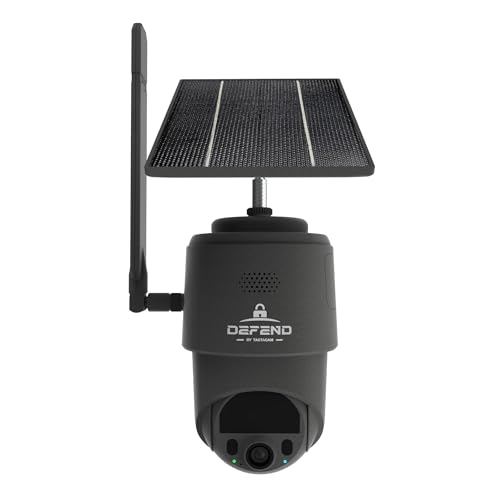
Tactacam DEFEND 360 Cellular Security Camera, Solar Power, No WiFi | Rechargeable battery, 4K photo, 1080p video, 360° Pan/Tilt/Zoom,instant alerts, weatherproof, app control, Live View
Check price on AmazonFrequently Asked Questions
Do cellular security cameras need Wi-Fi?
No. They connect directly to a mobile network using a built-in SIM card. Wi-Fi is only needed for the initial setup in some models, and even that can often be done via the cellular connection or Bluetooth.
How much does the monthly data plan cost?
Most plans range from $5 to $25 per month depending on video quality and upload volume. Some brands include a free trial period, and a few offer free basic alerts with no subscription at all.
Can I use my own SIM card?
Some cameras are unlocked and accept any standard SIM, while others are locked to a specific carrier or the manufacturer's own plan. Always verify compatibility before purchasing.
How long do batteries last?
Battery life depends on how often the camera is triggered and whether you use live view frequently. Typical ranges are 1–3 months for busy areas and up to 6 months for low-traffic locations. Solar panels can eliminate battery anxiety entirely.
Are cellular cameras good for home security?
Absolutely—especially as a backup or for outbuildings, garages, and gates far from your router. For a comprehensive home setup, you might combine cellular cameras with a wired and wireless security camera system for layered protection.
Final Verdict: Who Should Buy a Cellular Security Camera?
A security camera with cellular service is the right choice if you need surveillance where Wi-Fi doesn't reach or where you can't rely on a fixed internet connection. It's ideal for remote properties, job sites, RVs, and renters. The trade-off is a higher upfront cost and a recurring data fee, but the freedom and reliability are worth it when no other option exists.
Before you buy, decide on your resolution needs, check whether the camera accepts third-party SIMs, and confirm battery or solar expectations for your climate. If you want to see how these cameras fit into a broader system, explore our guide to security cameras for home with internet access or compare options for high-quality security cameras for home. With the right cellular camera, you're never out of sight—even when you're off the grid.