
Weatherproof Surveillance Cameras: Complete Buying Guide
Protect your property in any climate. Learn how to choose weatherproof surveillance cameras that withstand rain, snow, dust, and extreme temperatures without compromising image quality.
SEE TOP RECOMMENDATIONSWhy Weatherproofing Matters: An indoor camera placed outdoors will fail within weeks. Weatherproof surveillance cameras are engineered with sealed housings, corrosion-resistant materials, and wide operating temperature ranges to deliver reliable 24/7 monitoring year-round.
What Makes a Surveillance Camera Weatherproof?
Weatherproof surveillance cameras are built to operate reliably in outdoor environments where moisture, dust, and temperature fluctuations are constant threats. Unlike standard indoor cameras, these models feature sealed enclosures, gaskets, and specialized coatings that prevent water and particulate ingress.
The most important specification to understand is the IP (Ingress Protection) rating. This two-digit code tells you exactly how well a camera resists solids and liquids. For outdoor surveillance, you should look for at least IP65, though IP66 and IP67 are strongly preferred for exposed locations.
Beyond the IP rating, consider the operating temperature range. A camera rated for -4°F to 140°F (-20°C to 60°C) will handle most climates, but if you live in extreme heat or cold, you will need a model with a wider range. Many modern weatherproof surveillance cameras also include built-in heaters or sun shields to extend their operational limits.
Understanding IP Ratings for Outdoor Cameras
Not all weatherproof ratings are equal. Here is a quick breakdown of the IP codes you will encounter when shopping for outdoor surveillance equipment:
| IP Rating | Solid Protection | Liquid Protection | Recommended Use |
|---|---|---|---|
| IP65 | Dust tight | Water jets from any direction | Sheltered outdoor areas |
| IP66 | Dust tight | Heavy seas and powerful water jets | Exposed outdoor locations |
| IP67 | Dust tight | Immersion up to 1 meter for 30 minutes | Flood-prone or coastal areas |
| IP68 | Dust tight | Immersion beyond 1 meter | Extreme marine environments |
For most residential and commercial installations, IP66 is the sweet spot. It handles heavy rain, snow, and dust without issue. If you live near the coast or in an area prone to flooding, consider IP67 or higher. You can explore specific outdoor models in our guide to WiFi security cameras outdoor.
Key Features to Look For
1. Night Vision and Low-Light Performance
Weatherproof cameras must perform in complete darkness. Look for models with infrared (IR) LEDs or color night vision. IR range of at least 30 feet is standard, but 100 feet or more is better for large properties. Some advanced models use infrared thermal camera technology to detect heat signatures, which works in total darkness and through light fog.
2. Power Source and Connectivity
Outdoor cameras can be powered by batteries, solar panels, or Power over Ethernet (PoE). Battery-powered models offer flexible placement but require periodic recharging. Solar-powered options, like a solar security camera, are excellent for remote locations with adequate sunlight. PoE cameras, such as a PoE camera, provide both power and data through a single cable, making them the most reliable choice for permanent installations. If you prefer a wireless setup, consider a wireless security system or wirefree outdoor security cameras.
3. Resolution and Field of View
1080p is the minimum for useful surveillance footage. 2K and 4K resolution provide clearer details for identifying faces and license plates. A wide field of view (at least 110 degrees) reduces blind spots. For specialized applications, a fisheye camera can cover an entire room or yard with a single unit.
4. Storage Options
Weatherproof surveillance cameras typically store footage locally on a microSD card, on a Network Video Recorder (NVR), or in the cloud. For local storage without recurring fees, a PoE network video recorder is a popular choice. If you want to avoid subscriptions entirely, look for wireless security cameras without subscription or non-WiFi security cameras.
Installation Tips for Harsh Weather
Proper installation is just as important as choosing the right camera. Even the best weatherproof surveillance cameras can fail if installed incorrectly. Follow these guidelines:
- Mount under an eave or overhang whenever possible. This reduces direct exposure to rain and UV radiation.
- Angle the camera slightly downward. Water pooling on the lens can distort footage. A downward tilt encourages runoff.
- Use dielectric grease on connections. This prevents corrosion in the ports and cable connectors.
- Secure cables in conduit. Exposed wiring is vulnerable to UV damage, rodents, and moisture. A camera pole with internal cable routing is an excellent solution for clean installations.
- Test before final mounting. Verify the WiFi signal strength, field of view, and night vision performance before drilling permanent holes.
If you are setting up a comprehensive system, our guide to what is a CCTV and what is a IP camera can help you understand the broader ecosystem. For smart home integration, consider a smart security camera system or a wireless DIY home security system.
Best Weatherproof Surveillance Cameras
⚠️ AFFILIATE DISCLOSURE: This website contains affiliate links. As an affiliate Associate, we earn from qualifying purchases. If you make a purchase through these links, we may receive a small commission at no additional cost to you. Read our full affiliate policy.

blurams 2Pack Security Cameras Outdoor Wired, 2K 360° PTZ Outdoor Security Camera, Weatherproof, 24/7 Recording with SD Card, Color Night Vision, AI Human Tracking, 2.4/5GHz WiFi6, Work with Alexa
Check price on Amazon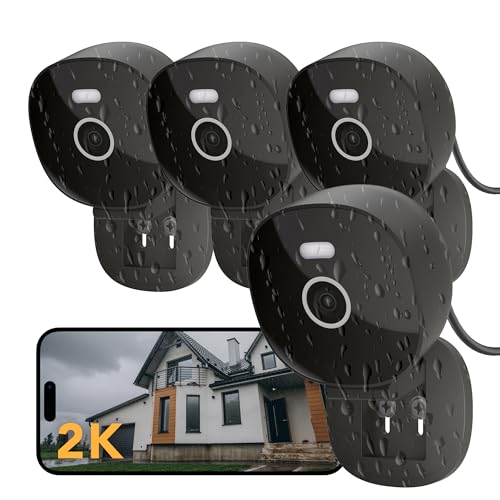
FAMVIVA 2K Wired Security Camera, Indoor/Outdoor for Home, Pet, Baby, Nanny, IP65 Waterproof Color Night Vision, White Light & Siren, Recording, Motion Detection, Works with Alexa,Pulg in, Black-4P
Check price on Amazon
4MP Security Cameras Wireless Outdoor, No Subscription 128GB Local Storage, Solar Powered Cameras For Home Security, PTZ Auto Tracking, 4Cam-Kit, Color Night Vision Home Security Camera System,5G&2.4G
Check price on Amazon
Security Cameras Wireless Outdoor, 2K Indoor Cameras for Home Security Battery Powered, AI Motion Detection, Color Night Vision, 2-Way Talk, Spotlight Siren Alarm, Cloud & SD Storage-Jet Black Camera
Check price on Amazon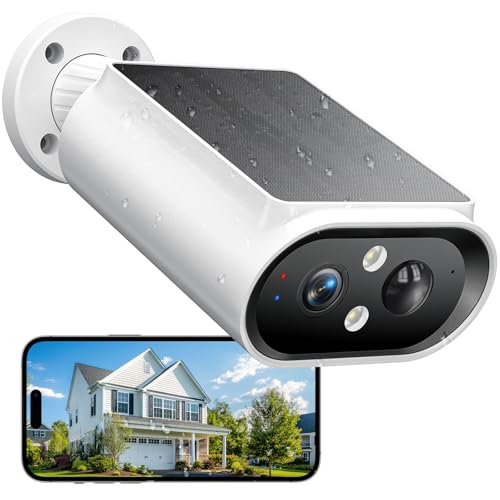
AlkiVision Solar Security Cameras Wireless Outdoor - 2K Night Color Vision Cameras for Home Security, AI Motion Detection, 360° View, Spotlight, 2-Way Audio, Siren, IP67 Waterproof, SD/Cloud Storage
Check price on Amazon
ZOSI 2.0MP 1080P HD 1920TVL Security Camera Hybrid 4-in-1 TVI/CVI/AHD/960H CVBS CCTV Camera Outdoor Indoor,80ft IR Night Vision,Weatherproof Bullet Camera For analog Surveillance DVR(Black)
Check price on Amazon
Fazoxo 2K Security Camera Wireless Outdoor, WiFi Cameras for Home Security | Solar Powered,Motion Detection,Color Night Vision(Spotlight),Instant Alert,2-Way Audio,Siren&SD/Cloud Storage,IP65,2.4GHz
Check price on AmazonCommon Use Cases and Recommendations
Home Perimeter Security
For protecting your home's exterior, a WiFi security camera outdoor with IP66 rating and motion detection alerts is ideal. Pair it with an outdoor lamp camera for discreet coverage near entryways. If you want a camera that blends into your landscaping, a solar camera eliminates wiring concerns.
Commercial and Industrial Sites
Businesses require higher durability and resolution. A PoE camera connected to a PoE network video recorder provides reliable, high-bandwidth surveillance. For large perimeters, consider thermal imaging camera for home inspection technology to detect intrusions in low-visibility conditions.
Remote and Off-Grid Locations
Construction sites, farms, and cabins often lack power and internet. A battery powered outdoor security camera paired with a solar security camera setup can operate indefinitely. For cellular connectivity, look for models that support 4G LTE. If you need to monitor wildlife, a wildlife trail camera or non cellular trail camera is purpose-built for the task.
Rental Properties and Apartments
Tenants and landlords often prefer non-permanent solutions. A wireless security camera without subscription or a non subscription security camera offers flexibility without long-term contracts. For doorways, a PoE doorbell or wireless smart doorbell provides both security and convenience.
Maintenance for Long-Term Reliability
Even the most durable weatherproof surveillance cameras require occasional maintenance. Here is a simple routine to keep your system running smoothly:
- Clean the lens monthly. Use a microfiber cloth and a camera sensor cleaning kit for stubborn grime. Avoid abrasive materials that can scratch the lens coating.
- Inspect seals and gaskets. Over time, rubber seals can crack or degrade. Replace them as needed to maintain the IP rating.
- Check connections. Ensure all cable connections are tight and free of corrosion. Apply dielectric grease annually.
- Update firmware. Manufacturers release firmware updates that improve security and performance. Check for updates every few months.
- Review footage quality. Periodically review recorded footage to ensure the camera is still capturing clear images. If quality degrades, clean the lens or check for obstructions.
Frequently Asked Questions
Can I use an indoor camera outdoors?
No. Indoor cameras lack the sealed housing and weather-resistant components needed to survive rain, dust, and temperature extremes. Using an indoor camera outdoors will void its warranty and likely lead to premature failure.
What is the best IP rating for a surveillance camera?
For most outdoor applications, IP66 is the minimum recommendation. It protects against dust and powerful water jets. If you live in a flood-prone or coastal area, choose IP67 or IP68 for added protection against immersion.
Do weatherproof cameras work in extreme cold?
Many weatherproof surveillance cameras are rated for temperatures as low as -4°F (-20°C). For extreme cold, look for models with built-in heaters or those specifically rated for arctic conditions. Battery-powered cameras may experience reduced battery life in cold weather.
How do I prevent my camera lens from fogging up?
Choose a camera with an anti-fog coating or a built-in heater. Proper installation with a slight downward tilt also helps prevent water from pooling on the lens. Silica gel packets placed near the camera housing can absorb excess moisture.
Are wireless weatherproof cameras reliable?
Yes, modern wireless weatherproof cameras are highly reliable. However, they depend on a strong WiFi signal. If your outdoor WiFi coverage is weak, consider a mesh network or a PoE camera, which uses a wired connection for both power and data.
Ready to Protect Your Property?
Browse our top-rated weatherproof surveillance cameras and find the perfect fit for your climate and security needs.
VIEW RECOMMENDED CAMERASFinal Thoughts
Investing in weatherproof surveillance cameras is essential for anyone serious about outdoor security. By understanding IP ratings, power options, and installation best practices, you can select a system that delivers reliable performance for years to come.
Whether you need a single WiFi security camera outdoor for your home or a comprehensive smart security camera system for your business, the key is to match the camera's specifications to your specific environment. Don't compromise on weatherproofing — it is the difference between a camera that lasts and one that fails when you need it most.
For more guidance on building your security setup, explore our related guides on what is a CCTV, PoE cameras, and wireless security cameras without subscription.