
Thermal Nightvision: Complete Guide to Thermal & Night Vision Cameras
Explore the best thermal nightvision cameras for security, hunting, wildlife observation, and outdoor adventures. Learn how thermal imaging and night vision technology work, what to look for, and which models deliver the best performance for your needs.
VIEW TOP PICKSAllCameraGuide Insight: Thermal nightvision devices combine two powerful technologies — thermal imaging (detecting heat signatures) and night vision (amplifying low light). Whether you need a thermal nightvision scope for hunting, a security camera for complete darkness, or a handheld monocular for wildlife observation, understanding the differences between thermal and night vision is the first step toward making a smart purchase.
What Is Thermal Nightvision and How Does It Work?
Thermal nightvision refers to imaging devices that allow you to see in complete darkness by detecting infrared radiation (heat) emitted by objects. Unlike traditional night vision, which amplifies existing light and requires some ambient illumination, thermal cameras work in absolute darkness, through smoke, fog, and light foliage. This makes them indispensable for security professionals, hunters, and outdoor enthusiasts.
There are two primary technologies to understand. Thermal imaging captures heat signatures and displays them as a grayscale or color-mapped image where warmer objects appear brighter. Night vision (image intensification) amplifies low-light conditions using an image intensifier tube, producing the classic green-hued image. Some advanced devices combine both technologies for maximum situational awareness.
When choosing a thermal nightvision device, consider the resolution (measured in pixels), thermal sensitivity (measured in millikelvins, or mK), refresh rate (Hz), detection range, and whether you need a handheld monocular, a weapon-mounted scope, or a standalone security camera. For those interested in general camera technology, exploring a camera for video or a high-end digital camera can provide useful context, but thermal devices operate on fundamentally different principles.
Thermal Imaging vs. Night Vision: Key Differences
Understanding the distinction between thermal and night vision is critical before you buy. Each technology excels in different scenarios, and the best choice depends on your specific use case.
| Feature | Thermal Imaging | Night Vision |
|---|---|---|
| Operating Principle | Detects infrared heat radiation | Amplifies existing light (image intensification) |
| Performance in Darkness | Works in complete darkness | Requires some ambient light (moonlight, starlight) |
| Through Smoke/Fog | Excellent — can see through smoke, dust, light fog | Poor — blocked by smoke, fog, and obstructions |
| Image Detail | Lower resolution, but detects heat signatures clearly | Higher resolution, recognizable facial features |
| Camouflage Detection | Excellent — detects body heat regardless of camouflage | Limited — relies on visual contrast |
| Typical Price | $800–$8,000+ | $200–$3,500 |
| Best For | Hunting, security, search & rescue, wildlife | Home security, boating, camping, surveillance |
For many buyers, a hybrid approach works best. Some modern devices offer both thermal and night vision channels, allowing you to switch between modes depending on conditions. If you are also considering traditional security options, a video surveillance camera for home or affordable home security cameras can complement a thermal setup. For specialized uses, a camera detector device or hidden cameras for home may also be worth exploring.
Key Features to Look For in a Thermal Nightvision Device
When shopping for a thermal nightvision camera or scope, these specifications matter most:
- Thermal Resolution: Measured in pixels (e.g., 256×192, 384×288, 640×480). Higher resolution means better image detail and longer detection range.
- Thermal Sensitivity (NETD): Measured in millikelvins (mK). Lower is better — 25mK or below is excellent for detecting subtle temperature differences.
- Refresh Rate: 50Hz or higher provides smooth, real-time imaging. Lower refresh rates can feel laggy during motion.
- Detection Range: How far the device can detect a human-sized target. Ranges vary from 300 yards to over 2,000 yards depending on the model.
- Display Type: OLED displays offer better contrast and visibility in low light. Some devices feature color palettes (white-hot, black-hot, rainbow) for different scenarios.
- Battery Life: Look for at least 4–6 hours of continuous use. Rechargeable batteries and USB-C charging are convenient features.
- Recording & Connectivity: Built-in video recording, Wi-Fi streaming, and app connectivity allow you to capture and share footage.
- Durability: For outdoor use, look for IP67 or higher water resistance and rugged construction.
- Mounting Options: Weapon-mounted scopes require recoil-rated construction, while handheld monoculars prioritize portability.
- Digital Zoom: 2× to 8× digital zoom helps identify targets at distance, though it reduces image quality.
For those who also work with traditional cameras, similar principles apply when selecting a macro camera lens or 600mm lens — optical quality and intended use drive the decision. If you are building a broader camera kit, consider a camera accessories bundle or a lightweight mirrorless camera for daytime shooting.
Popular Use Cases for Thermal Nightvision
Thermal nightvision devices serve a wide range of applications. Here are the most common scenarios where they prove invaluable:
Hunting & Wildlife
Detect game animals through dense brush, in complete darkness, and at long distances. Thermal imaging reveals body heat that traditional night vision might miss, especially in thick cover.
Home & Property Security
Monitor your property in total darkness. Unlike standard video surveillance cameras for home, thermal cameras detect intruders regardless of lighting or camouflage.
Search & Rescue
Locate missing persons in darkness, smoke, or adverse weather. Thermal imaging is a critical tool for first responders and outdoor rescue teams.
Outdoor & Adventure
Navigate safely during night hikes, camping, and boating. Thermal monoculars help identify hazards, wildlife, and other vessels in the dark.
Industrial & Inspection
Detect overheating equipment, electrical faults, and insulation issues. Thermal cameras are essential for predictive maintenance and building inspections.
Wildlife Observation
Observe nocturnal animals without disturbing them. A camera trap with thermal capability or a handheld thermal monocular is ideal for researchers and enthusiasts.
For related outdoor imaging needs, a cheap trail camera or ice fishing camera can complement your thermal gear. If you are also interested in general photography, consider a good camera for sports photography or a top camera for photography for daytime pursuits.
Thermal Nightvision Budget Guide
Thermal nightvision devices span a wide price range. Here is what you can expect at different budget levels:
Entry-Level: $800–$1,500
At this price point, you will find thermal monoculars with 256×192 resolution and basic features. These are suitable for short-range observation (up to 300 yards) and casual outdoor use. Brands like AGM, FLIR, and HikMicro offer solid entry-level options. Best for: Beginners, casual hikers, and budget-conscious hunters.
Mid-Range: $1,500–$3,500
Step up to 384×288 or 640×480 resolution with improved sensitivity (35mK or lower), longer detection ranges (600–1,200 yards), and advanced features like video recording, Wi-Fi, and multiple color palettes. Best for: Serious hunters, security professionals, and outdoor enthusiasts who need reliable performance.
Premium: $3,500–$8,000+
Top-tier thermal scopes and binoculars with 640×480 or higher resolution, 25mK or better sensitivity, detection ranges exceeding 1,500 yards, and advanced features like ballistic calculators, rangefinders, and dual thermal/night vision channels. Best for: Professional hunters, law enforcement, and military applications.
When budgeting, remember that accessories like extra batteries, mounts, and carrying cases add to the total cost. If you are also shopping for traditional camera gear, a budget action camera or cheap mirrorless camera can be a great complement for daytime recording.
Recommended Thermal Nightvision Cameras
⚠️ AFFILIATE DISCLOSURE: This website contains affiliate links. As an affiliate Associate, we earn from qualifying purchases. If you make a purchase through these links, we may receive a small commission at no additional cost to you. Read our full affiliate policy.

AGM Global Vision Rattler V2 19-256 Thermal Scope High-Sensitivity Sensor | 19mm Lens, 256×192 12μm Thermal Sensor, OLED Display, High-Sensitivity Imaging, WiFi, Video Recording
Check price on Amazon
TOPDON TS004 Thermal Imaging Monocular, 13mm 50Hz Night Vision | 320 x 240 TISR 256 x 192 IR Resolution, Supported Wireless Connection, 11h Battery Life, IP67 Monocular for Hunting, Green
Check price on Amazon
DNT Optics TNC225R ThermNight Thermal & Night Vision Multispectral Scope with Laser Rangefinder and Ballistic Calculator
Check price on Amazon
Nightfox Arctic Thermal Night Vision Monocular | Head or Helmet Mounted, Low Latency 50fps Thermal Camera, IP65 Waterproof, 24° FOV, 256*192 Resolution
Check price on Amazon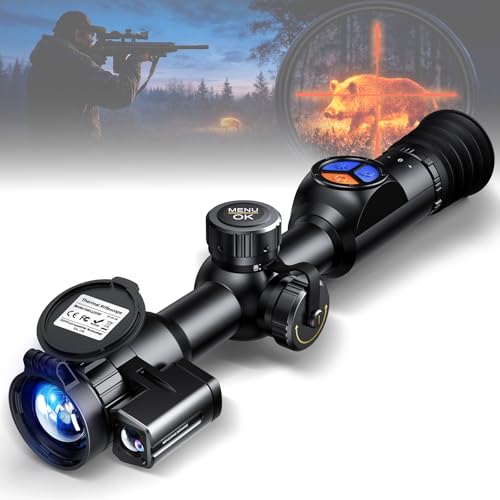
GOYOJO GRS/GRL Series Thermal Riflescope for Hunting (256-25 Rangefinder) | 256-640 High Resolution, 25-35mm Lens, Rangefinding & Ballistic Assistance, 50-55Hz, RAV, Hotspot Tracking, 12μm Sensor
Check price on Amazon
RIX Storm S2 256x192 Thermal Scope, 25mm Lens for Hunting | Lightweight 0.9lb thermal scope with 256x192 sensor, easy controls, handheld use, NETD <25mK and 50Hz for hunting
Check price on Amazon
GOYOJO G210 Thermal Monocular, 256x192 Thermal Imaging Monoscope Camera for Adults, 10mm Focal Lens Vision Goggles Thermal Scopes for Night Hunting Camping
Check price on Amazon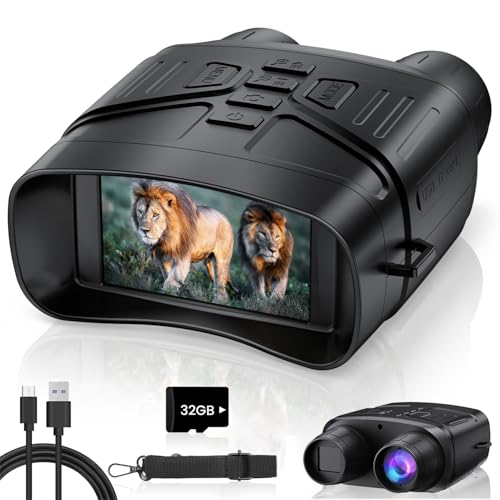
Vtiisamao Night Vision Goggles, 4K Night Vision Binoculars for Adults | 3" HD Display, 5000mAh Rechargeable Battery, 32GB TF Card Included for Wildlife, Camping & Security
Check price on AmazonExpert Tips for Buying Thermal Nightvision
Before you commit to a purchase, keep these expert recommendations in mind:
- Match the Device to Your Primary Use: A handheld monocular is great for scanning, while a weapon-mounted scope is better for hunting. Security applications may require a stationary camera with continuous recording.
- Prioritize Sensitivity Over Resolution: A 384×288 sensor with 25mK sensitivity often outperforms a 640×480 sensor with 50mK sensitivity in real-world conditions.
- Consider the Ecosystem: If you already own cameras from a specific brand, check whether their thermal devices integrate with your existing setup. For example, a wireless camera for car or battery-powered dash cam may share accessories.
- Check Warranty and Support: Thermal devices are significant investments. Choose brands with robust warranties and responsive customer support.
- Try Before You Buy: If possible, test the device in low-light conditions. Many retailers offer demo units or generous return policies.
- Think About Future Needs: If you plan to expand your capabilities, consider a device with firmware upgrade support and accessory compatibility.
For broader camera buying advice, explore our guides on camera buying mistakes and first camera checklist to avoid common pitfalls. If you are also considering a nice camera for general photography or a content creator camera for video work, those can complement your thermal nightvision setup.
Frequently Asked Questions About Thermal Nightvision
No. Thermal imaging detects surface heat, not through solid objects like walls. However, thermal cameras can detect heat signatures through smoke, fog, and light foliage, which makes them superior to traditional night vision in those conditions. For through-wall detection, you would need specialized equipment like a camera detector device or plumbing camera inspection tool, which serve entirely different purposes.
Thermal imaging detects heat (infrared radiation emitted by objects) and works in complete darkness. Infrared night vision typically refers to devices that use an infrared illuminator to project light that is invisible to the human eye, then amplify the reflected light. Thermal cameras do not need any light source, while infrared night vision requires an IR illuminator or ambient light.
Legality varies by country and state. In many jurisdictions, using thermal or night vision for hunting is restricted or prohibited, especially for game animals. Always check your local wildlife regulations before using a thermal scope for hunting. For security and property monitoring, thermal cameras are generally legal, similar to standard hidden cameras for home or secret cameras for home, but privacy laws apply.
Detection range depends on the device’s resolution, lens focal length, and sensitivity. Entry-level thermal monoculars can detect a human at 300–500 yards. Mid-range devices reach 800–1,200 yards, while premium thermal scopes can detect human-sized targets at 1,500–2,500 yards or more. For context, a 600mm lens on a traditional camera offers magnification but requires light, whereas thermal works in darkness.
Yes, thermal cameras are excellent for home security because they detect intruders in complete darkness and are not fooled by camouflage. However, they are typically more expensive than standard affordable home security cameras or mini security cameras wireless. For comprehensive coverage, combine thermal cameras with traditional video surveillance cameras for home and light bulb security cameras.
NETD (Noise Equivalent Temperature Difference) measures a thermal sensor’s ability to detect small temperature differences, expressed in millikelvins (mK). A lower NETD means the sensor can distinguish smaller temperature variations, resulting in clearer images with more detail. For example, a 25mK sensor will outperform a 50mK sensor in scenarios where temperature contrast is low, such as detecting a person through heavy clothing or in warm environments.
Final Thoughts: Choosing the Right Thermal Nightvision Device
Thermal nightvision technology has become more accessible and affordable than ever. Whether you need a device for hunting, home security, wildlife observation, or professional use, there is a solution that fits your needs and budget. Prioritize thermal sensitivity, resolution, and detection range, and choose a device from a reputable brand with solid warranty support.
As you continue your research, explore our related guides on camera light, camera covers, and camera accessories to build a complete imaging toolkit. For those interested in traditional photography alongside thermal imaging, a mirrorless camera for beginners or entry-level DSLR offers a great starting point. And if you are also considering security upgrades, browse our resources on wireless camera for car and wireless rear camera for car for automotive monitoring.
With the right thermal nightvision device in hand, you will gain a powerful advantage in darkness — seeing what others cannot, and capturing critical moments that would otherwise go unnoticed.