


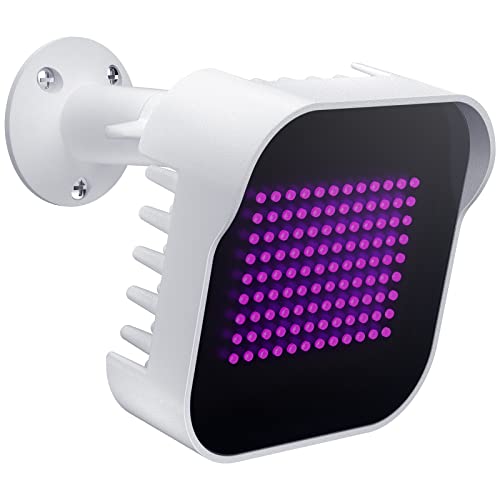


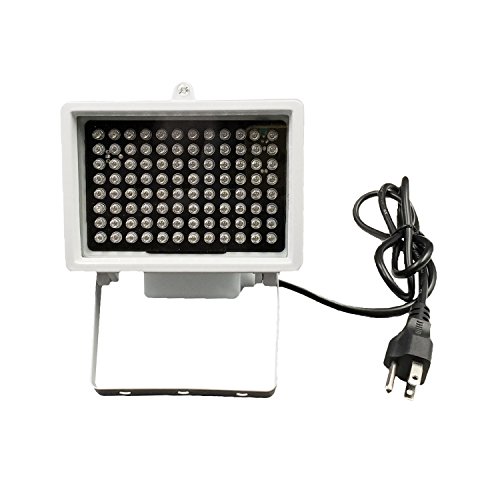
What Is an Infrared Spotlight for Security Camera?
An infrared spotlight, also known as an IR illuminator, is a dedicated lighting device that emits infrared light—invisible to the human eye but fully detectable by security cameras. Unlike standard white-light floodlights, IR spotlights provide covert illumination that doesn't disturb neighbors or alert intruders. They are essential for outdoor security cameras with motion detection that need to capture clear footage in low-light or zero-light conditions.
Most cameras come with built-in IR LEDs, but these are typically low-power and only effective at short distances. A standalone IR spotlight can extend your camera's night vision range significantly, making it a must-have for large yards, driveways, parking lots, and commercial properties. If you're using a security camera that doesn't require a subscription, adding an IR spotlight is a one-time investment that boosts performance without recurring fees.
How Does an Infrared Spotlight Work?
Infrared light operates at wavelengths between 700nm and 1,000nm, just beyond the visible spectrum. Security cameras are designed with sensors that can detect this light, effectively turning darkness into daylight in monochrome. When you pair an IR spotlight with your camera, the camera's night vision mode activates automatically (or manually), and the IR light illuminates the scene without producing any visible glow.
There are two main types of IR illumination: IR floodlights (wide coverage) and IR spotlights (narrow, long-range beam). For most residential applications, a hybrid or adjustable model works best. If you're running a professional home surveillance system, you may want multiple IR spotlights to cover different zones. For remote locations without power, consider pairing an IR spotlight with a solar-powered surveillance camera without WiFi for a completely wire-free solution.
Key Factors to Consider Before Buying
Not all IR spotlights are created equal. Here's what to evaluate:
- Wavelength: 850nm offers a faint red glow (visible to humans) but is more affordable. 940nm is completely invisible but has a shorter range and higher cost.
- Range: Entry-level models reach 50–80 feet. Mid-range units cover 100–150 feet. Professional-grade IR illuminators can reach 300+ feet.
- Beam Angle: Narrow beams (10°–30°) are ideal for long-distance spotting. Wide beams (60°–120°) cover larger areas but with less intensity.
- Power Source: Most IR spotlights are hardwired (120V AC) or low-voltage (12V DC). Battery-powered and solar models exist for off-grid use.
- Weather Rating: Look for IP66 or IP67 ratings for outdoor use. This ensures protection against rain, dust, and extreme temperatures.
- Compatibility: Ensure the IR spotlight works with your camera's sensor. Most cameras with night vision support external IR illuminators, but check the manual.
If you're building a system from scratch, you might also explore security cameras that use Ethernet cable for reliable power and data, or hard-wired security camera systems with remote viewing for maximum stability.
IR Spotlight vs. Built-In IR: Which Is Better?
Built-in IR LEDs are convenient but limited. They're typically rated for 30–50 feet and can cause "flashlight effect" (bright center, dark edges). A dedicated IR spotlight offers:
- Longer range: Up to 300 feet or more.
- Even coverage: Adjustable beam angles prevent hotspots.
- Flexible placement: Mount the spotlight separately from the camera to eliminate glare and reflections.
- Better performance in adverse weather: External units often have higher IP ratings.
For most users, a combination approach works best: use the camera's built-in IR for close-range coverage and add an external IR spotlight for distance. This is especially useful for outdoor wireless PTZ security camera systems that need to monitor large areas.
Installation Tips for Maximum Performance
Proper installation is key to getting the most out of your IR spotlight. Follow these guidelines:
- Mount at the right height: 8–12 feet above ground is ideal for most residential applications.
- Avoid pointing directly at the camera: This causes glare and washes out the image. Angle the spotlight slightly away from the camera lens.
- Use a separate power source: If your camera is battery-powered, a hardwired IR spotlight will drain the battery quickly. Consider a rechargeable battery-powered security camera or a battery-operated CCTV camera with SD card for flexible placement.
- Test at night: After installation, review footage at night to ensure even coverage and no blind spots.
- Secure all connections: Use waterproof junction boxes and cable glands for outdoor installations.
If you're not comfortable with DIY installation, consider a flood light security camera installation service, which often includes IR spotlight setup.
How Much Does an Infrared Spotlight Cost?
Prices vary widely based on range, build quality, and features:
- Budget models: $25–$50 (50–80 ft range, basic housing)
- Mid-range: $50–$120 (100–150 ft range, IP66, adjustable beam)
- Professional-grade: $120–$300+ (200–300+ ft range, IP67, advanced cooling)
For most homeowners, a mid-range IR spotlight offers the best balance of performance and value. If you're protecting a commercial property or a large perimeter, investing in a professional-grade unit will pay off in reliability and coverage. Pair it with a 4K wireless security camera system with DVR for the ultimate surveillance setup.
Common Mistakes to Avoid
Many buyers make these errors when adding an IR spotlight:
- Buying a visible-light floodlight instead of IR: White light scares away intruders but also alerts them. IR is covert.
- Ignoring wavelength compatibility: Some cameras are optimized for 850nm, others for 940nm. Check your camera's specs.
- Underpowering the spotlight: Long cable runs cause voltage drop. Use the correct gauge wire or a local power source.
- Overlooking maintenance: IR spotlights need occasional cleaning. Dust and spiderwebs can reduce performance.
If you're unsure about compatibility, consult the camera manufacturer or a professional installer. For those using security cameras without a monthly fee, adding an IR spotlight is a smart way to enhance performance without ongoing costs.
Frequently Asked Questions
Can I use any infrared spotlight with my security camera?
Most cameras with night vision support external IR illuminators, but you should verify the wavelength (850nm or 940nm) and power requirements. Some proprietary systems may require brand-specific accessories.
Does an IR spotlight work with battery-powered cameras?
Yes, but it will drain the battery faster. For battery-powered cameras, consider a wireless security camera that doesn't need WiFi with a separate solar panel or a solar security camera without subscription to power both devices.
Is infrared light visible to the human eye?
850nm IR emits a faint red glow that some people can see. 940nm IR is completely invisible. For covert surveillance, choose 940nm, but note it has a shorter range.
How far can an IR spotlight illuminate?
Entry-level models reach 50–80 feet. Mid-range units cover 100–150 feet. Professional-grade IR illuminators can reach 300+ feet, depending on beam angle and power.
Can I install an IR spotlight myself?
Yes, most IR spotlights are DIY-friendly if you have basic electrical skills. However, for complex installations or high-voltage wiring, hire a licensed electrician. If you're renting, consider a cheap easy-to-install security camera with built-in IR instead.
Do IR spotlights work in rain, snow, or fog?
IR light is scattered by fog and heavy rain, reducing effective range. However, a high-quality IP67-rated spotlight will continue to operate in adverse weather. For extreme conditions, consider a thermal camera for moisture detection or a trail camera with night vision.