
CMOS Camera Guide: The Complete Breakdown
Everything you need to know about CMOS sensors, how they work, and why they power almost every modern camera on the market.
Quick Answer: A CMOS (Complementary Metal-Oxide-Semiconductor) camera uses a sensor that converts light into electrical signals. CMOS sensors are the dominant technology in modern digital cameras, smartphones, and webcams because they offer high speed, low power consumption, and excellent image quality at a lower cost than older CCD sensors.
What Is a CMOS Camera?
If you have shopped for a digital camera recently, you have likely seen the term "CMOS" in the specifications. But what does it actually mean, and why does it matter for your photography?
A CMOS camera is any digital camera that uses a Complementary Metal-Oxide-Semiconductor sensor to capture images. This sensor is the heart of the camera—it is the component that receives light through the lens and converts it into the digital data that becomes your photo or video.
The term "CMOS" refers to the manufacturing process used to create the sensor. Each pixel on a CMOS sensor has its own amplifier and readout circuitry, which allows the sensor to read data faster and use less power than older technologies. This is why virtually every modern camera, from a small digital camera to a professional mirrorless camera for video, relies on CMOS technology.
Understanding CMOS is not just technical trivia—it helps you make smarter buying decisions. When you know how a CMOS sensor works, you can better evaluate specs like resolution (measured in megapixels), dynamic range, and low-light performance.
How Does a CMOS Sensor Work?
To appreciate why CMOS cameras are so popular, it helps to understand the basic process of how they capture an image. Here is a simplified breakdown:
- Light Enters Through the Lens: The lens focuses light onto the sensor.
- Photodiodes Convert Light to Electricity: Each pixel on the CMOS sensor contains a photodiode that converts incoming photons (light) into electrical charge.
- Amplification and Readout: Unlike CCD sensors, which transfer charge across the chip to a single amplifier, each pixel on a CMOS sensor has its own amplifier. This allows for faster readout and lower power consumption.
- Digital Conversion: The electrical signals are converted into digital data by an analog-to-digital converter (ADC).
- Image Processing: The camera's processor applies color, contrast, and noise reduction to produce the final image.
This architecture is why CMOS sensors are so efficient. They can read data from individual pixels without having to shift charge across the entire sensor, which is a major advantage for high-speed shooting and video recording.
CMOS vs. CCD: What's the Difference?
Before CMOS became dominant, CCD (Charge-Coupled Device) sensors were the standard for digital cameras. Today, CMOS has largely replaced CCD in consumer and professional cameras. Here is a quick comparison:
| Feature | CMOS Sensor | CCD Sensor |
|---|---|---|
| Power Consumption | Low | High |
| Readout Speed | Fast | Slower |
| Manufacturing Cost | Lower | Higher |
| Noise Performance | Excellent (modern) | Excellent |
| Best For | Video, burst shooting, smartphones | Scientific imaging, legacy cameras |
The shift to CMOS was driven by the demand for cameras that could shoot high-resolution video, operate on battery power for longer, and be produced at scale. Today, if you buy a new DSLR, mirrorless, action camera, or even a camera connect security device, it almost certainly uses a CMOS sensor.
Why CMOS Matters When Choosing a Camera
When you are researching a camera purchase, the sensor type is one of the most important specifications to consider. Here is why CMOS should be on your radar:
1. Better Low-Light Performance
Modern CMOS sensors are designed to capture more light per pixel, which means they perform better in dim conditions. If you often shoot indoors or at night, a camera with a high-quality CMOS sensor will produce cleaner images with less noise.
2. Faster Continuous Shooting
Because CMOS sensors read data faster, they enable higher burst rates. This is essential for action photography, wildlife, and sports. If you are considering a compact video camera or a 4K video camera, CMOS is a must-have for smooth, high-frame-rate recording.
3. Superior Video Capabilities
CMOS technology is the reason your camera can record 4K or even 8K video. The fast readout speeds reduce rolling shutter effects and allow for continuous autofocus during video recording. This is why vloggers and filmmakers prefer CMOS-based cameras like the small vlogging camera or mirrorless camera for video.
4. Energy Efficiency
CMOS sensors consume less power than CCDs, which translates to longer battery life. This is critical for outdoor shooters, travelers, and anyone using a travel camera or action camera 4K.
Types of CMOS Cameras Available Today
CMOS sensors are used in a wide variety of cameras. Here are the most common categories you will encounter:
- DSLR Cameras: Classic DSLRs use CMOS sensors to deliver excellent image quality and interchangeable lens versatility. If you are comparing DSLR vs mirrorless, both use CMOS sensors, but mirrorless cameras often have newer, faster CMOS designs.
- Mirrorless Cameras: These are the most popular choice for enthusiasts and professionals. They use CMOS sensors and offer advanced features like in-body image stabilization and high-speed video.
- Compact Cameras: Point-and-shoot models like a compact camera for street photography or a small digital camera rely on small CMOS sensors to fit in your pocket.
- Action Cameras: Rugged cameras like the 360 action camera use CMOS sensors to capture high-speed footage in extreme conditions.
- Security Cameras: From CCTV installation to wireless doorbell cameras, CMOS sensors are standard for their reliability and low power needs.
- Specialty Cameras: Cameras like the endoscope camera with light or trail camera with night vision also use CMOS sensors for their compact size and efficiency.
Recommended CMOS Cameras
⚠️ AFFILIATE DISCLOSURE: This website contains affiliate links. As an affiliate Associate, we earn from qualifying purchases. If you make a purchase through these links, we may receive a small commission at no additional cost to you. Read our full affiliate policy.

KENWOOD CMOS-230LP Universal Backup Camera with License Plate mounting Bracket Included
Check price on Amazon
Duluvulu 4K Digital Camera for Photography Autofocus, 2026 Latest 48MP Vlogging Camera for YouTube with SD Card, 2 Batteries, 3" 180°Flip Screen Compact Travel Camera for Teens with 16X Zoom,Black
Check price on Amazon
Arducam 1080P Low Light WDR Ultra Wide Angle USB Camera Module for Computer, 2MP CMOS IMX291 160 Degree Fisheye Mini UVC USB2.0 Webcam Board with Microphone, 3.3ft Cable for Windows Linux Mac OS
Check price on Amazon
Voyager VCMS172B Super CMOS Color Rear Mount Observation Camera, Black, 12VDC, Waterproof, Built-in Microphone, Electronic Automatic Iris, Mirrored Image Orientation, 600 TV Line Resolution
Check price on Amazon
Arducam 5MP Wide Angle USB Camera for Computer, 1/4" CMOS OV5648 Mini UVC USB2.0 Video Webcam with Microphone, with 3.3ft/1m Cable
Check price on Amazon
DJI Osmo Pocket 3 Vlogging Camera with 1'' CMOS & 4K/120fps Video | 3-Axis Stabilization, Fast Focusing, Spotlight Follow, 2" Rotatable Touchscreen, Video Camera Camcorder for Photography
Check price on Amazon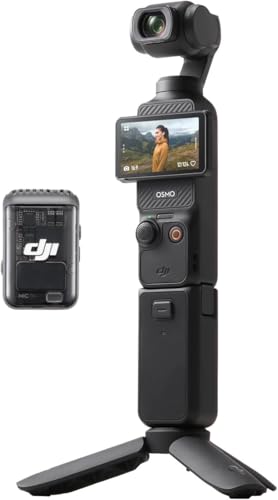
DJI Osmo Pocket 3 Creator Combo, Vlogging Camera with 1'' CMOS & 4K/120fps | 3-Axis Stabilization, Spotlight Follow, Fast Focusing, Mic Included for Clear Sound, Small Camera for Photography
Check price on AmazonHow to Choose the Right CMOS Camera
Now that you understand what a CMOS camera is, here are the key factors to consider when making a purchase:
Sensor Size
CMOS sensors come in different sizes, from tiny 1/2.3-inch sensors in compact cameras to full-frame sensors in professional models. Larger sensors generally perform better in low light and offer more control over depth of field. If you want professional-grade images, look for a full-frame or APS-C CMOS sensor.
Resolution
Resolution is measured in megapixels. While more megapixels allow for larger prints and more cropping flexibility, they are not the only measure of quality. A 24MP CMOS sensor with good low-light performance often beats a 48MP sensor with poor noise handling.
Video Capabilities
If video is important to you, check the camera's maximum resolution and frame rate. A CMOS sensor that supports 4K at 60fps is ideal for smooth action footage. For vlogging, consider a camera with a flip-out screen and good autofocus, such as a small vlogging camera.
Lens Compatibility
The lens you use is just as important as the sensor. If you are buying a DSLR or mirrorless camera, make sure the lens mount has a good selection of lenses. For example, a 50mm lens is a versatile choice for portraits, while a 35mm lens is great for street photography.
Budget
CMOS cameras are available at every price point. You can find a capable budget-friendly digital camera for under $300, or invest in a professional mirrorless system for $2,500 or more. If you are looking for deals, check out our camera deals section.
Ready to Find Your Perfect CMOS Camera?
Explore our curated selection of top-rated CMOS cameras and start capturing stunning photos and videos today.
View Recommended CamerasCaring for Your CMOS Sensor
Once you have your CMOS camera, proper care is essential to keep it performing at its best. Here are a few tips:
- Keep It Clean: Dust on the sensor can create spots in your images. Use a blower or sensor cleaning kit to remove dust gently. If you are unsure, professional cleaning is recommended.
- Protect from Moisture: Store your camera in a dry place, ideally in a camera case or dry cabinet. Moisture can damage the sensor and electronics.
- Avoid Extreme Temperatures: CMOS sensors can be affected by extreme heat or cold. Let your camera adjust to room temperature before use when moving between environments.
- Use Quality Lenses: A good lens not only improves image quality but also protects the sensor from dust when changing lenses.
For more tips on keeping your gear in top shape, explore our camera care guides.
Final Thoughts on CMOS Cameras
CMOS technology has revolutionized digital photography. It powers the cameras we use every day, from the high-quality camera in your pocket to the professional systems used by filmmakers and photographers worldwide.
When you are ready to buy, remember that the sensor is just one part of the equation. Consider your needs, your budget, and the lenses you plan to use. Whether you choose a DSLR or mirrorless, a compact DSLR camera, or a specialized device like a trail camera with night vision, a CMOS sensor ensures you get fast performance, great image quality, and long battery life.
We hope this guide has helped you understand CMOS cameras and given you the confidence to make an informed purchase. Happy shooting!